Summary
Outward achievement can coexist with emotional hurt. This account explores resilience through risk, care, manageable challenges and opportunities for renewed hope.
At a glance
Psychological resilience is a relative, flexible capacity to respond to stress and adversity; it does not make anyone invulnerable. The account describes how protective relationships, constructive reflection, reduced overwhelming risks where possible, and successful coping with manageable challenges may support its development. Resilience can change throughout life and differ across life domains, so achievement does not establish complete emotional recovery.
After painful experiences, can we feel fully alive again? That hopeful question lies at the heart of psychological resilience.
One writer exploring resilience begins with an account of the final weightlifting contest of the 2008 Olympics, held at Beijing’s Beihang weightlifting venue on the night of August 19. A German weightlifter was the last to appear. Most spectators had never heard of him, and his earlier performance had been disappointing. Yet his expression was unusually determined as he prepared to attempt 258 kilograms—a weight he had never tried before, according to the account. He had a deeply personal reason to win gold.
The audience fell silent. A few seconds later, he let out a roar and lifted the weight overhead. What had seemed impossible was suddenly accomplished, and the venue erupted in cheers.
He had grown up in a weightlifting family, but had been diagnosed with diabetes. His competitive results had been disappointing, and he had endured ridicule and contempt from people in his own country. He had also found a relationship he treasured, only to lose his wife in a car accident.
The account presents her final wish in these words: “Darling, how I wish I could go to Beijing with you. Don’t give up because of me. You must go to Beijing. You must win gold.”
The writer marvels at how one person could withstand so much pressure and sees his achievement as an expression of psychological resilience. His story leads to a broader question: can painful experiences lead only to painful outcomes?
What resilience can look like
You would probably say no. Yet the writer’s account of early research describes just such a starting assumption. In the early twentieth century, researchers examining the harmful developmental effects of stress and adversity—including family breakdown and parental divorce—expected those effects to operate similarly in every child.
The outcomes they observed varied markedly. Some children showed almost no negative consequences and instead became stronger. A small minority even developed more successfully than children who had not faced those circumstances. Adversity did not lead inevitably to a negative outcome, nor did it affect every child in the same way.
Those children’s successes do not mean they were born indestructible. No one is invulnerable. Resilience describes a relative, flexible psychological capacity to respond to stress and adverse circumstances. Researchers have not reached a single agreed understanding of it, but when resilience is viewed as a personal quality, the writer offers three ways it can take shape.
One is overcoming adversity to achieve success. Imagine a child who spends years enduring ridicule, pranks, and exclusion at school, yet does well academically and, through sustained effort, goes on to succeed later in life.
Another is adapting to stress. The writer illustrates this with a child whose parents argue frequently, but who appears calm and comparatively little affected. There is a weary, almost numb quality to the response: they are arguing again; it has become all too familiar. That apparent calm leaves open what the child may be feeling beneath it.
A third is recovering after trauma, as when a person gradually begins to emerge from grief after the death of a loved one. Resilience here involves recovery over time, with pain as part of that process.
The writer sees this capacity as a valuable resource: even when we cannot change the conditions around us, we may still be able to influence how we respond. Strong resilience can make a favorable outcome possible under very poor conditions, though it cannot guarantee one.
The research discussed in the account also treats resilience as a matter of degree. It can develop and change throughout life, and it can differ across areas of the same person’s life. A child who has experienced trauma might retain good social skills and improve academically while still struggling with unresolved emotional hurt. Doing well in one area does not establish recovery in another.
This distinction matters when returning to the weightlifter. The writer interprets his achievement as resilience helping him respond to sudden upheaval within competitive sport. His performance does not tell us whether he had recovered emotionally. How, then, did he develop the capacity to compete through such difficulty? The writer turns to his environment.
The influences that shape resilience
The writer pictures environmental influences as two winds blowing against each other: risk factors and protective factors. Risk factors hinder ordinary development and increase vulnerability to harm and unfavorable outcomes, without making those outcomes inevitable. Protective factors lessen the adverse effects of difficult circumstances and support resilience, though they do not necessarily remove all harm. In the writer’s analogy, these are the forces of hardship and care.
The research described in the account suggests that risk and protection often operate together. Positive events that help people overcome risks or compensate for the effects of trauma are considered especially favorable to resilience development. Their value lies in what they provide amid adversity; hardship alone does not ensure that resilience will grow.
Such protection can come through life turning points and supportive family relationships. The reported research links a harmonious marriage, stable employment, and entering military service with moving beyond adverse circumstances in the past and developing a stronger sense of identity. Warm family care, offered when it is needed, can also be protective, especially for children. A separate reported finding suggests that a good relationship with even one parent can provide some protection.
The writer sees this pattern in the weightlifter’s marriage. His wife entered his life during a low period, and, in the writer’s interpretation, their happy marriage helped him through those difficulties and supported the development of his resilience.
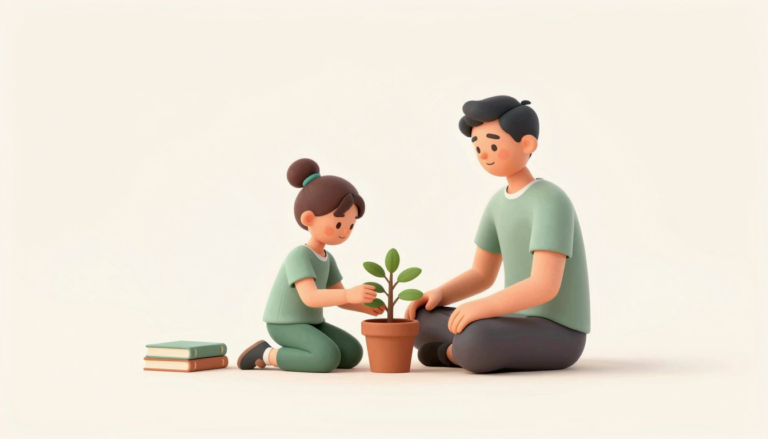
Consider, too, a child facing setbacks at school or in social situations. Timely encouragement from family might help turn a threatening experience into a valuable opportunity to work through difficulty. The benefit could extend beyond that moment, perhaps shaping how the child copes throughout life.
Personal capacities and habits may also offer protection. The research discussed by the writer links stronger resilience with a greater ability to plan and manage one’s life, an inclination to take on constructive challenges, confidence in one’s ability to withstand stress, and strong self-confidence more broadly. The writer interprets these as protective resources. The confidence described here is a person’s belief in their ability to handle stress.
Cultivating resilience
How can we cultivate resilience in our own lives? The writer begins with reducing demands that may exceed our capacity to cope. Extreme family poverty, high crime in the surrounding community, and serious illness can place overwhelming pressures on people. Where there is some choice over our environment, or a realistic way to reduce these risks, taking those opportunities may help prevent a continuing cycle of setbacks. These conditions are not always within our control; the aim is to lessen overwhelming pressures wherever possible.
Alongside those efforts, the second recommendation concerns how we interpret what happens to us. The account emphasizes that the meaning we give an experience can substantially influence whether it functions as a source of protection or vulnerability. Reflection can therefore play a useful role even when difficult circumstances remain.
Looking back on an event or situation, we can pay attention to its positive elements and give ourselves credit for our efforts and what we handled well. Such reflection can help build positive emotional experiences. Adults can also guide children in looking back constructively, helping them recognize these elements in their own experiences.
A third approach draws on what is called the steeling effect: when stress and adversity remain within manageable limits and we cope with them successfully, those experiences may make us less vulnerable to later difficulties and help resilience develop. Both the level of difficulty and successful coping matter.
The writer encourages us to face manageable difficulties with courage and trust in our ability to work through them. Doing so can help prepare us for future challenges, while the need to reduce overwhelming risks still stands.
The fourth recommendation is to create opportunities for protective turning points. Sudden bereavement or a natural disaster can cause severe trauma. Later experiences—a fulfilling romantic relationship or stable employment, for instance—may help renew hope. The writer therefore encourages us to make room for such possibilities where we can. We cannot ensure that these turning points will arrive or bring recovery, but we can try to create conditions in which they become more likely.
A compressed spring stores energy, ready to release it. When life leaves you feeling flattened, that image can offer encouragement: trust in the resilience you can draw on and continue to develop. Give that strength room to emerge, and let resilience be a companion as you grow, even when recovery remains uneven and the way forward is uncertain.
Frequently asked questions
Does resilience mean being unaffected by adversity?
No. Resilience is relative and flexible, and no one is invulnerable. Someone may function well socially or academically while continuing to experience emotional hurt.
Does hardship automatically build resilience?
Hardship alone does not ensure resilience will grow. The account emphasizes protective experiences and successful coping with challenges that remain within manageable limits, while recommending reducing overwhelming risks wherever possible.
What is the steeling effect?
The steeling effect describes how successfully coping with stress and adversity within manageable limits may reduce vulnerability to later difficulties. Both manageable difficulty and successful coping matter.
What approaches does the account suggest for cultivating resilience?
It suggests reducing overwhelming risks where possible, reflecting constructively on experiences, building on successful coping with manageable challenges, and creating opportunities for protective turning points. These approaches do not guarantee recovery or favorable outcomes.