Summary
Sandy’s story challenges the assumption that children simply outgrow trauma, tracing how reminders can provoke fear and how a sense of control can gradually return.
At a glance
Childhood trauma can leave lasting stress responses, making ordinary reminders feel threatening; children do not necessarily recover simply with time. Through Sandy’s case, the article describes gradual recovery involving renewed agency, the brain’s adaptability and supportive relationships. Stress responses depend on intensity, circumstances and a child’s capacity to cope, and the activities discussed do not guarantee recovery.
The Lifelong Influence of Childhood Trauma: Reflections on A Ladder to the Sky: A Child Psychiatrist’s Clinical Notes
“Look at those ‘problem children’ who used to be in your class. Haven’t they gone on to have families and careers?” “Oh, I remember you in middle school, insisting you were depressed and wanted to jump off a building. Aren’t you doing perfectly well now? I think you just wanted attention. Don’t you feel embarrassed when you look back?”
Terms such as “family of origin,” “childhood scars” and “childhood trauma” have become familiar across social media in recent years. Yet familiarity has not necessarily brought understanding. Other people dismiss the pain while those living with it struggle to find a way through. Is it really impossible to leave the shadow of the past behind?
Do Children Recover Naturally?
“I need your help,” a lawyer told Perry over the phone. The request concerned a four-year-old girl named Sandy. A year earlier, when she was three, Sandy had witnessed her mother’s murder. The killer had also cut Sandy’s throat, but she had been rescued and survived. Now the lawyer wanted her to prepare to appear in court and identify the murderer.
Having witnessed her mother’s murder, Sandy had already endured a devastating experience. Testifying in court could expose her to further psychological harm. But this was the early 1980s, when children were often assumed to be naturally resilient, able to recover simply because they were young. The damage childhood trauma could cause received far less attention.
Childhood Trauma and Resilience
The definition of childhood trauma used here refers to nonaccidental physical or psychological harm inflicted by people before a child turns 13. It includes sexual abuse, physical abuse, physical neglect, emotional abuse and emotional neglect.
Stress affects children differently. Its intensity and the circumstances in which it occurs help determine whether it builds resilience or causes harm. Sandy would repeatedly draw a crayon across a toy rabbit’s neck, murmuring, “This is for your own good, little one.” The attack she had survived was neither moderate nor predictable, and she had been far too young to cope with it. It was sudden and extreme, leaving a deep imprint whose effects endured. Her behavior made clear that she had suffered severe psychological trauma; she had not simply recovered with the passage of time.
Children can be more vulnerable to trauma than adults because the brain is particularly sensitive to experience during its early development. Beneficial and harmful experiences alike can shape it quickly and profoundly. That sensitivity helps explain why someone might say, “Childhood trauma has affected my entire life.”
The Brain and Childhood Trauma
Perry later learned from Sandy what had happened that night. The doorbell had rung before the killer entered the room, and afterward she became frightened of doorbells: the sound announced his arrival. The killer had cut her throat with a knife, and silver objects came to evoke killing, injury and terror. After regaining consciousness, she had tried to drink milk, only for it to flow out through the wound in her throat. From then on, she stopped drinking milk.
Trauma can leave stress responses deeply embedded in the brain, ready to be activated when a similar situation arises. Sandy’s reactions were attempts by her brain to protect her. Objects that seemed ordinary to others had become triggers for anxiety and panic. Drawing on what it had learned that night, her brain was trying to prevent her from being hurt again.
How do these protective responses arise? One way to picture the brain’s functions is through three metaphorical “executives,” each with a different responsibility. The physiological brain handles bodily responses such as breathing without conscious effort. The rational brain supports higher cognitive tasks, such as playing the social deduction game Werewolf or solving advanced mathematics problems. The emotional brain is associated with feelings, from joy to anger and sorrow. Within this account, the amygdala plays an important role in generating and regulating emotion. It assesses the emotional significance of incoming information and works through connections with the hypothalamus, hippocampus and forebrain to help guide a response.
Think of an argument in which your emotions rise and your thoughts become muddled. Have you ever struggled to make a coherent point, only to think afterward, “That’s what I should have said”? In the model just described, stress activates the amygdala, allowing the emotional response to arrive before more deliberate reasoning.
Something similar can happen when a traumatic situation, or a reminder of it, returns. Continuing the metaphor of competing emotional and rational executives, negative experiences can gradually give emotional reactions the upper hand. The activated amygdala helps organize fear, anxiety and other responses that prompt avoidance of danger. The resulting behavior may look unusual to other people while serving a protective purpose for the person experiencing it. Ordinarily, drinking milk would be an unremarkable act. For Sandy, however, it was bound to the experience of having her throat cut. Avoiding milk was her brain’s way of trying to keep that experience from happening again.
Childhood and adolescence are critical periods of neural development. Childhood trauma can adversely affect neural structures and the brain functions involved in maintaining metabolic balance and regulating behavior. Its psychological effects can include greater cognitive vulnerability, heightened perceptions of stress, a diminished sense of social support and reduced emotional well-being. These effects may eventually contribute to psychosomatic illness.
Finding a Way Through Childhood Trauma
What happened to Sandy afterward? Did she find a way through what she had experienced? Over the following months, she repeatedly ordered Perry to adopt a posture resembling someone whose legs were bound, with his knees bent and his hands behind his back. Her mother’s feet had been bound when she died. Sandy would then walk around the room, looking through things and repeating, “This is for your own good, little one.” These interactions suggested a need to keep everything under her complete control.
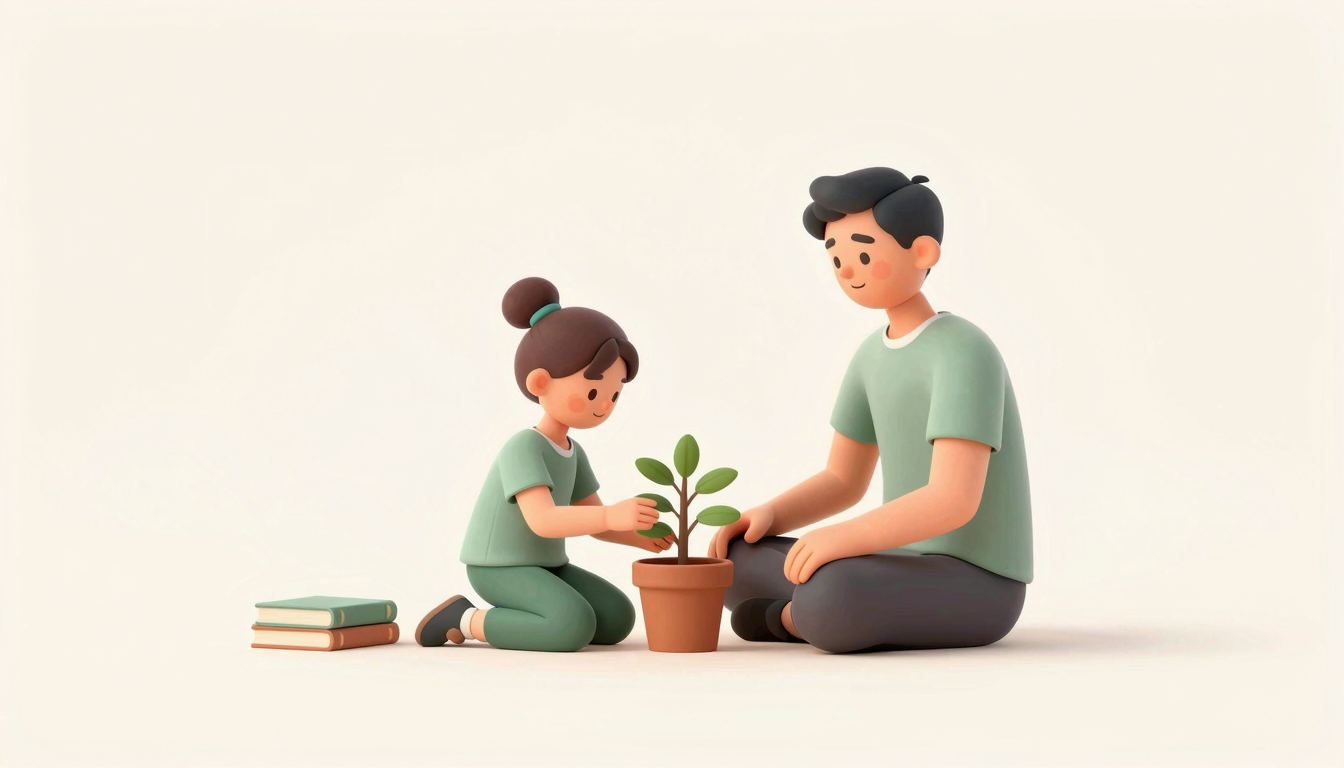
A profound sense of helplessness and a complete loss of control are prominent features of traumatic experience. Regaining a sense of control can therefore be an important part of coping with traumatic stress. This can begin with small everyday activities: tidying a room, tending plants, caring for a cat or dog, or spending time on an interest. Such activities offer ways to gradually reclaim agency in daily life.
For Sandy, directing Perry became a way to recover that sense of control. After ten-odd repetitions of these interactions, she began to change her instructions. In time, she had him get up and sit in a rocking chair to tell her stories. She was gradually feeling less overwhelmed by a world beyond her control.
The brain’s remarkable adaptability and plasticity offer grounds for hope to people who have experienced profound adversity. As they work through what happened, they can begin to distinguish the pain of the past from who they are in the present. That growing self-understanding can help them draw on their capacity for resilience, gradually loosening the past’s hold and recovering both enjoyment of life and a sense of control over it.
Sandy had endured terrible misfortune: she had witnessed her mother’s murder and suffered a devastating attack herself. Yet she was also fortunate to gradually emerge from the shadow of those experiences. She went on to live a satisfying life and continued moving toward a better future.
Most children will never experience violence as extreme as Sandy’s. Even so, their lives can contain serious challenges: bitter conflict between parents, emotional distance between parent and child, or persistent antagonism between teachers and pupils.
Help from other people is essential in facing these pressures. The adults children deeply trust and depend on have a particularly important role. Through love, support and encouragement, they can become a dependable source of protection and comfort when life feels threatening.
Sunlight sustains growth, yet intense heat can leave things parched and burned. Rain nourishes life, yet too much can flood and destroy a home. Relationships have a similar capacity to sustain or injure us: their interwoven threads can create a beautiful fabric, but that fabric can also tear. Within these complicated emotional connections, however, there remains the possibility of healing and renewal. Meeting one another with understanding, tolerance and love can help soothe old wounds, restore vitality to relationships and make room for healing and reconciliation.
As Perry puts it, “Relationships are the catalysts for change, and the most effective treatment is human love.”
Frequently asked questions
Do children naturally recover from trauma as time passes?
Recovery is not automatic. Sandy’s case shows severe psychological trauma continuing after the immediate danger had passed, followed by gradual improvement. The article emphasizes that stress affects children differently depending on its intensity, circumstances, predictability and their capacity to cope.
Why can ordinary objects become trauma triggers?
The article describes how ordinary objects can become associated with a traumatic event and later prompt anxiety, panic or avoidance. Sandy’s fear of doorbells and refusal to drink milk are presented as learned protective responses linked to what happened during and after the attack.
What role can everyday activities play in recovery?
Activities such as tidying a room, tending plants, caring for a pet or pursuing an interest can offer ways to gradually reclaim agency. The article presents these as possible starting points for regaining control, without establishing that they guarantee recovery.