Summary
Receiving a family’s protection and becoming responsible for sustaining it are different experiences. That distinction may help explain conflicting views on marriage.
At a glance
Parents may hope marriage will bring their children continued companionship and care, while those considering it may focus on the responsibility and uncertainty of sustaining a new family. Family resilience can strengthen coping, but it requires cooperation and continuing effort, and family itself can introduce risks. There is no universally correct choice about marriage or parenthood; supportive connections can matter whether someone remains single or forms a family.
As we try to make conversations about dating, marriage and parenthood feel lighter, are we overlooking something that matters?
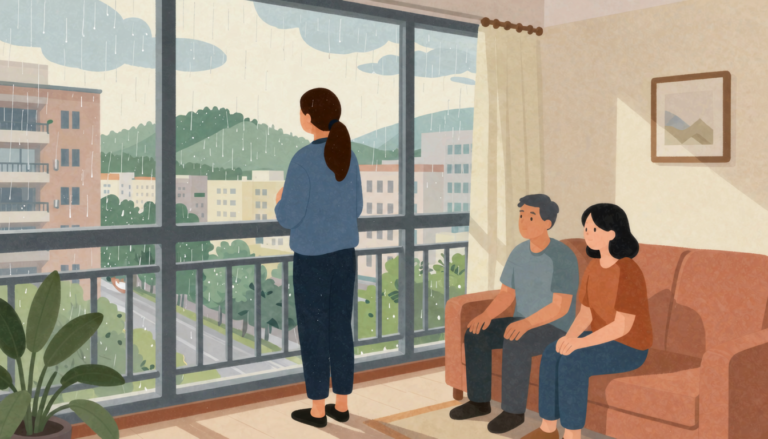
The tension between people who urge others to marry and people who choose to remain unmarried may reflect two different perspectives. One focuses on the love and protection a family can offer. The other recognizes what it takes to build a family capable of offering them.
“I love you, and I want more people to love you”
From a parent’s perspective, a concern such as “Who will take care of you if you get sick?” expresses a particular understanding of family—or perhaps a heartfelt wish for what family will provide: companionship and care.
Family resilience theory offers a way to understand that hope. Developed by McCubbin, Patterson and others, it describes how families mobilize resources when facing stress, adversity or crisis, showing a capacity to adapt and recover. The related Double ABCX Model is credited to McCubbin and Patterson in 1983.
As this theoretical framework has gained recognition, it has also continued to develop. Researchers have emphasized the family’s role as a system: it involves individuals, but it is also influenced by larger systems, including communities and society. One reason marriage and family attract so much attention, then, is that they have social dimensions as well as private ones.
The difficulties and crises involved can vary in nature and severity. The theory’s early research focused on American military families coping with the crisis of war. Later research examined families facing depression, poverty and the pandemic.
Facing such crises as an individual can leave us feeling isolated, with no one to turn to. Support from family members can give us another source of strength. An online joke during the pandemic captured the practical side of this support: somehow, COVID always left each household with one person who could still cook.
Family security also takes quieter, more familiar forms. We settle into our own little space. We call for Mom when we cannot find something. We look forward to seeing family over the holidays. After being hurt or treated unfairly, we think of a meal at home. Even after arguments and misunderstandings, the memories that stay with us can be the happy times we shared.
Set other considerations aside for a moment, and this is a substantial part of what family can offer: a tangible, steady sense of security.
That is what parents and older relatives hope we will find in a new family. Perhaps the love and protection we receive there can eventually take the place of what they have given us.
“I enjoy being loved, but unfamiliar love worries me”
There is another side to that hope. Family structure and the ways family members interact are important to developing and maintaining resilience. Simply establishing a marriage or a parent-child relationship does not create a family that can cope well with adversity. That also takes optimistic beliefs, flexible organization, open emotional expression and the ability to work together.
This is where the perspective of those being urged to marry becomes especially relevant. Appreciating the love we already receive does not mean feeling confident about the love—and responsibilities—of an unfamiliar future family.
While we are under our parents’ protection, we benefit from family resilience without necessarily being the people who organize and sustain it. If we establish a new family centered on ourselves, our role changes. We become responsible for helping the family sustain its ability to cope with adversity.
That requires more energy than managing and adapting to our own lives. The uncertainty of this unfamiliar responsibility can leave us frightened, unsure what to do and more inclined to avoid taking it on.
At the same time, we may already believe we can handle life’s pressures and adapt to crises. We have resilience of our own. A family can amplify it to some extent, but doing so requires additional adjustment and continuing effort to maintain relationships.
Much of what we encounter also reminds us that a family is not an entirely stable structure. The concern is therefore understandable: even as a family helps us manage risks, it may become a source of risk itself.
This combination of responsibility and uncertainty can make us more cautious about marriage and parenthood. Meanwhile, as we become accustomed to dealing with difficulties or crises independently, our own resilience can grow. Each experience can provide more positive feedback, reinforcing the feeling that “I am strong enough.” Gradually, establishing a family may begin to feel less necessary.
A choice without a universal answer
Whether to marry or establish a new family is a question with no universally correct answer. In the past, more people chose “yes”; now, more people want to try “no.” We cannot judge the rightness of someone else’s choice, make the decision for them or predict its ultimate outcome.
What we can hope for is that people continue to build connections and express their feelings. When a crisis arrives, sometimes another person’s companionship or support can help us recover some courage and strength.
And whether we ultimately remain single or form a family, we can still offer a stranger kind support when it is needed.
Family life may not suit everyone. Being loved and cared for can still be a powerful source of strength when we face a crisis.
Frequently asked questions
Does marriage automatically create a resilient family?
Simply establishing a marriage or a parent-child relationship does not create a family that can cope well with adversity. Family resilience also takes optimistic beliefs, flexible organization, open emotional expression and cooperation.
Why might parents encourage their children to marry?
Parents may hope a new family will provide companionship, care and protection as their children grow older. The article presents this as a hope, rather than a guarantee of what marriage will provide.
Can personal resilience make forming a family feel less necessary?
Independent coping can strengthen a person’s confidence and gradually make establishing a family feel less necessary. This does not mean supportive relationships lose their value: companionship and care can still provide strength during a crisis.