Summary
A broken pair of earphones or a tin of spent pen refills may carry a private history. Repeated moves make that history harder to house—and sometimes harder to discard.
At a glance
Old belongings can carry memories and a sense of personal continuity, making their loss feel greater than their practical value suggests. The writer interprets some decluttering regret as resistance to constant change, while acknowledging that keeping things can also involve avoidance, moving burdens, and space costs. The suggested compromise is to keep a few personally significant objects with care and let the rest go.
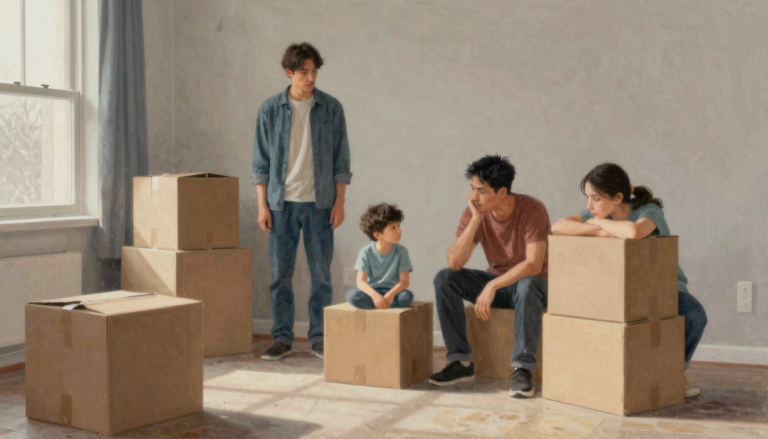
A cardboard box follows you from a rented apartment back to the family home, then into the next rented place. You haven’t opened it in three years, yet every time you move, you carefully carry it to the car.
Decluttering can leave you with an unexpected feeling: the more you throw away, the harder it becomes to part with what remains. Some young people even label old belongings with the dates they put them away. Perhaps what they are keeping goes beyond the objects themselves.
In a reflection on this attachment, a writer describes an online post asking whether people owned anything completely useless that they still couldn’t throw away. The post reportedly drew thousands of replies in a single day.
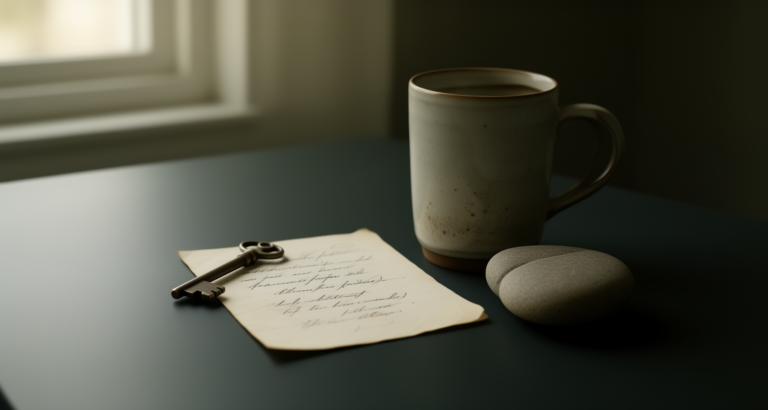
The first highly liked reply came from someone who had kept their elementary school composition notebooks, numbered them by semester, and made a table of contents. Another commenter had saved a pair of wired earphones: the left side still worked, but the right did not. On the box, they had written, “Bought June 2019.” A third had kept every used-up pen refill since middle school, storing them in a cookie tin to this day.
The writer describes many similar collections appearing under storage and organizing topics on social media: old textbooks and earphones, childhood toys, movie ticket stubs long past their dates, washed bags from milk tea shops, and pen refills drained of ink. Their owners carefully sort, number, and label these belongings. Some record the date each item was put away.
Those dates suggest something more deliberate than a reluctance to throw things away. As the writer observes, if parting with an object were the only difficulty, a drawer would do; there would be no need to record a month and year. Adding a date is more like giving a memory a place in an archive, so it can be found again later.
Someone quoted in the account calls old belongings “physical evidence of fragments of a life.” Imagine coming across a pair of broken earphones and remembering a road you walked along one June while listening to music, the trees beside it, and how you felt then. Those details might have blurred together over time. The earphones could work like a bookmark: touch them, and a half-forgotten page opens again.
Seen this way, keeping an object can also mean keeping hold of an experience and the person you were within it. What survives in the drawer is a tangible connection to your own life.
Attachment alone, however, does not explain every difficulty with throwing things away. The writer distinguishes choosing to keep belongings from hoarding disorder, noting that the disorder was formally included in the American diagnostic manual for mental disorders in 2013. The account’s medical overview describes persistent difficulty discarding possessions regardless of their value, extreme distress at the thought of throwing them away, and accumulation that prevents living spaces from being used normally. It also describes resulting distress or disruption to daily life, social relationships, or work.
A home may become so crowded that there is barely room to stand, while its occupant still feels unable to stop bringing more things inside. Financial comfort does not rule this out: someone with ample money can also end up living in a home that resembles a warehouse.
The writer argues that the vast majority of people keeping old textbooks or earphones fall outside this picture. The distinction drawn here concerns the order of their belongings and how they feel about them, rather than simply how much they own. A deliberately maintained collection is sorted; its owner knows where things are, wants to revisit them, and feels satisfied afterward. In the contrasting picture of hoarding disorder, possessions become mixed together, thoughts of them bring embarrassment or shame, and the brief pleasure of acquiring something gives way to anxiety.
Parting with an object can also feel very different. Someone may feel a momentary pang over an old possession and still let it go. For a person with hoarding disorder, discarding an ordinary item may feel like a painful farewell and can even bring intense physical discomfort.
The writer offers a rough way to understand the boundary: are you choosing what to keep, or does fear leave you feeling unable to throw things away? Conflating a personal choice with an illness misreads the choice and minimizes the suffering involved in the illness.
Why, then, do the young people in these accounts take such care over things that seem fit for the trash? The writer draws a contrast with households roughly twenty years earlier, where plastic bags, glass jars, and grain ration coupons were often saved “just in case.” In this generational interpretation, the habit grew out of experiences of scarcity: keeping one more thing meant being a little better prepared, and feeling a little safer.
The young people described here already know that many of their belongings will never be useful again. The broken earphones cannot be repaired. The pen refills cannot write. The composition notebooks will never be opened again. What matters is that these things are still there.
An unnamed counselor cited in the account explains this through the idea of an “emotional anchor”: amid movement and change, a person needs a fixed point to hold on to, something that helps them feel they are still themselves.
The writer sees this generation as more frequently on the move than those before it: moving to another city for school, then elsewhere for work, signing leases a year at a time, perhaps moving home every three to five years. With each move, fewer belongings remain that have accompanied them all along. The furniture may belong to the landlord, the decorations to the previous tenant; even the roommates come and go. Against that changing backdrop, the few old things in a box can become personal evidence: I lived here. This was part of my life.
The account also presents an unnamed counselor’s three-part explanation of why young people keep these belongings. The first reason concerns identity. In this explanation, the brain is described as generally reaching maturity around age 25, while the years from adolescence through the twenties involve an ongoing search for a sense of self. Where you studied, what you do for work, and how much you earn may offer labels without answering the question of who you are. A collection of things that belong uniquely to you can provide a private mental space, a way to recognize yourself beyond those labels.
The second reason is a chance to regain some control. Your job, your rent, the state of your industry, and your family’s pressure to get married may all feel beyond your control. A collection leaves certain decisions entirely to you: what goes into it, how things are arranged, and how they are numbered. In the counselor’s explanation, having that small area of control can provide an emotional buffer.
The third is to give memories somewhere to rest. Feelings that are difficult to put into words, and moments that cannot be held in place, can find a home in something you can touch. The object holds what would otherwise be hard to keep.
The writer draws a generational distinction from these ideas: older relatives saving plastic bags are seeking security against future need; the young people keeping old belongings are seeking somewhere for their feelings and memories to settle.
Yet the belongings themselves may have nowhere settled to stay. The writer contrasts their precarious existence with the storage available to an older generation: a family might live in the same home for twenty years, with an attic, a storage room, or a courtyard at the family home. Things could sit undisturbed, gradually becoming family heirlooms simply because they had somewhere to remain.
For the young people described here, belongings travel with graduation, a job in another city, or the end of a lease. A cardboard box may accumulate labels from several moving companies. Each move forces another inventory: what comes along, what gets thrown away, and what gets sent back to the family home.
There is something cruel about standing over a box late at night, knowing that whatever will not fit may be something you are seeing for the last time. But the writer also sees a possible clarity in these repeated decisions. Choosing again and again can help a person distinguish what feels bound up with who they are from what is simply something they own. The few objects that remain have survived that sorting. They need not be the most expensive or the most beautiful. Their weight comes from all the times their owner hesitated, then chose to take them along.
By that measure, keeping a worthless pair of broken earphones while selling a designer bag can make sense. Someone might carry an old notebook wherever they go while readily giving away beautiful clothes. To an onlooker, the choices may seem inconsistent. The owner can still have a clear sense of what matters, even when the scale they use is difficult for anyone else to see.
That does not make every decision to keep something an act of courage in facing oneself. The writer pulls back from that romantic interpretation with less comforting examples. Someone may hold on to an old phone because it contains chat histories they worry they might need someday. Another person may keep gifts from an ex because throwing them away would feel like admitting the relationship is truly over. Delivery boxes may fill a room, left untouched on the grounds that they will come in handy for the next move. Behind that explanation may be a reluctance to begin the work of opening or dismantling them, sorting them, and deciding which to discard.
Tenderness, procrastination, and a fear of facing something can all be present in the same decision. Acknowledging those mixed motives is more honest than giving every attachment the flattering name of nostalgia.
There are practical burdens, too, especially when it is time to move. Imagine someone else leaving with one suitcase while you have three cardboard boxes, two of them filled with memories. Making room for those boxes may mean leaving behind something you would rather have taken. And in a rented home, space is something you pay for. If old belongings occupy a square meter, part of the rent goes toward keeping that square meter available to them.
Those burdens help explain why another group of young people takes the opposite approach, decluttering until only the essentials remain. Some describe the exhilaration afterward as feeling eleven pounds lighter. Others enjoy the initial relief, then begin to regret what they discarded, knowing that certain belongings cannot be recovered.
The writer sees keeping and minimalism as different answers to the same question: what gives me a sense of who I am? Some find that reassurance in objects; others find it in the life they are living now. Neither answer is inherently more valid than the other.
Still, what happens after the clearing out deserves attention. The writer describes a quiet shift online over the past two years. After years of enthusiasm for decluttering and countless articles urging people to clear everything out, young people seem to be finding it harder to part with things the more they discard. Beneath posts announcing “I threw away 300 things,” a comment that often attracts the most likes asks: “Did you ever think about those things afterward?” Some people say they have. Others express regret. One says that, given another chance, they would never have thrown away their high school notebook.
The writer reads this hesitation as a reaction against the pressure to move quickly. Change jobs quickly, move cities quickly, end an unsuitable relationship decisively, clear out a roomful of old belongings without delay. Shedding those burdens may bring relief, but it can also leave someone feeling unmoored, unsure where they have come from or where they are going.
Old belongings, in this reading, can slow that momentum a little. They do not solve practical problems. They can, however, remind you that you have a long history: the person you are now took shape through years of accumulated experience. You did not simply appear in the present moment.
The writer also sees a middle course gaining favor: choose a few belongings that carry real personal weight, keep them with care, and let the rest go. Rather than pursuing an utterly empty home or allowing possessions to accumulate unchecked, this approach makes room for the need to travel light while acknowledging that a little emotional weight can help keep a person grounded. It is a compromise the writer regards as mature.
But personal weight is not always easy to explain. Consider that cookie tin of used-up pen refills, kept since middle school. They are neither attractive nor valuable. They take up space and have no practical use left. Returning to the example, the writer imagines that even their owner might struggle to explain why they have stayed, perhaps accompanying them through several moves.
The reason might lie somewhere in more than a decade of that person’s life: evenings spent studying at school, the frustration of being unable to solve a problem, difficulties that once seemed impossible to get through. In that imagined history, those experiences become the ink in the refills. The ink is used up, the pens are empty, but the tin remains.
A person can lose a home, a job, a relationship, or people who once mattered deeply. Through such losses, a few old belongings with no obvious purpose may still remain. Calling them wealth does not quite fit; calling them souvenirs may not fully explain their place in a life, either. They can feel more like evidence that you really did travel a certain stretch of the road, and that the journey was not for nothing.
The next time you move and lift that cardboard box, give yourself a moment before deciding to throw it away. Open it first. There may be more inside than a few old things.