Summary
A worn sewing box holds silk threads, battered tools and a handkerchief that first appears blank. Together, they change a grandchild’s understanding of the care that surrounded them.
At a glance
Opening the sewing box changes how the grandchild understands their grandmother’s love. Silk threads recall everyday care, worn tools evoke its personal cost, and a seemingly blank handkerchief reveals repeated embroidered blessings for peace and safety. The discovery inspires the grandchild to offer similarly quiet, enduring care to the people they love.
Opening Grandmother’s Sewing Box
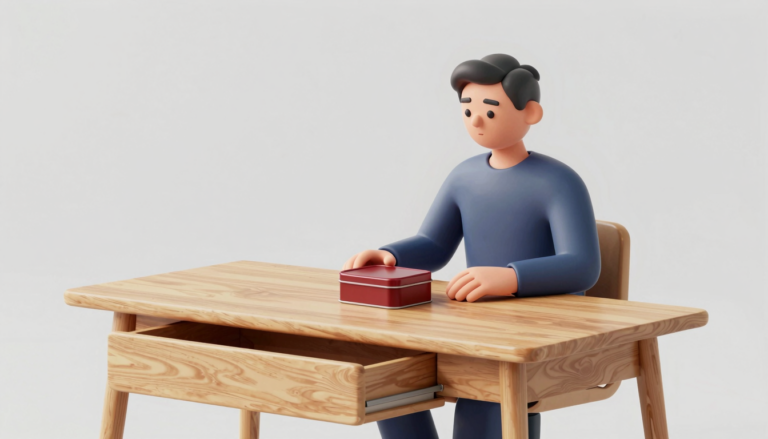
For years, the grandchild had wondered about their maternal grandmother’s wooden sewing box. Its red lacquer was worn in patches, and it had lain for ten years at the bottom of her camphorwood chest. What made the ordinary needles and thread inside so precious to her? Why, as death drew near, had she clutched their hand and murmured, her words barely intelligible, “Sweetheart … open it … it’s all yours”?
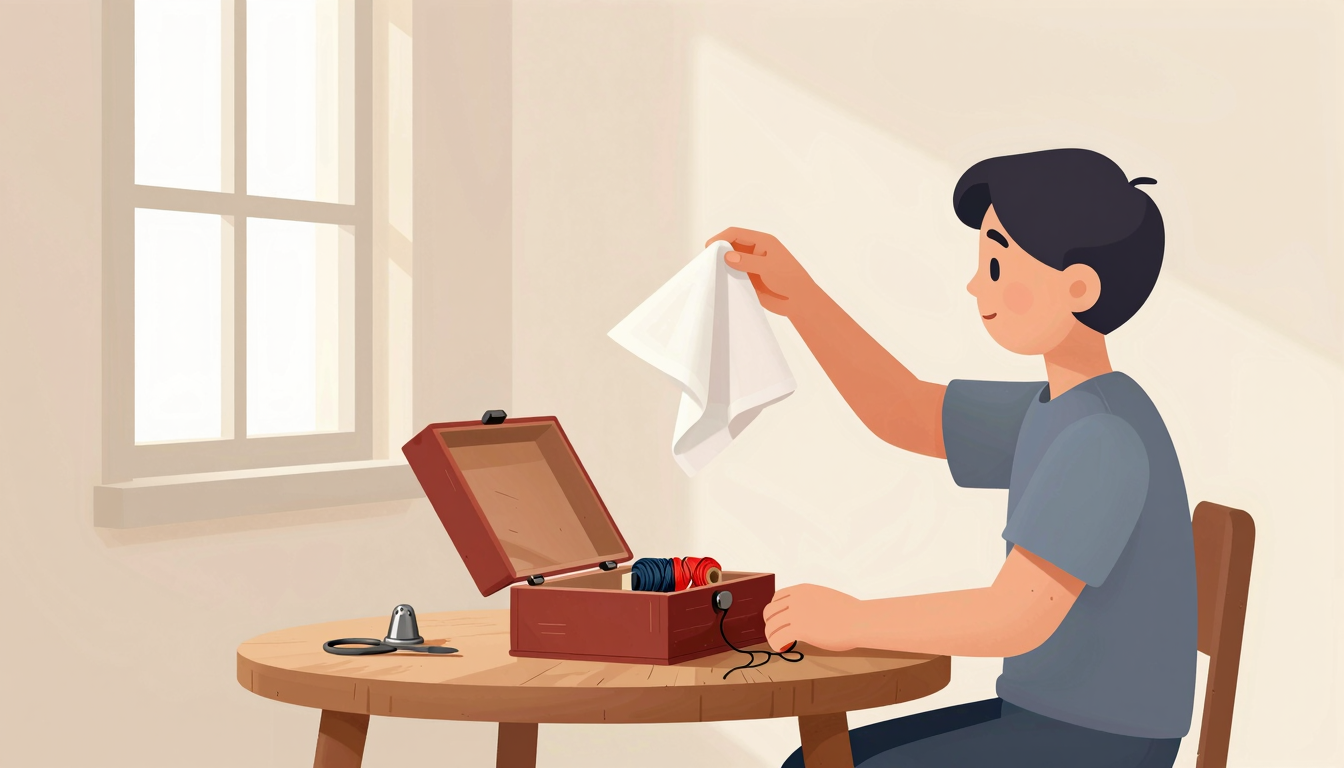
Only yesterday, the grandchild recalls, they finally lifted the rusty copper clasp while sorting through old belongings. The moment the box opened, they felt as though they were unfolding a map of love woven from silk thread and the years themselves.
In the top layer, dozens of bundles of silk thread were neatly wound around stiff cardboard. The colors ran from faded madder red to muted blue-black, like a rainbow washed pale by time. The silk still felt slightly rough under the grandchild’s fingertips. All at once, the strands seemed to turn into young rivers. The madder red brought back the glow of the Lantern Festival sunset, when their grandmother tied back their hair with a ribbon. The blue-black brought to mind a late night when she mended Grandfather’s Zhongshan jacket by the light of a kerosene lamp.
Over the years, the silk had passed between their grandmother’s rough fingertips and the soft cloth, as though it were binding the family’s lean days together and stitching warmth into each one. The ends were unknotted. Like their grandmother’s unspoken toil, the strands seemed to run without end into the fabric of everyday life.
Under the lining cloth lay a thimble and a small pair of scissors. The aluminum thimble was covered in dents, like a medal worn out in service. When the grandchild slipped it onto their index finger, the cold metal sent a chill straight through them. They pictured that little ring of metal taking ten million blows from the point of a needle. The thimble had shielded their grandmother’s hand as she sewed to ease life’s hardships for her family.
The scissors were mottled with rust, though the blades were still sharp where they met. The grandchild could almost hear the scissors snip through a loose thread, a sound that brought to mind their grandmother setting aside, time and again, her wish to travel far from home. The two tools lay silent, yet every mark of wear spoke loudly of what the grandmother had given of herself to keep others whole.
At the bottom of the box lay a plain white handkerchief, flat and smooth. Puzzled, the grandchild unfolded it. To their disappointment, it looked blank. Then sunlight skimmed a corner, and they froze. “Peace and safety,” read the two nearly transparent Chinese characters, embroidered in very pale, closely packed stitches.
The grandchild held the handkerchief up to the light and slowly turned it. Through a blur of tears, they made out the same blessing stitched across the cloth hundreds of times, perhaps thousands. The stitches added no visible color, and the repeated words formed no overall design. In the overlapping stitches, they saw a whole city crowded with prayers, hidden in the weave.
This was the grandmother’s last piece of needlework. After her sight grew blurred, she finished it by feel, working from memory. To the grandchild, each stitch was a blessing in its purest form, one their grandmother could no longer put into words.
Holding the cloth, the grandchild understood how the three layers fit together. The silk showed how love flowed through ordinary days, while the worn tools bore the marks of what it had cost their grandmother to care for her family. The seemingly wordless handkerchief embodied love in its fullest form. There was no need to see, and love asked for no answer. To the grandchild, loving this way meant spending the last of one’s strength in silent darkness to embroider a blessing as enduring as a birthmark.
The grandchild closed the box. The copper clasp clicked softly, like a sigh, like a spell that opened something. That moment redrew the map of their life for good. Suddenly there was a place on that map for their grandmother’s little reminders, which they used to complain about, and for the old things she had stubbornly kept.
Love had never been a loud declaration. Love was the quietest needlework. In the grandmother’s hands, it gathered around you, stitch by stitch, until you looked back and realized you’d long been stitched into her boundless blessing of peace and safety.
The grandchild had finally learned how to take up life’s needle. They would do more than mend holes. They would work unseen as their grandmother had, embroidering a whole spring, quiet and resilient, for the people they loved.
Frequently asked questions
What does the handkerchief reveal?
Sunlight reveals nearly transparent Chinese characters meaning “Peace and safety.” The grandchild sees the blessing repeated hundreds of times, perhaps thousands, across the cloth.
How did the grandmother finish her last piece of needlework?
After her sight grew blurred, the grandmother finished the handkerchief by feel, working from memory.