Summary
A taped pair of reading glasses, a childhood certificate and a photograph reveal care Lu Heng had not recognized. After three years hidden in a drawer, his father's tin finds a place on the desk.
At a glance
Lu Heng begins by saying his father's name, then independently opens the tin he has kept hidden for three years. Its ordinary contents bring his father's quiet acts of care into view. The account presents continuing bonds as allowing a relationship to change after death, with no need to rush disposal or force an immediate opening.
For Three Years, He Had Dared Not Open His Father's Belongings—On the Night He Opened Them, He Finally Slept for Two Hours
Lu Heng was a forty-five-year-old architect. Three years earlier, when his father died, he had been revising a design during a presentation and had not made it to the hospital. Since then, he had woken at three every morning, unable to get back to sleep.
In the previous chapter, he admitted for the first time that he had heard his father breathing at three in the morning. This third chapter follows him as he approaches what he has feared most throughout those three years: opening the belongings his father left behind.
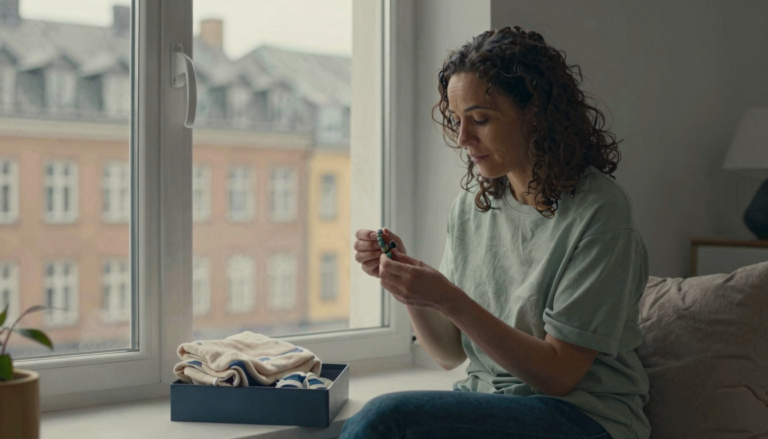
That evening, after applying vetiver, Lu Heng sat on the edge of the bed, his feet flat on the floor. The coolness slowly spread upward from his soles. As Su Wan had instructed, he said his father's name silently.
Lu Jianguo.
There was no answer in the darkness. He opened his eyes. His wife was sound asleep in the adjoining room, and a thin line of warm yellow night-light showed beneath her door. Sitting in the quiet, he felt like someone beginning to speak an unfamiliar language: the pronunciation awkward, the grammar uncertain, but speech possible at last. He tried the name again, this time aloud. It was barely more than a sound in his throat, but he heard himself say it.
He had not spoken that name for three years. The last time had been at the funeral home, when an employee asked for the name of the deceased. He had answered, “Lu Jianguo.” Then came the paperwork, the cremation, the burial of the ashes. After that, the name disappeared from his conversations. When his mother was with him, she would sometimes mention his father—“Your dad used to…” He listened without answering. Eventually, she stopped bringing him up.
Now he sat beside the bed in the middle of the night, his feet cold against the floor, the faint earthy scent of vetiver still on his palms. He said the name once more. It came a little more easily.
“Lu Jianguo.”
His throat felt tight. He swallowed, then spoke very softly, as though addressing the room, or the coolness beneath his feet.
“I was giving a presentation the day you died.”
His voice faded into the darkness. No one answered, but he went on. Su Wan had given him no words to say beyond his father's name. Once he had said it, something else had followed. He did not know where the words came from.
“The client said the design wasn't good enough. They wanted changes. I was halfway through when the phone rang. The nurse said you'd died.”
He stopped. In the quiet, he could hear water running through the pipes inside the wall. He looked up at the faint line of light between the curtains. His eyes felt sore, but he did not cry. His palms rested on his knees, his fingertips pressing into his kneecaps.
“I was going to come the next day,” he said. “I thought there was still time.”
His chest suddenly tightened, as though something inside it had turned over. Without looking down, he moved a hand from his knee and pressed it against his chest. It was the same place he touched automatically before leaving home. He had done it countless times over the past three years. Only now did he notice himself doing it.
Were you waiting for me when you died?
His lips moved, but no sound came. The question was too heavy to say aloud. Still, he knew he had asked it. He lowered his head and looked at his feet on the floor. The vetiver scent rose slowly from his soles, heavy and earthy, as though the soil itself were breathing. No answer came.
He stayed there. Five minutes passed, then ten. Outside, the streetlight went out. Near dawn, he lay back down and closed his eyes. He did not hear the breathing again. His last thought before sleep was that he had said his father's name, and his father had heard him.
The narrator pauses here with a medical reminder. Chest tightness during grief or excitement can often be a physical expression of emotion: breathing becomes shallower, and the muscles of the chest wall remain contracted, creating a feeling of pressure. That possibility is no reason to assume the cause is emotional.
The reminder urges readers to seek assessment through cardiology or emergency care if any of the following occurs:
- Chest pain lasts more than twenty minutes without relief, or keeps recurring.
- It worsens with activity and eases with rest.
- It spreads to the left arm, shoulder or jaw.
- It comes with heavy sweating, difficulty breathing, nausea or fainting.
For recurrent chest tightness, the narrator also recommends an electrocardiogram (ECG) and a physical examination for anyone over forty, or anyone with a history of smoking, high blood pressure, diabetes or a relevant family history. Physical disease needs to be ruled out before the symptoms are attributed to emotion. That order matters.
The next morning, Lu Heng woke at five-thirty. The light was just beginning to come through, and the alarm had not yet sounded. For once, he had not woken at three. The account describes this as his first uninterrupted stretch of more than two hours' sleep in three years.
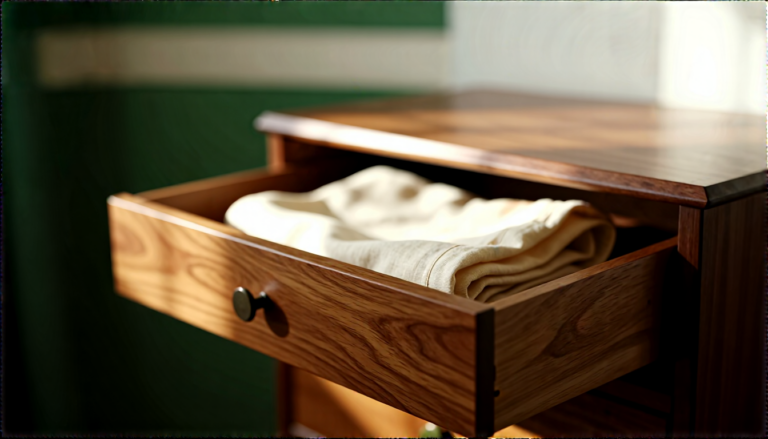
He sat in his study, still in his suit, his shirt collar unbuttoned and his tie draped over the chair back. He stared at the lower-right drawer of the desk. A stack of old drawings, a broken mouse and half a box of business cards lay over it. He moved them aside one by one, then paused with his fingers on the handle.
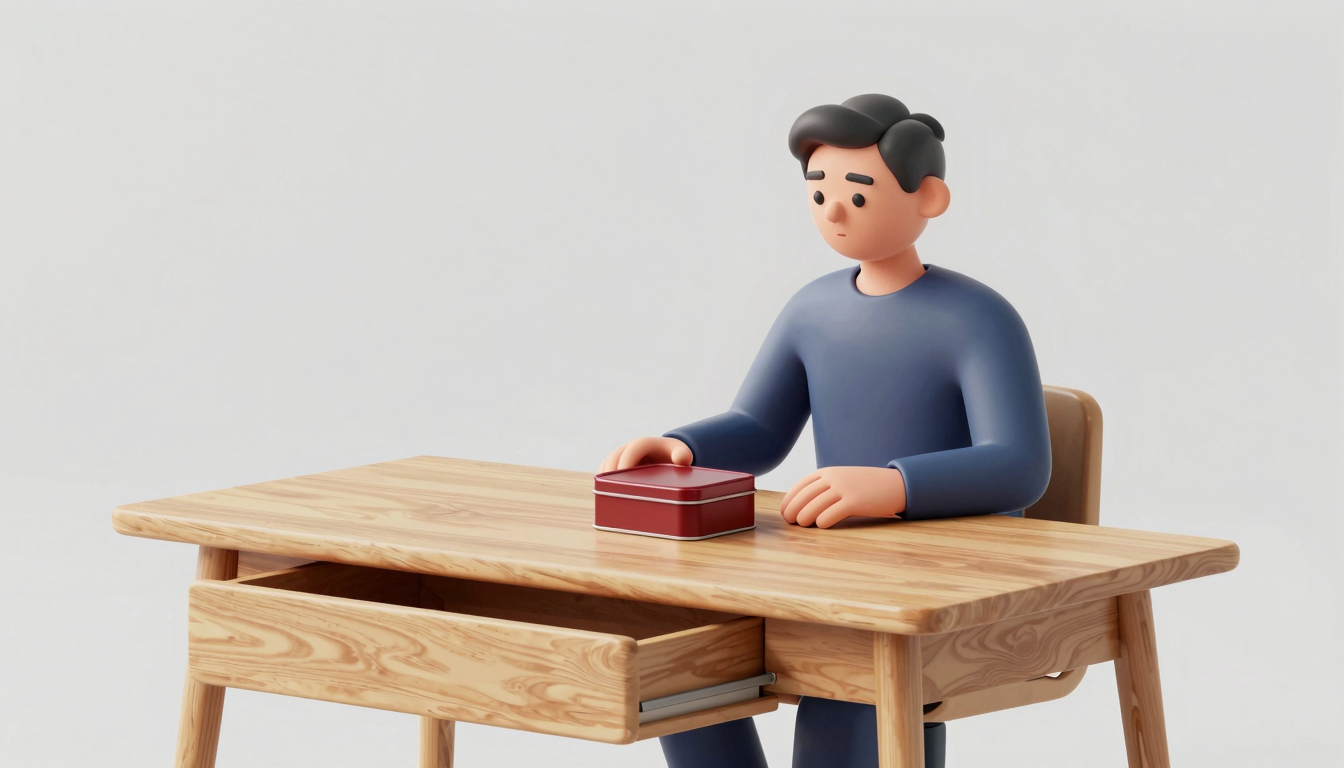
Inside was an old dark-red biscuit tin. A little rust marked its edges, and the brand printed on the lid had faded beyond recognition. When the nurse handed it to him, she had said, “These are your father's things.” He had put it in his bag, brought it home and tucked it into the drawer. It had stayed there for three years.
He lifted the tin onto the desk. Its lightness surprised him. His father had lived into his eighties. How could what remained of that long life feel so light in his hands?
He sat with both hands resting on the lid. Su Wan had only asked him to say his father's name. Opening the tin had been no part of her instructions. But sitting there now, his hands on the metal, he suddenly felt he could no longer leave it closed.
He lifted the lid.
There was no final letter, no bankbook, nothing valuable. Inside lay an old square of dark-blue cloth, its corners frayed. He lifted it to reveal a few ordinary belongings.
A pair of reading glasses had yellowed tape wrapped around one temple. The lenses were scratched but carefully cleaned. Beside them was a silver metal lighter engraved with a peony. It no longer lit, though the gas nozzle was still inside. He unfolded a neatly folded sheet of paper: his childhood “Three-Good Student” certificate, issued more than thirty years earlier. The edges had grown brittle, and the paper was close to splitting along the folds.
The last item was a photograph. His hand trembled as he picked it up. It was small, with rounded corners, taken with an old film camera. In it, he looked about seven or eight, wearing a dark-blue padded coat and standing beside his father. His father sat in a bamboo chair in a gray Zhongshan suit, his hair cropped short, his face unsmiling. One hand hung at his knee. The other rested firmly on his son's shoulder.
Lu Heng could not remember having the photograph taken. At first, he could not even remember owning that coat. Then he noticed the turned-up cuffs. The sleeves had been too long: his father had deliberately bought it one size larger, saying it would last him two years. Whenever the cuffs were turned back, the dark-red lining showed beneath the blue. He remembered that color. He remembered the sleeves. But he still could not remember the photograph being taken.
He turned it over. On the back was a line in his father's handwriting. Lu Jianguo's writing had never been beautiful, but the strokes were forceful, almost carved into the paper.
“Heng, seven years old, at the park entrance. He said he was cold that day, so I gave him my scarf.”
Lu Heng studied the words for a long time. Then he laid the photograph on the desk, leaned back in his chair and covered his face with both hands. His hands were cold. His father had been a man of few words all his life, a man whose familiar announcement was “Food's ready.” Yet after giving his son a scarf, he had recorded it on the back of a photograph. He had never mentioned the incident to anyone. Lu Heng did not remember it at all. In the narrator's reading, the father had written it down so that he would remember.
Lu Heng lowered his hands. He had not cried. He sat with both hands on the desk, the photograph, old lighter, taped reading glasses and brittle certificate spread before him. Sunlight came through the window and fell across the dark-red lid, revealing its rust and faded lettering.
He picked up his phone and sent Su Wan a message: “I opened it.”
He waited a long time. No reply came. He set the phone down and looked at the photograph again. Where his younger self's cuff was turned back, the dark-red lining showed. He lifted the picture closer. There was a button on that lining, sewn on with black thread passed through three times. He recognized his father's work. Lu Jianguo had always sewn awkwardly, but he always made those three passes. Three were strongest, he used to say.
Lu Heng put everything back in the tin, one item at a time: the reading glasses, the lighter, the certificate, the photograph. He covered them with the dark-blue cloth and closed the lid. This time, he left the tin in the center of the desk instead of returning it to the drawer. Sunlight gave the old dark-red metal a faint sheen.
He went to the kitchen for a glass of water. When he returned, his wife was standing in the study doorway with a cup of freshly brewed coffee.
“What's that?” she asked.
“My dad's things.”
She looked at the tin, then at him. Without asking anything more, she set the coffee on the desk and turned to leave.
“Wait,” he said.
She turned back.
“I'll make dinner tonight.”
She paused, then smiled, a small smile she made no attempt to hide. “Can you cook?”
“No.” Lu Heng picked up the coffee and took a sip. There was no milk in it. “But I can learn.”
The narrator reads those three years with the tin unopened as avoidance rather than heartlessness. The accompanying commentary describes two common forms of unfinished mourning. Memories intrude without invitation: a moment, a sound or a smell brings someone back before there is time to turn away. It places Lu Heng's reported experience of hearing his father's breathing within that pattern. Another form is the inability to approach reminders at all. Photographs are put away, a room stays closed, a conversation changes direction whenever the person's name comes up. For Lu Heng, there was the drawer beneath the old drawings.
Approaching a reminder can feel like having to endure the sharpest moment of loss again. Busyness offers cover, and that cover can remain in place for years. Yet withdrawing soon after a death can also be protective. The narrator's concern is not that Lu Heng has mourned too slowly, but that for three years he has been unable to begin approaching what hurts.
That leaves the question of what to do with the belongings. Keep them, or throw them away? The familiar advice is easy to hear: get rid of them; having them around is no good; look ahead and stop holding on. The narrator connects that advice to an earlier view within psychology that understood healthy mourning as separating from the deceased and transferring emotional investment to new people.
The commentary contrasts that view with “continuing bonds.” Love need not be cut off because someone has died. The relationship can take a different place: the person is no longer beside you, but has a place within you. In this understanding, mourning allows the relationship to change rather than requiring it to end.
There is no need, the narrator argues, to hurry to discard the belongings or clear everything neatly away. Pressure to do so often answers other people's discomfort with grief. For Lu Heng, the difficulty lay in being unable to open the tin for three years, rather than in having kept his father's things.
His first message to Su Wan was still waiting for an answer. Around midday, she had been assessing a client who had come for a first appointment, her phone on silent. By the time she saw his message, it was two in the afternoon.
“Are you all right?” she replied.
Ten minutes later, his answer came: “Yes.”
Five minutes after that, another message arrived.
“He left me a pair of reading glasses. There's tape wrapped around one of the arms. The tape has gone yellow. There's a photograph, too. There's a line of writing on the back.”
Su Wan looked at the screen. She did not ask what the writing said. If he wanted to tell her, she trusted that he would. Several minutes passed before the phone lit up again.
“His handwriting wasn't pretty. But every stroke was clear.”
She put her phone away. She understood how long a process lay between that brief “Yes” and the words that followed. He had opened the tin for the first time in three years, but had not written “I cried” or “I miss him.” He had named no feeling. He had told her about the tape and the handwriting.
The narrator sees those details as Lu Heng's tears, his grief given another form. He had translated his feelings into the taped arm of the glasses, the yellowing adhesive, the forceful strokes on the back of the photograph. The details were themselves a language.
At closing time, Lin Banxia found Su Wan still sitting in the consulting room, Lu Heng's file open on the desk.
“Aren't you leaving?”
“In a moment.” Su Wan picked up her pen and began a new page of notes.
She recorded that, during the current consultation period, he had independently opened the tin of his father's belongings for the first time in three years. She listed the reading glasses, lighter, Three-Good Student certificate and father-son photograph, and copied the inscription recording the scarf his father had given him at the park entrance when he was seven.
He had chosen to tell her about his discovery, she wrote, using details rather than words for feelings. She understood this as his way of expressing emotion: the feelings were held in the objects, and the tin was their container. In her formulation, he did not need to name everything inside that container; he could simply hold it close.
She returned to his last message: “His handwriting wasn't pretty. But every stroke was clear.” To her, the remark suggested a recognition beginning to take shape. His father had conveyed love through actions and the things he recorded, rather than through spoken declarations. Lu Heng seemed to be beginning to receive that love.
For the next consultation, she recommended leaving room for this discovery rather than hurrying him forward. Let him return with it. Allowing the photograph to find a visible place on his desk could become an ongoing way of approaching the loss and mourning, rather than shutting it away in the drawer. For now, it remained inside the closed tin. Her notes ended with an image: mourning need not require a ritual. It could be someone sitting each day beside the place left empty.
Su Wan closed the file. Outside, the late-autumn dusk had deepened. The branches of the banyan in the courtyard traced clear lines against the gray-blue sky, like an unfinished sketch. The cat Chenxiang jumped down from the windowsill, walked to the doorway and meowed into the empty corridor.
“He'll be back,” Su Wan said.
The cat glanced back at her, then rested its paws on the threshold, as though waiting for someone.
The earthy scent accompanying Lu Heng's first attempt to say his father's name receives a separate reflection in the account. You can be walking down the street, feeling fine, when a smell suddenly brings tears to your eyes. The people beside you have no idea what has happened.
The narrator offers a simple explanation: photographs and words pass through recognition and interpretation first. Who is this? What year was it? Should I feel sad? Smell, in this telling, reaches memory and emotion more directly, without waiting for conscious permission. That is how the narrator explains the way a change in autumn's smells can bring back a relative who has died. The feeling follows a pathway; it is no performance of grief.
Deliberately choosing a fragrance, the narrator suggests, may offer a way to approach a memory with more control. You can choose to smell it when you want to remember, leave it alone when you do not, and stop at any point. That choice differs from being caught unprepared by a smell between the supermarket shelves.
This is the role the narrator gives the vetiver Lu Heng applied to the soles of his feet: a way to feel grounded as he approached the memory of his father. It is not presented as a means of inducing sleep.
If there is something you have not dared to open—a box, an old phone, a voice recording you have never listened to, a drawer—you do not have to open it today. You could begin by bringing what you have kept hidden into a place where you will see it every day. That much can be done today.
The central figure in this chapter is Lu Jianguo. He, too, returned to these pages only after a name had been spoken.