Summary
A birthday, retirement or a change in health can make old age feel closer. Research in the article explores why people place this threshold differently and how it relates to preparation for later life.
At a glance
The perceived onset of old age is the age or signs at which someone believes old age begins, shaped by age, health, culture and social experiences. Older people tend to place this threshold later, while feeling older and reporting poorer health are associated with an earlier threshold. Later thresholds generally accompany better health, without establishing causation; some researchers caution that excessively postponing the threshold could leave people insufficiently prepared for functional decline.
When Do We Become Old? The Perceived Onset of Old Age
“My body keeps giving me trouble lately. Am I getting old?” “I'm 60 now—that makes me an older person.” “I've already retired. Of course I'm old.” We seem to use different yardsticks to decide when old age begins. How do these perceptions differ across groups, and what relationship do they have with our physical and mental health?
When Does Old Age Begin?
The answer depends on whom you ask. Young or old, people have their own ideas about the age or signs that mark the beginning of old age. Researchers call this the perceived onset of old age. Where we place that threshold is shaped by our physical and mental health, our age, our cultural background, and other factors.
Older People Tend to Place the Threshold Later
In a German population, Wettstein and colleagues (2025) found that each additional five years of chronological age corresponded to an approximately one-year increase in the age people considered the beginning of old age. A nationally representative 2009 Pew Research Center survey of more than 2,900 US adults revealed a similar pattern. Respondents aged 18–29 placed the threshold at 60, middle-aged respondents placed it at 70, and those aged 65 or older placed it at 74.
This pattern, known as age-group dissociation, serves a self-protective purpose. Old age often carries negative associations. As people grow older, psychologically distancing themselves from older people helps them avoid identifying with a stigmatized group.
Feeling Younger and Healthier Is Linked to a Later Threshold
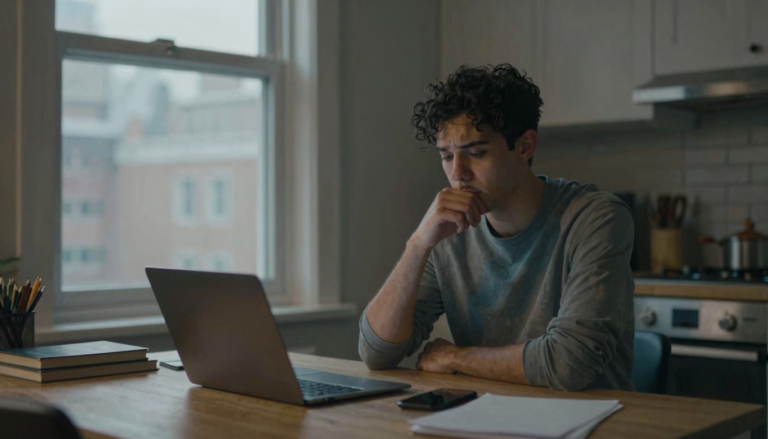
Subjective age means how old someone feels. A 25-year longitudinal study in Germany found that people who felt older, had more chronic illnesses, and rated their health more poorly also reported an earlier beginning to old age (Wettstein et al., 2024).
Even people of the same chronological age can feel very different. One 65-year-old may be full of energy and feel much as they did at 40. Another may feel nearly 70, notice a marked decline in memory, and already consider themselves very old. Declining health can make aging feel immediate: energy is no longer what it was, or keeping pace with one's children on a walk becomes difficult. Such moments can bring a sharp awareness of growing older.
Other Factors That Shape the Threshold
Social experiences matter too. Previous research has found that people who experience more age discrimination place the beginning of old age earlier. Aging is partly socially constructed: the stereotypes about older people that surround us may gradually become part of how we see ourselves.
Historical context also changes the picture. People born in later cohorts tend to place the beginning of old age later. As rising life expectancy lengthens the life course, reaching a particular age takes on a different meaning from the one it had in the past.
Gender is another factor. Women tend to place the onset of old age later than men. Women's longer lives and younger subjective ages help explain this difference. Another possible explanation involves the especially negative portrayals of older women: these may encourage women to distance themselves from that age group and place the threshold further ahead.
What Makes Us Feel We Are Getting Old?
The perceived onset of old age need not be a birthday. It can also be a life event or turning point, such as retirement, declining memory, or losing the ability to care for oneself independently. Through an analysis of texts on Weibo, Chang Yuanqing and colleagues (2025) identified 12 thematic categories reflecting the different signs users associated with growing old.
The most common signs concerned physical functioning and appearance: gray hair at the temples, wrinkles around the eyes, feeling completely drained after a business trip, or starting to brew tea for its perceived health benefits. Such changes can all seem to signal that we are no longer so young.
Changes in social roles and life tasks provide another set of reminders. People around us begin to die, and we move from being students to workers and eventually retirees. Even the way children address us can change. In Chinese, a child who once used a familiar term meaning “older sister” or “older brother” may begin calling us “auntie” or “uncle.” These external changes can make middle age or old age feel closer.
Other possible signs are more psychological or behavioral: nostalgia for things from the past, a loss of passion or ambition, difficulty keeping up with new technology, or a growing enjoyment of solitude. People may interpret any of these as evidence that they are getting older.
Why Does the Perceived Threshold Matter?
Our sense of when old age begins influences whether and how we prepare for later life. Previous research has generally linked a later perceived onset with better physical and mental health. In a follow-up study, Kuper and Marmot (2003) found that participants who believed middle age ended at 70, compared with those who placed its end at 60, had lower risks during follow-up of coronary heart disease, fatal coronary heart disease, nonfatal myocardial infarction, and poor physical functioning.
Yet placing the threshold ever further away may have a cost. Some researchers caution that postponing the perceived onset of old age excessively could leave people insufficiently prepared when functional decline actually arrives, with potentially negative consequences.
Frequently asked questions
What is subjective age?
Subjective age means how old someone feels. People of the same chronological age can differ greatly in their subjective age.
What age did US survey respondents consider the start of old age?
In a nationally representative 2009 Pew Research Center survey of more than 2,900 US adults, respondents aged 18–29 placed the threshold at 60, middle-aged respondents at 70, and respondents aged 65 or older at 74.
Can an event make someone feel that old age has begun?
The perceived onset of old age can involve a life event or turning point, such as retirement, declining memory or losing the ability to care for oneself independently. These are perceived signs rather than diagnostic criteria.
Does placing the start of old age later cause better health?
The reported findings show associations and differences in follow-up risk, rather than proving causation. Some researchers also caution that excessively postponing the perceived onset could leave people insufficiently prepared when functional decline arrives.