Summary
Stress may make people feel older and is studied in relation to cellular markers. Coping can support daily life without promising control over aging.
At a glance
Stress can contribute to feeling worn down, but subjective age and cellular aging are different measures. Address manageable demands and seek help for persistent symptoms; mindset or wellness methods do not guarantee prevention of aging.
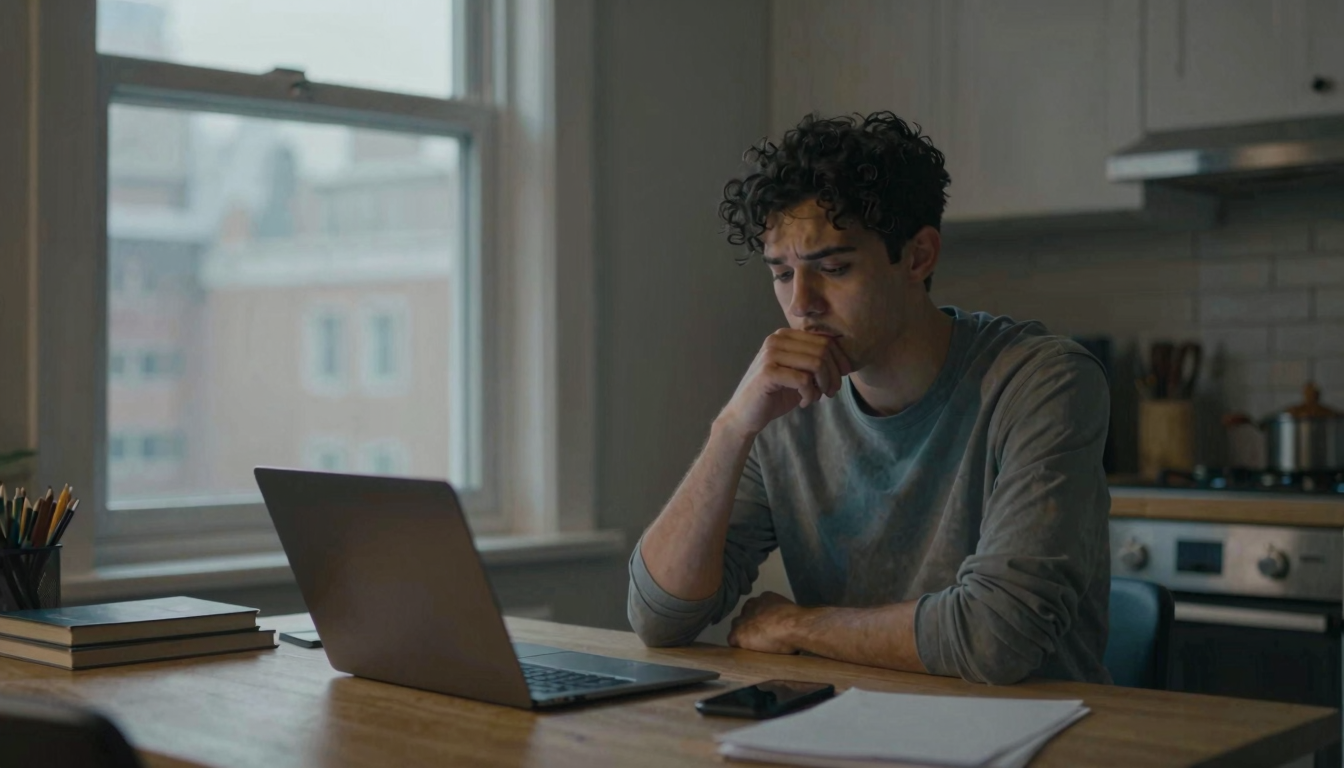
You arrive somewhere and realize you have forgotten the card you need. A late night leaves you barely awake in class. During exams, information seems to stop making its way into your head. It is easy to describe the combination as feeling old before your time.
The feeling deserves attention, but it is not a diagnosis of premature aging. Forgetfulness, fatigue and poor concentration can have many explanations. They cannot tell you how quickly your cells are aging or what your health will be years from now.
Stress can still be part of the picture. The useful distinction is between how old you feel, what researchers measure biologically and what practical changes might help you now.
Feeling older is an experience, not a biological test
Subjective age refers to how old someone feels or perceives themselves to be. A difficult day may make the body feel heavy and ordinary tasks seem more demanding. Looking tired in the mirror can reinforce that impression.
Research on subjective weathering examines connections between stressful experiences and a sense of aging. The term describes a social and psychological question; it does not establish that the number of years a person feels has been added to their biological age.
Perceived control is another useful idea. A demand may feel different when you can identify a response than when it appears both important and impossible to influence. That does not mean people can choose away every stressful circumstance. Workload, illness, money and caregiving can impose real constraints.
A sense of agency can help organize a response within those constraints. It should not become a demand that someone feel in control of events they cannot control, or a reason to blame them for being worn down.
What the telomere research actually asks
Telomeres are structures at chromosome ends involved in maintaining cellular integrity. Researchers study their length and related processes as part of a much broader account of cellular aging. A measure in particular cells is not a complete clock for a whole person.
In Epel and colleagues’ 2004 study, researchers examined 58 healthy premenopausal mothers, including 39 caring for a chronically ill child and 19 with a healthy child. They considered perceived stress over the previous month, caregiving duration and biological measures including telomere length, telomerase activity and oxidative stress.
The study reported associations between stress measures and indicators relevant to cellular aging. Its design did not establish that a person’s attitude alone determines aging, nor that reframing a demand as a challenge prevents telomere shortening. Association helps identify a research question; it does not provide an individual forecast or prove a treatment.
This distinction matters emotionally as well as scientifically. If you are already under strain, the thought that every worried day is rapidly aging you may add another burden. The findings are a reason to take sustained stress seriously, not to monitor your thoughts as though they directly set your lifespan.
Strengthen control by choosing a manageable next step
Begin with the stressor rather than with an instruction to become more positive. What happened during the past day that left you overwhelmed? Which part could change, and what would require help from someone else?
A short stress inventory can separate recurring demands you could remove or reduce from circumstances you would like to change but cannot readily influence. The first group may call for a boundary, a smaller commitment or a different arrangement. The second may call for support, recovery or accepting a limit while deciding what remains possible.
This is more concrete than telling yourself that all pressure is good. Some challenges create opportunities to learn; other demands are harmful or excessive. Reframing is useful when it opens a realistic response, not when it denies a genuine problem.
You might replace “I cannot cope with any of this” with “I can decide which part to address first and where I need help.” The aim is workable agency, rather than a promise that the right sentence will protect your cells.
A demanding wellness method is not an antiaging requirement
The Wim Hof Method combines breathing practices, cold exposure and mental focus. Its dramatic presentation can make it seem like a route to extraordinary control over the body. That is a different proposition from demonstrating that it prevents aging or treats ongoing distress.
A 2024 systematic review found a limited evidence base with substantial concerns about bias, including small samples and difficulty blinding interventions. Preliminary physiological findings do not establish a reliable antiaging effect or make an extreme athlete’s practice appropriate for everyone.
You do not need forceful breathing, prolonged breath-holding or cold immersion to begin coping with stress. These are not interchangeable with gentle relaxation, and personal tolerance is not a complete safety assessment. If you are considering an intensive practice, discuss suitability with a qualified professional rather than treating it as a challenge to push through.
Choose a quieter practice if it helps you settle
There are many other ways to cope actively with stress. One modest option is a brief period of comfortable attention. Sit somewhere supported, allow breathing to remain natural and notice sensations in the body or contact with the chair and floor.
When thoughts arrive, you can acknowledge them and return attention gently. There is no need to empty the mind, increase breathing force or endure discomfort. End by noticing the room and deciding what you need next. If focusing inward increases distress, stop or try another form of support.
The National Center for Complementary and Integrative Health describes evidence and limitations for meditation and mindfulness, including that these practices are not a substitute for needed care. A calming experience does not have to be justified through claims about blood flow or brain networks.
If fatigue, memory difficulty or stress and anxiety persist or interfere with daily life, seek a healthcare assessment. You can respond to feeling older without accepting it as proof that you are rapidly deteriorating. Reduce what can be reduced, get help with what remains and allow recovery to be a practical need rather than another performance test.
Frequently asked questions
Does tiredness prove accelerated aging?
No. Fatigue and forgetfulness are nonspecific symptoms with many possible explanations.
Do telomeres reveal my whole biological age?
No. A cellular measure is not a complete clock for a person.
Can positive thinking prevent telomere shortening?
The cited study does not establish that claim.
Must I use cold exposure to cope with stress?
No. Intensive practices are not required and should not be treated as proven antiaging methods.