Summary
Aging with friends can offer companionship and practical sharing, but money, habits, care needs and membership changes require clear preparation.
At a glance
It can work for friends with compatible expectations, suitable housing and realistic support arrangements. Discuss costs, privacy, changing care needs, family duties and leaving or joining before committing.
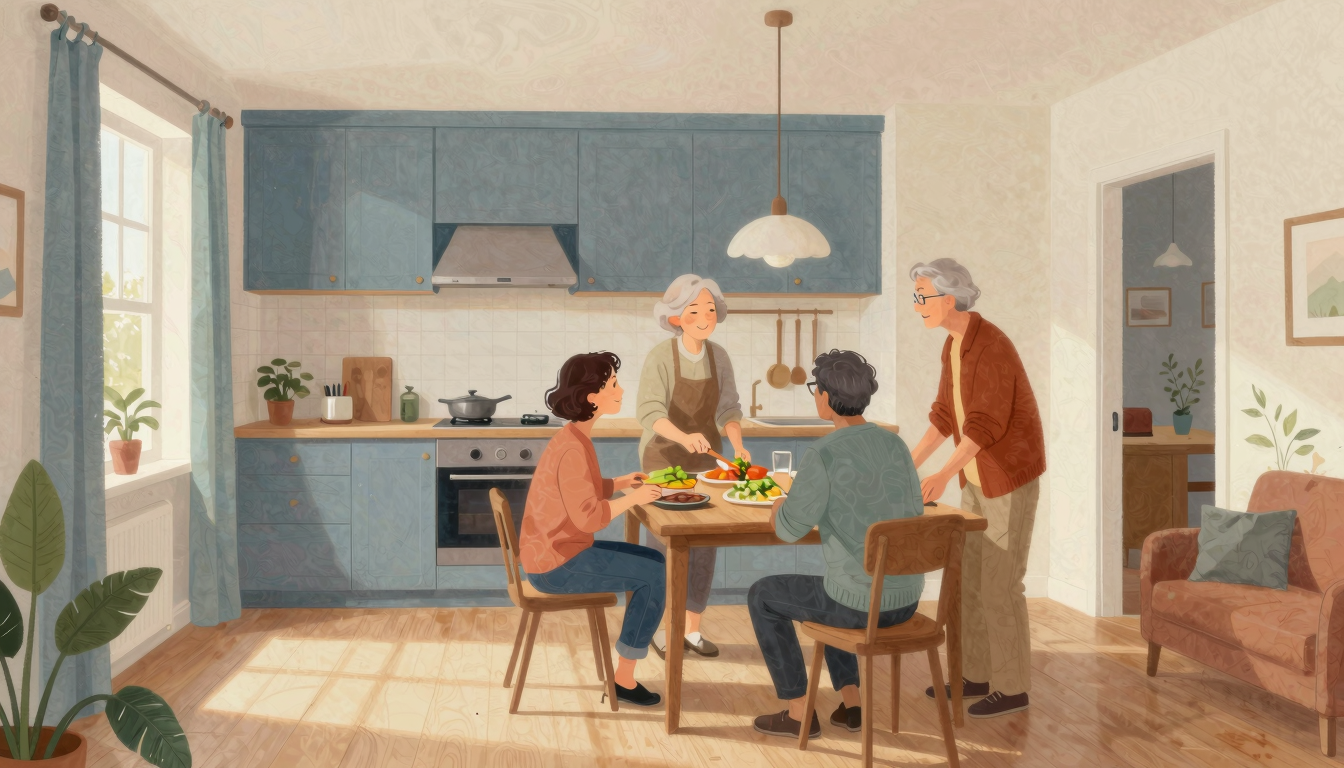
The Chinese drama Old Girlfriends gave many viewers an appealing picture of later life: familiar companions nearby, shared meals and people who understand the history behind a story. Living with friends can make that picture feel possible without requiring an older adult to move in with their children.
The everyday arrangement needs more than affection, however. Friends must also become housemates, share expenses and decide what happens when someone's needs change. The most useful question is not whether growing old together sounds pleasant, but whether the particular group can build a workable life together.
What friends can offer one another
Companionship that fits ordinary days
Shared experience and interests can make conversation easy. A friend may understand a disappointment without a long explanation, remember someone important from the past or enjoy the same small routines.
Having someone nearby also creates opportunities to listen to, understand, and support one another. Encouragement during a difficult week may be easier to give when it does not require arranging a special visit.
These are possibilities, rather than automatic results of similar ages or backgrounds. Companionship depends on willingness to make room for one another. Familiarity can start the connection; consistent consideration helps sustain it.
Practical help and shared resources
Housemates can divide ordinary tasks and share skills. One may enjoy cooking, another may handle household organization, and another may be comfortable arranging appointments. A shared kitchen, bathroom and living room can reduce duplication of space and equipment.
But mutual help needs limits. Being able to notice that someone is unwell is different from providing nursing care. A household of friends should be clear about what members are willing and able to do, rather than relying on an unspoken promise that everyone will manage whatever comes.
Shared living may reduce some costs, but the total depends on the home, services and people involved. Lower expenses should be calculated rather than assumed.
A different relationship with adult children
Living with friends may reduce some day-to-day demands on children and give parents more independence. Separate homes can also ease friction about routines or household decisions.
It does not guarantee family harmony or remove the need for family involvement. Children may still help with appointments, emergencies or more complex decisions. Discussing the actual support arrangement is more reassuring than simply announcing that friends will take care of everything.
What can strain the arrangement
Money becomes a shared decision
Rent, renovations and furniture can create substantial startup costs. After moving in, food preferences, heating, visitors and expectations about paid services can produce recurring differences.
Two people may both consider themselves economical and still disagree about what the household should buy. Similar incomes help only if expectations are also compatible. Decide how shared costs will be handled and which expenses remain personal before resentment begins to accumulate.
Friendship does not settle household habits
A friend who is delightful over lunch may be difficult to live with if your routines conflict. Noise, cleanliness and use of common rooms become daily matters rather than occasional inconveniences.
The question is not whether everyone has the same personality. It is whether differences can be discussed without one person's preferences always taking precedence. Tolerance and empathy matter most when the household encounters something inconvenient.
Care needs and membership can change
An informal household may not provide professional medical or personal care. If a member needs more assistance, the group must consider support beyond what friends can safely offer.
People may also leave, move closer to family or want someone new to join. That can alter both the emotional balance and the finances. A plan that works only while everyone remains exactly as they are has left an important part of later life unaddressed.
How to assess whether the group is a good fit
Start with needs and expectations
For a household based mainly on mutual assistance, members need a realistic view of their ability to manage daily life. Age alone cannot answer that question. The original discussion highlights people in their sixties and healthier seventies, but those bands are not eligibility rules.
Ask what support each person currently needs and what the arrangement can provide. Also consider whether members can respect privacy, negotiate disagreements and accept that another person's way of living may differ from their own.
Check the budget and the home
Compare spending expectations openly. Agreement about the desired standard of living matters as much as the size of individual savings.
Separate bedrooms within one home may balance independence and company. The layout should suit the residents' needs, and access to medical services deserves attention. Discuss ways to contact one another in an emergency and obtain qualified advice about any necessary adaptations or care arrangements.
A good-looking property is not enough if the daily logistics are difficult. The home needs to work when someone wants quiet, when visitors come and when help is needed.
Address responsibilities outside the group
Some prospective members help care for grandchildren. Others share responsibility with siblings for an older parent. Those obligations do not disappear after moving in with friends.
Talk with the relevant relatives about practical commitments and availability. This is coordination, not a requirement that adult children approve every personal choice. The aim is to avoid building the new household on assumptions that conflict with existing responsibilities.
Put important expectations in writing
Record the group's understanding of expenses, use of space, responsibilities and changes in membership. Discuss what happens if someone wants to leave or needs more care. Property and contract questions should receive appropriate local professional advice; a friendly written note is not automatically a complete legal solution.
The conversation itself reveals compatibility. If discussing a contribution, a boundary or an exit feels impossible now, it may become harder after money has been spent and everyone has moved in.
Growing old with friends can be a positive choice when companionship is supported by practical preparation. The goal is to protect the friendship as well as the household, so that ordinary differences can be handled before they become reasons to part.
Frequently asked questions
What are the possible benefits?
Companionship, shared resources, mutual help and greater independence from adult children.
Can friends replace professional care?
Not automatically. Their willingness and ability have limits, and changing needs may require additional services.
Is there an ideal age?
Age alone does not determine fit; actual daily needs and available support matter.
Why write down expectations?
Clear expectations can reduce misunderstandings, while property and contract questions may need local professional advice.