Summary
Insomnia involves trouble sleeping despite adequate opportunity, with effects on daily life. Understanding triggers, vulnerability and maintaining habits can guide change; persistent problems may benefit from CBT-I and assessment.
At a glance
Support a regular rhythm, comfortable sleep environment and calmer evening while examining habits and worries that maintain wakefulness. CBT-I is an established option for chronic insomnia. Avoid rigid self-prescribed sleep restriction and never ignore dangerous daytime sleepiness.
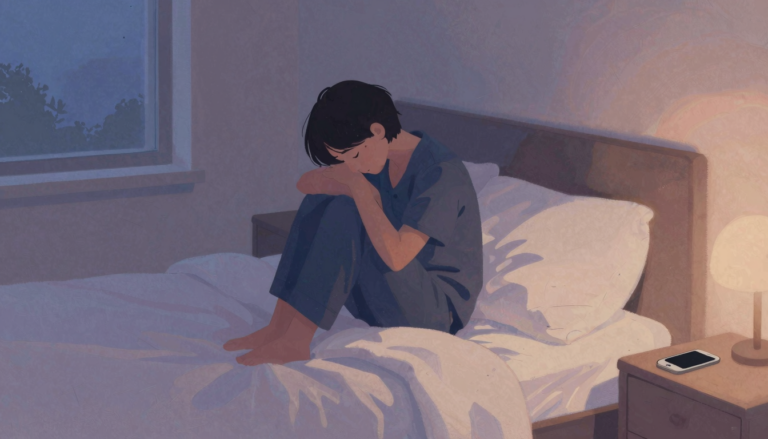
A difficult night can become more than a difficult night when bedtime starts to feel like a test. You lie down early, check the clock, calculate the hours left and try harder to sleep. The effort itself can leave you increasingly alert.
Understanding insomnia can help interrupt that pattern. The aim is to create conditions that support sleep and address what is keeping the problem going, rather than force unconsciousness through determination.
What counts as insomnia?
Insomnia involves difficulty falling asleep, staying asleep or obtaining satisfactory sleep despite having an adequate opportunity and environment. It can interfere with daytime functioning. The number of hours slept, or a single night taking longer than expected to fall asleep, does not establish a diagnosis.
NHLBI distinguishes short-term and chronic insomnia. Short-term difficulties may follow stress or changes in schedule and last days or weeks. Chronic insomnia involves a persistent pattern, typically at least three nights a week for three months or longer, considered alongside daytime effects and other explanations.
Occasional disturbed sleep is common. It need not become a forecast of permanent problems, but significant distress or impaired functioning deserves attention even before a particular duration threshold is reached. There is no need to wait months to ask for help.
Why a sleep problem starts—and why it continues
One useful account separates predisposing, precipitating and perpetuating factors. These describe vulnerability, the event that starts a problem and the processes that keep it going. They can overlap.
A stressful event may precipitate a period of sleeplessness. The source uses the pandemic as an example: routines changed, some people became less active, others took on demanding childcare, and the boundary between home, work and rest blurred. Those are examples of changed circumstances, not proof that everyone’s body responded in the same way.
Psychological and social conditions matter too. Repeatedly checking alarming news can leave worries active at bedtime. Household members may follow incompatible schedules. A remote conversation intended as reassurance may instead become another round of anxious speculation. For someone already vulnerable to sleep disruption, these pressures can accumulate.
Perpetuating factors are especially important because they may continue after the original stress has eased. Trying to recover by spending much of the day in bed can reduce the distinction between waking life and bedtime. Long or late naps can make nighttime sleepiness less reliable. A phone offers distraction, but also keeps attention engaged when you intended to wind down.
Smoking to pass the time, using alcohol as a sleep aid or suddenly exercising intensely late at night can become part of the same cycle. These are understandable attempts at relief, but it is worth asking whether they help beyond the first few minutes.
When treatment is more useful than another sleep tip
Insomnia is a recognized sleep disorder and can occur alongside physical or mental health conditions. Pain, mood problems, substances, medicines or another sleep disorder may need assessment. Do not stop prescribed medication on your own because you suspect it affects sleep.
Cognitive behavioral therapy for insomnia, or CBT-I, is usually recommended first for long-term insomnia. It combines approaches to sleep-related thoughts and behavior. Medication may also be considered with a clinician, depending on the situation.
Everyday habits can support that work, but a list of bedroom tips is not equivalent to a full treatment plan. Seek help when sleep problems persist, substantially affect your day or occur with other concerning symptoms. A sleep diary can give the conversation more detail than a general impression that every night is terrible.
Reconsider three beliefs that add pressure
More time in bed must mean more recovery
Quiet rest can be valuable, but it does not replace all the functions of sleep. Spending extra hours in bed trying to manufacture sleepiness can also turn the bed into a place associated with frustration and vigilance.
The question is not whether you are allowed to rest. It is whether this particular pattern is helping you sleep. Separating restful waking activities from the place where you repeatedly struggle may be useful.
A bad night must be repaired with a long daytime sleep
A long or late nap may reduce the sleepiness you want at bedtime. That can lead to another difficult night and another attempt to compensate the following day.
This does not mean all naps are harmful or that sleep deprivation should be endured at any cost. Notice timing, length and your circumstances. Someone working shifts or struggling to remain safely alert needs a plan suited to that situation. Sleep habits should not become a reason to drive or do hazardous work while drowsy.
One difficult night means everything will go wrong
“I will not function tomorrow” can quickly become “My health will collapse” or “My life is falling apart.” Such predictions make bedtime feel urgent and threatening.
A more proportionate thought leaves room for discomfort without certainty about disaster: tomorrow may be harder, and you can adjust what is feasible. Address the actual problem in the morning rather than demanding a guarantee of perfect sleep tonight.
Make the evening and bedroom easier to settle into
Regular meals, comfortable hydration and a manageable routine can reduce avoidable disruptions. Going to bed painfully hungry or after an overly large meal may be uncomfortable. Drinking a large amount just before bed can mean more trips to the bathroom.
Consider stimulants in context. Coffee, tea, cola and chocolate can contain caffeine, and nicotine can also interfere with sleep. Alcohol may feel sedating initially while making the rest of the night less settled. They are poor tools for managing a recurring sleep problem.
Keep physical activity regular and appropriate to your capacity. If vigorous late exercise leaves you alert, move it earlier where possible. The goal is a sustainable daily pattern, rather than exhausting yourself in the hope that sleep becomes unavoidable.
Choose a bedroom that feels comfortable, with manageable light, temperature and noise. NHLBI’s sleep-habit guidance recommends a quiet, cool, dark setting and a calmer period before bed. A room need not be made unusually warm to be restful.
Some people enjoy steady background sounds, including rain or rustling leaves, because they make intermittent noises less noticeable. These recordings are not all technically white noise, and they do not help everyone. If you try one, keep the volume comfortable and stop if it becomes another source of disturbance.
Turn the clock face away if checking it fuels calculations and worry. This is about reducing monitoring, not hiding time so thoroughly that getting up becomes difficult.
Rebuild the connection between bed and sleep
Stimulus control aims to strengthen the association between bed and sleeping. Go to bed when sleepy rather than merely frustrated with the day. If you are lying awake and becoming increasingly tense, get up when it is safe and do something quiet in subdued light. Return when sleepiness comes back.
Use the bed mainly for sleep and sexual activity. Avoid turning the instruction into another timed test: watching for an exact fifteen-minute deadline can recreate the clock-checking problem. Adapt any advice about getting up to mobility and safety needs.
Keep a rhythm without prescribing deprivation
A reasonably consistent wake time can provide an anchor for the day. Choose a schedule that allows adequate sleep opportunity and fits your responsibilities, rather than adopting someone else’s ten-to-six timetable as a rule.
Formal sleep restriction is a component of CBT-I that adjusts time in bed and requires an individualized plan. It is different from deciding to sleep as little as possible or refusing rest regardless of daytime impairment. Ask a qualified clinician about it rather than improvising an aggressive schedule.
Better sleep often involves reducing the struggle around sleep while changing what maintains it. Start with a manageable adjustment, observe its effect and seek help if the difficulty continues. The goal is a pattern that supports both nighttime sleep and a safer, more workable day.
Frequently asked questions
Is six hours enough to rule out insomnia?
No. Hours alone do not determine sleep needs or establish a diagnosis.
When is insomnia considered chronic?
A persistent pattern of at least three nights a week for about three months is considered alongside daytime effects and other explanations.
Should I stay in bed trying harder?
If wakefulness becomes tense, a quiet activity outside bed and returning when sleepy may help, adapted to safety.
Should I restrict sleep myself?
Formal sleep restriction should be individualized with qualified guidance; it is not an instruction to tolerate dangerous sleepiness.