Summary
From checking a phone to delaying water, the writer examines five familiar morning behaviors and proposes changes involving light, lighter tasks, breakfast and hydration.
At a glance
The writer identifies immediate phone use, missing morning light, starting complex work before fully waking, eating only sweet foods for breakfast and waiting until thirsty to drink. The proposed alternatives include delaying phone use, seeking morning light, beginning with lighter tasks, eating a protein-rich breakfast and drinking water on waking. These recommendations and their claimed effects are presented as the writer’s account.
The writer argues that the first hour after waking determines how the brain functions throughout the day, describing the broader first 60–90 minutes as a “golden period” for shaping brain function. Familiar morning routines, in this view, can have consequences that reach well beyond those early minutes.
The writer reports that neuroscientist Dr. Patricia Schmidt found that five common morning behaviors impair cognition, drain emotional energy and may even affect sleep. The account examines those habits from a neuroscience perspective and offers practical alternatives.
Reaching for the phone immediately
The first habit is reaching for a phone the moment you wake. The writer describes it as especially widespread, reporting that 84% of Americans check their phones within ten minutes of waking each day.
The explanation centers on the cortisol awakening response, which the writer places at 30–45 minutes after waking and describes as a natural morning “charging” mechanism that gradually prepares the body to function effectively. Work messages, social media notification badges and negative news are said to interrupt that transition with immediate pressure, driving cortisol excessively high and pushing the body into stress mode early. The claimed result is a greater likelihood of anxiety and difficulty concentrating throughout the day.
The proposed alternative is to leave the phone outside the bedroom or wait at least 45 minutes after waking before unlocking it. Beginning with something screen-free, such as stretching or drinking water, is meant to give the brain a gentler transition into the day.
Missing morning light
While phone content is presented as a source of early pressure, morning light is described as a cue that helps the body wake. The second habit is staying indoors without that exposure.
The writer likens light to a switch for the brain’s biological clock. In this explanation, morning light reaching the eyes stimulates the suprachiasmatic nucleus, the clock’s control center, and triggers three responses: a healthy cortisol awakening response, suppression of melatonin to promote wakefulness, and increased serotonin associated with a better mood and less irritability. Insufficient morning light is likened to setting the clock to the wrong time, leaving a person groggy during the day yet struggling to sleep at night.
The suggested routine begins within 30 minutes of waking, on a balcony, by a window or outdoors. On sunny mornings, the writer recommends at least ten minutes, without sunglasses and without looking directly at the sun. On cloudy mornings, the recommendation is 15–20 minutes, on the rationale that clouds do not block the relevant light.
When going outside is impossible, the proposed fallback is a 10,000-lux morning light lamp. The writer emphatically warns against using it at night because it would keep the user awake.
Starting complex work before fully waking
The third habit concerns what you ask of yourself as you wake: tackling complex work the moment you open your eyes, while still partly asleep. The writer describes the first one to two hours after waking as a period of sleep inertia, with sluggish thinking and poorer decision-making. During that interval, the account favors divergent thinking—making lists or generating ideas—over work demanding deep concentration, such as writing reports or developing plans. Forcing complex work through this transition is said to reduce efficiency, increase mistakes and cause frustration.
The practical recommendation is to spend the first hour on lighter tasks. Examples include stretching, taking a five-minute walk and planning the day in a paper notebook away from screens. Answering nonurgent messages and tidying a desk are also offered as activities that require little deep thought.
Eating only sweet foods for breakfast
The fourth habit shifts the focus from mental demands to the energy breakfast provides. The concern is a meal consisting only of sweet foods, such as bread with jam or sweetened cereal.
The writer identifies glucose as fuel for the brain and emphasizes a steady supply. In this account, a high-sugar breakfast sends blood glucose rising rapidly and then falling sharply, leaving the brain without stable energy. Morning drowsiness, scattered attention and cravings for snacks are the consequences described.
The proposed replacement is a breakfast containing 25–35 grams of protein. The writer roughly equates that amount with one egg, one cup of milk and one slice of chicken breast, without specifying the milk volume or chicken weight. A boiled egg, unsweetened soy milk and whole-wheat bread form a separate suggested meal, with portions left unspecified. The claimed benefits are sustained energy, avoidance of drowsiness and snack cravings, and help controlling appetite throughout the day.
Waiting until thirst to drink water
The fifth habit is failing to drink on waking and waiting until thirst appears. The writer warns that water lost through breathing and sweating during sleep leaves a person mildly dehydrated by morning. The account puts the brain’s water content at 70% and links insufficient water to slower reactions and irritability, including getting angry over minor matters.
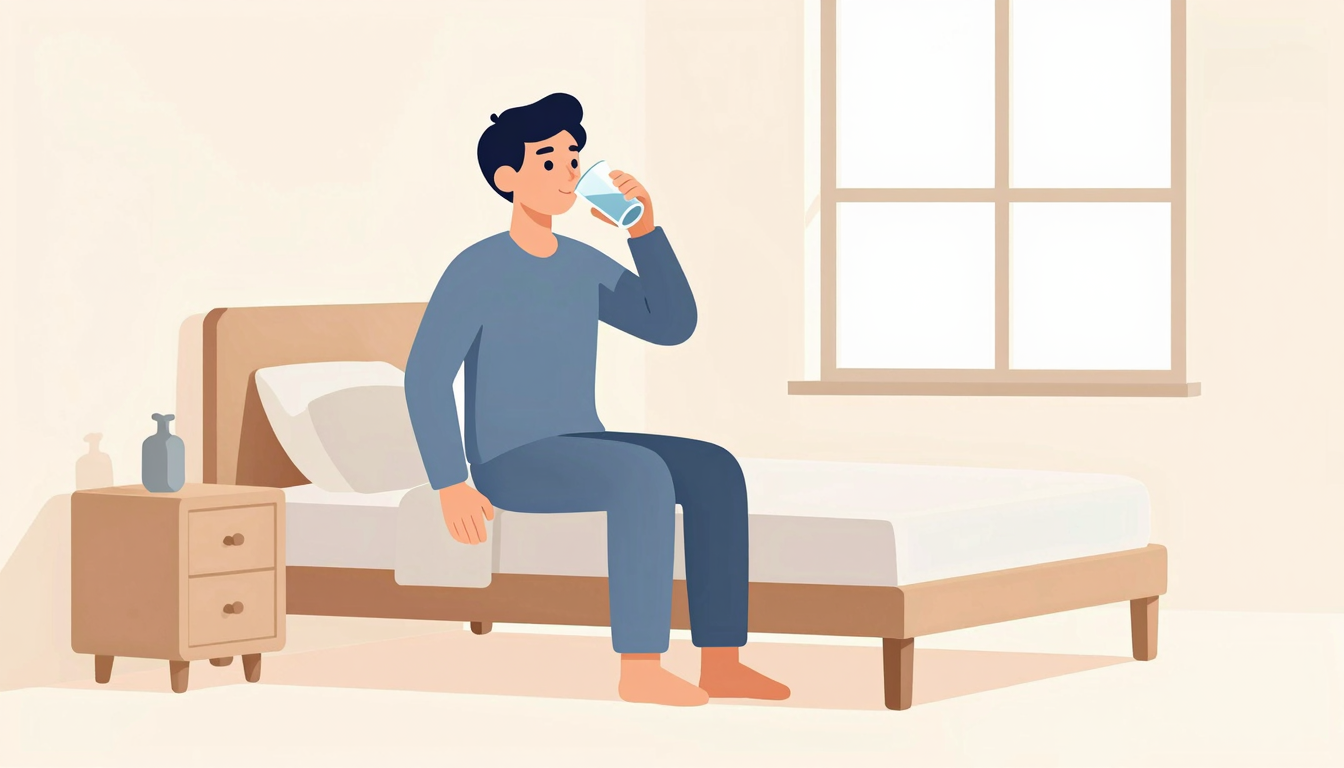
The proposed routine is to keep a glass of water on the bedside table and drink 250–350 milliliters of warm water immediately after waking—loosely described as somewhat less than half a bottle of mineral water. The writer’s rationale is that this quickly replenishes lost water and gets the body’s metabolism going.
Across these five habits, the writer’s argument is that small actions have substantial effects when repeated over time. Their accumulated influence is presented as shaping two different kinds of days: one marked by energy, focus and efficiency; the other by sluggishness, anxiety and difficulty getting things done.