Summary
Better scores on a practiced memory test may not transfer to everyday thinking. The article explores why mindful movement has attracted interest, alongside age-specific findings on yoga, tai chi and qigong.
At a glance
Mindful movement combines physical activity with present-focused awareness. The research account presents yoga, tai chi and qigong as promising approaches to supporting executive function, with findings across different ages and intervention durations. The writer suggests yoga may offer benefits across life stages when practiced within each person’s physical capacities.
Wait—could a quieter kind of exercise help us become “smarter”?
Fading memory, scattered attention, mental fog: even thinking about these experiences can be unsettling. The concern is that growing numbers of young people are experiencing cognitive difficulties, whether associated with illness or occurring without it, under the influence of work pressure, unhealthy habits and other factors. A decline in executive function is presented as one of the most important signs. Understanding that capacity offers a starting point for thinking about what might help.
Executive function directs thoughts and actions toward a goal. One research framework identifies three core components: working memory, inhibitory control and cognitive flexibility.
Working memory lets us briefly hold information and retrieve it when needed. As an illustration of exceptional working memory, the original writer points to people described as remembering everything they see after a single glance.
Inhibitory control allows us to overcome strong internal impulses and external temptations so we can do what is more appropriate or necessary. Knowing what we should do does not always mean we can stop ourselves from doing something else. Children with impaired inhibitory control, for instance, may keep disrupting a class even when they know they will be criticized.
Cognitive flexibility allows us to shift from a dominant response to another that better fits the situation. In a card-sorting task, someone with good cognitive flexibility can adapt quickly when the rule changes from sorting by color to sorting by shape.
The writer compares executive function to a senior company executive, with these three capacities serving as core departments. The executive coordinates their work toward a shared goal. A company needs both effective leadership and departments that do their jobs well; similarly, effective thinking and apparently “smart” behavior depend on how well executive function and its components work together.
Researchers have reported significant associations between better executive function and stronger academic achievement, career success and better interpersonal relationships. Strengthening it is therefore an appealing possibility: might it help counter cognitive difficulties and allow us to think and act more effectively?
Researchers have explored many interventions. A review summarized and compared findings from 179 studies, and the writer highlights a surprising result: calm, mindful forms of exercise appeared particularly promising. What makes that finding interesting is the question that earlier cognitive training left unresolved—whether better performance on a practiced test meant a broader improvement in thinking.
Early interventions often focused on a single capacity. In working-memory studies, for example, researchers tested participants before training, gave them exercises targeting working memory, then tested them again several weeks later. Their working-memory test scores improved.
Some scholars questioned what those higher scores represented. The training repeatedly used the same kinds of stimuli and required the same responses, making the tasks predictable. Intensive practice, they argued, might chiefly teach participants better strategies for particular tests without strengthening executive function more broadly. The concern was that these gains had limited stability and did not transfer readily to other tasks or situations. Might an intervention spanning several domains achieve more?
Broader approaches included physical exercise and mindfulness meditation. Research reports that ordinary aerobic and anaerobic exercise can improve physical coordination and inhibitory control. Eight weeks of seated meditation, meanwhile, can reduce stress and improve selective attention. From the intervention research, the writer draws a further comparative conclusion: mindful movement, which combines physical activity with mindful awareness, has a greater effect on executive function than either exercise or meditation alone.
Mindfulness has roots in Buddhist meditation and is also described as insight meditation. Its defining qualities are deliberate awareness, attention to the present and an absence of judgment.
The writer traces its adaptation into modern psychotherapy to the 1970s, when a scholar and colleagues studied this Eastern concept and adapted it for therapeutic use. In this account, mindfulness became a major therapeutic concept and technique, giving rise to approaches such as mindfulness-based stress reduction and mindfulness-based cognitive therapy. These approaches have been widely used in work with anxiety, depression and chronic pain, as well as in relationship counseling.
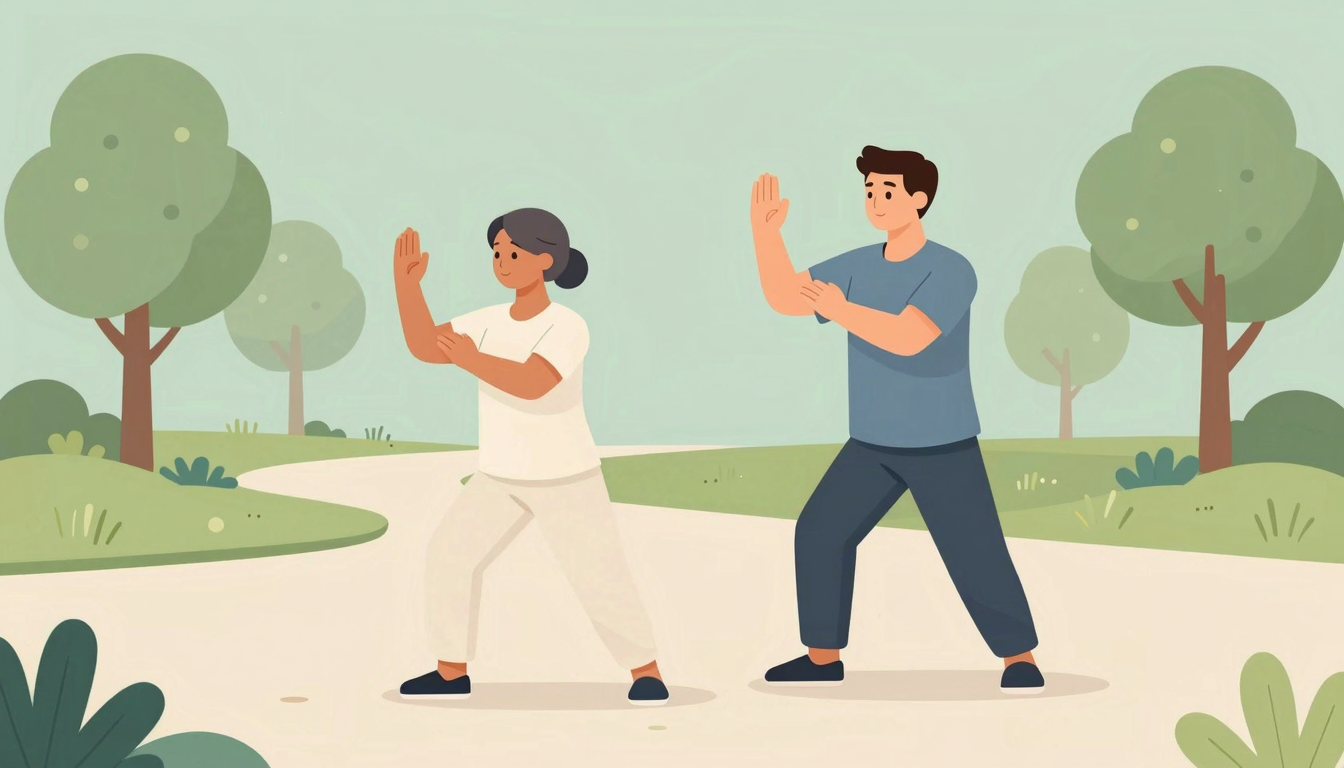
Combining mindfulness with movement is itself a longstanding practice. Yoga, tai chi and qigong are among its examples. Their shared intention is to remain emotionally calm and attentive while moving, keeping internal and external distractions from pulling attention away and staying fully present.
A separate research synthesis examined 39 mindful-movement studies involving school-age children, young adults and older adults. Of those studies, 37 reported positive effects on executive function. The individual interventions offer a closer look at what those findings involved.
Yoga across different ages
The word yoga comes from Sanskrit and means “unity” or “harmony.” Modern yoga brings together physical postures, flexibility, balance, breathing techniques and mindfulness meditation. Drawing on the research, the writer presents it as a practice that can strengthen all three core components of executive function: working memory, inhibitory control and cognitive flexibility.
In one intervention study, twelve-year-old children showed better inhibitory control at the immediate assessment after four weeks of yoga training. In a separate ten-week study, adults who completed yoga training reported less stress and performed better on tasks measuring cognitive flexibility.
Another study involved older adults whose average age was 75. At the post-training assessment, those who practiced yoga showed significantly greater positive changes in memory, inhibitory control and verbal ability than peers of the same age who had not taken part in the training.
These findings lead the writer to suggest that yoga may offer benefits at different stages of life, provided the practice stays within each person’s physical capacities.
Tai chi and qigong
Tai chi and qigong are rooted in Chinese mind–body practice. Their shared philosophy discourages struggling with thoughts or trying to force them under control. Forcing things is seen as counterproductive; the aim is to let things unfold naturally in pursuit of balance.
The writer describes these practices as requiring greater mental awareness and self-control than other forms of exercise, pointing to both longstanding practical experience in China and recent research as support for their executive-function benefits.
In one study, children whose average age was twelve practiced qigong for four weeks. They then performed significantly better in planning and inhibitory control than children who had learned Western relaxation exercises.
A separate study randomly assigned healthy adults aged 60–84 to tai chi classes or other exercise classes involving aerobic, anaerobic and flexibility activities. After six months, the tai chi group showed significant advantages in memory and verbal fluency.
Perhaps those older people practicing tai chi and qigong in the park every day deserve more credit: quiet champions of cultivating temperament, keeping fit and exercising the mind. The next time their spirit and stamina leave you thinking that the older generation still has plenty to teach us, why not join them?
Stress offers another reason to take that invitation seriously. Research indicates that stress harms executive function and that chronic stress worsens brain functioning. The writer suggests that frequently feeling forgetful, scattered or mentally foggy may be a warning from mind and body that we are overworked.
The writer also presents mindful movement as a way to ease both the stress we feel and the body’s physiological stress responses, bringing mind and body toward a more natural harmony. In this view, mindful awareness and physical movement reinforce each other, with combined benefits that may amount to more than the sum of their separate contributions.
Amid information overload, pressure and everyday challenges, paying attention to our inner experience and reconnecting with the body may help us recover energy to face the world and make fuller use of our potential. Why not give mindful movement a try? It may be a “special remedy” for finding that connection again.
Frequently asked questions
What are the three core components of executive function?
One research framework identifies working memory, inhibitory control and cognitive flexibility as the three core components of executive function.
What did the mindful-movement research synthesis report?
The synthesis examined 39 studies involving school-age children, young adults and older adults. Of those studies, 37 reported positive effects on executive function.
What condition accompanies the article’s suggestion to try yoga?
The writer suggests that yoga may offer benefits at different stages of life, provided the practice stays within each person’s physical capacities.