Summary
Movement, varied surroundings and learning can support cognition, but brain fog has multiple causes. Activity should fit individual symptoms, particularly when Long COVID involves post-exertional worsening.
At a glance
Exercise and a change of environment may help some people feel clearer and support cognitive health. They are not a universal cure for brain fog; persistent symptoms and exertion-related worsening call for individualized assessment and pacing.
When you keep misplacing things, lose the next word mid-sentence, or find it difficult to recall an ordinary meal, the day can feel as though it is happening through a haze. “Brain fog” is a useful everyday description of that experience. It is not, by itself, an explanation of why it is happening.
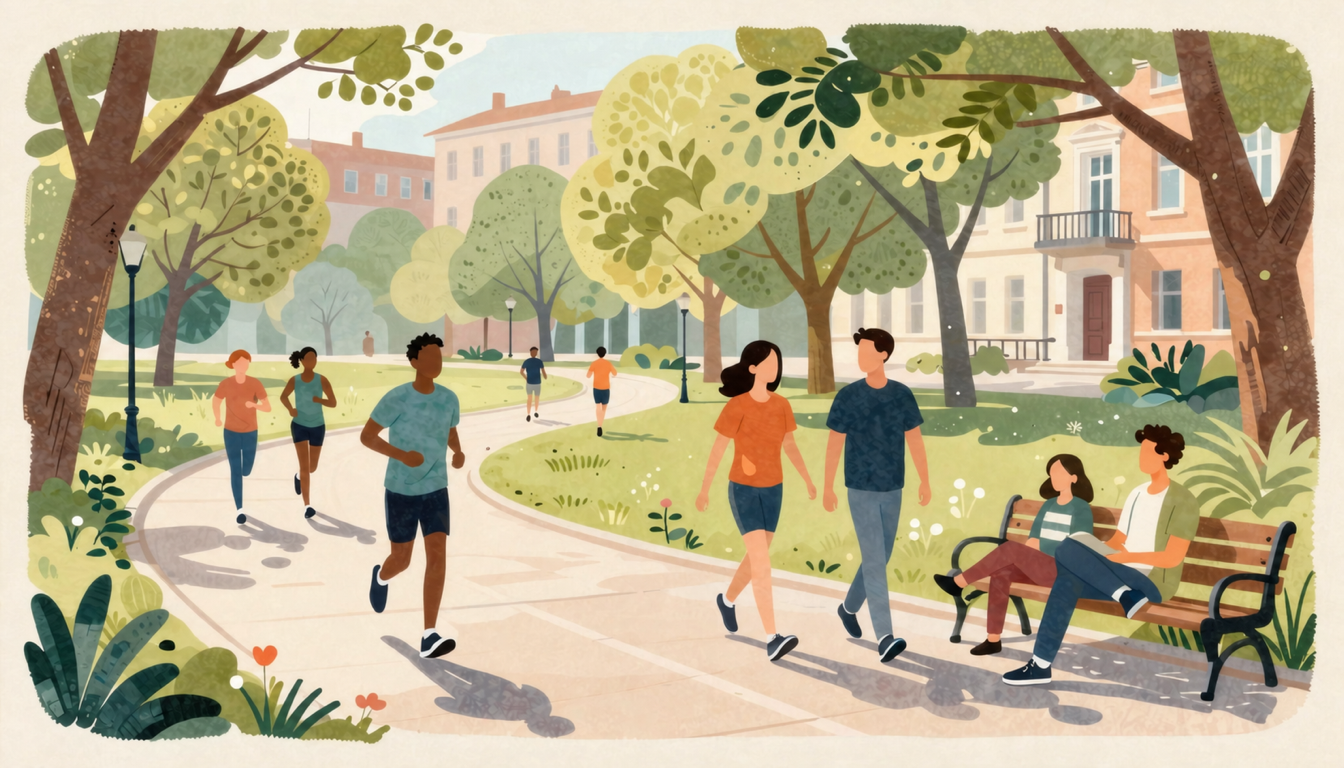
A walk, a change of surroundings, or an absorbing activity may help some people feel clearer. Movement can support cognitive health, and a repetitive indoor routine can leave few opportunities for activity, novelty, or company. But none of this means that staying home has killed your neurons, or that exercise is a universal treatment for persistent cognitive symptoms.
Start with the symptoms, not a verdict of decline
Difficulty thinking and concentrating can occur in Long COVID, among other circumstances. CDC describes brain fog, fatigue, and symptoms that worsen after exertion as important features for some affected people. Persistent or disabling symptoms deserve clinical attention rather than an assumption that you simply need more willpower or stimulation.
That matters before recommending activity. If physical or mental effort reliably causes a delayed worsening, pushing through a prescribed exercise course may be inappropriate. Seek individualized guidance and pace activity around the condition. A pleasant walk for one person can be too demanding for another.
For someone whose main difficulty is an exhausting, sedentary routine, however, a manageable change can be worth trying. The aim is to support functioning and discover what helps, not to prove that every lapse is reversible by going outside.
Exercise and an enriched environment are related ideas
The brain changes with experience. Learning, movement, and interaction can affect how neural systems work and how connections are maintained. Research on enriched environments has often studied animals given more opportunities for movement, exploration, and engagement than animals in simpler housing.
Such work helps explain why experience matters biologically. It does not transfer automatically to the claim that a human needs three locations each day or that isolation inevitably produces brain fog by destroying newborn cells.
It is also useful to distinguish changes in existing connections from the formation of new neurons. Dendrites, synapses, blood supply, and other features of brain function can respond to activity. These are different processes, and none should be compressed into “exercise produces a large batch of neurons that must be used within 28 days.”
One randomized study of exercise training and the hippocampus provides human evidence that physical activity can relate to brain structure and memory under studied conditions. It is a better starting point than treating every animal-cell finding as a personal timetable for brain growth.
The source's electrical-network analogy remains helpful in a limited way: functioning depends on connections and coordination, not merely on isolated parts. A biological network is more complex than a circuit whose wider wires simply make every thought faster.
Change the routine without turning novelty into another task
Going outside can combine several changes at once: movement, daylight, a different visual scene, and perhaps a conversation. These may make a day feel less enclosed even when the outing has no ambitious purpose.
The source makes a useful distinction between varied activities and more of the same work. Completing three slide decks is still one kind of demand. A break involving a short walk, a conversation, or quiet observation offers a different experience from switching between work files.
There is no need to count places or manufacture three meaningful events. A smaller change that fits your energy may be more useful than a quota. Someone unable to leave home can also find manageable variation through interests, social connection, or a change in activity; being housebound does not make brain health hopeless.
Begin with movement you can sustain
Running is a familiar option because it needs relatively little equipment. Walking, gentle movement, or another accessible activity may be a better starting point depending on fitness, symptoms, preference, and surroundings. The best choice is not necessarily the one that looks most athletic.
Research can find short-term changes in cognitive performance after exercise, but that does not guarantee fluent speech or brilliant ideas before an afternoon meeting. People may feel energized, tired, or unchanged. Pay attention to your own response during the activity and afterward.
Consistency matters more than treating a single session as a cognitive upgrade. A manageable routine can support general health without being framed as a medical “course” for brain fog. Exact heart-rate targets, session counts, and duration should not be copied from an unverified book anecdote as though they were a prescription for every reader.
Give learning something specific to practice
Movement and skill practice ask different things of the brain. Repeating a comfortable route may be easy to maintain. Learning a new movement sequence, a game, or another skill adds attention, feedback, and coordination. This does not establish that complexity is always superior; a difficult activity can also be frustrating or unsuitable.
The writing example in the source captures the point well. At first, finding a word or shaping a sentence can be slow. With practice and useful feedback, the task may become easier. Vocabulary learning and reading involve related opportunities to strengthen knowledge and fluency.
Eric Kandel's work helped establish how learning and memory involve changes at synapses. It should not be reduced to a claim that practice makes all connections swell or that his Nobel recognition proves a particular exercise routine treats Alzheimer's disease.
BDNF, brain-derived neurotrophic factor, is one molecule studied in learning, plasticity, and exercise research. An increase in an animal experiment is not a direct measure of a human's intelligence or a guarantee of memory recovery. Claims about mice “juggling” and a precise percentage advantage are not needed to make the practical point: learning requires engagement with something you are trying to learn.
Combine activities for a life you can keep living
Aerobic activity and resistance exercise develop different aspects of physical fitness. A routine can include both when appropriate. But a particular order—weights followed immediately by running—is not established here as the best cognitive treatment, and a more complex activity does not automatically create a more intelligent brain.
The source is right to challenge the stereotype that physical strength and thoughtfulness are opposites. Movement can be part of an intellectually engaged life, alongside reading, conversation, and practice. There is no reason to turn that observation into a contest between active people and people who spend more time indoors.
Recovery belongs in that life too. A quiet outdoor pause can have value without needing to generate a measurable improvement. You can sit and daydream, notice the surroundings, and let the next task wait for a moment.
For some readers, that is the most useful invitation in the article: introduce a manageable change, observe its effects, and make room for both activity and rest. If fog persists or worsens, the next step is understanding the cause—not blaming yourself for failing to grow enough neurons.
Frequently asked questions
Is brain fog a diagnosis?
It describes difficulties with thinking or concentration rather than a single cause.
Should everyone exercise through fatigue?
No. Post-exertional worsening requires individualized guidance rather than pushing through.
Must I visit three places every day?
No verified universal three-place rule supports that advice.
Why include learning as well as movement?
Practice engages specific skills and knowledge, while exercise alone does not guarantee their development.