Summary
A familiar park, shifting leaf shadows, or an evening sky may invite a moment of wonder. Explore awe walking, the proposed small self, and nature’s gentle pull on tired attention.
At a glance
An awe walk means noticing things that feel new, vast or astonishing, including details in familiar surroundings. In a small eight-week study of healthy older adults, awe instructions were associated with more daily prosocial positive emotions and less daily distress, without significant group differences in changes in anxiety, depression or life satisfaction.
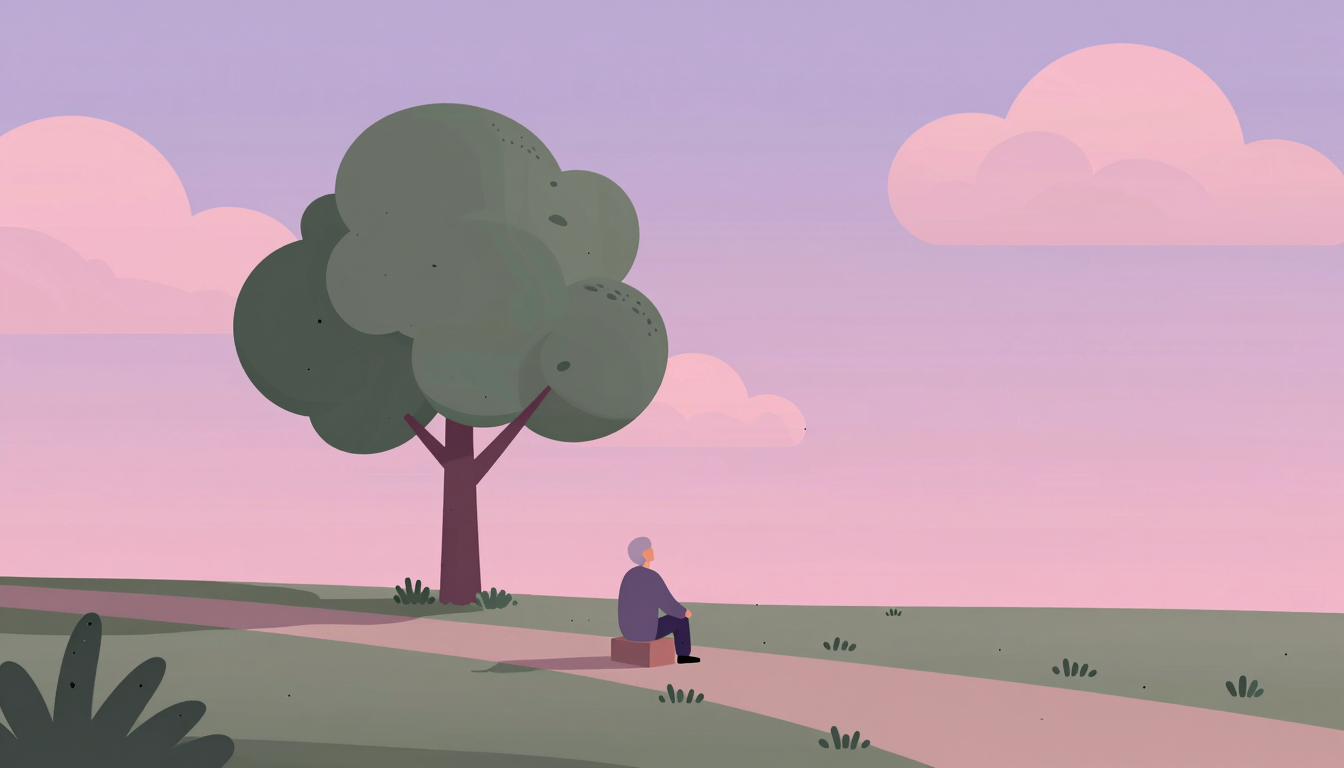
Nature can sometimes feel like the best healer for a troubled mind. Imagine stepping out of the office, exhausted after a long day, or going downstairs to take out the trash after dinner. You happen to look up. Pink and purple clouds stretch across half the evening sky, and a bright star has just appeared in the distance.
You stop, take a deep breath, and spend two minutes watching. The work worries and everyday concerns that occupied you a moment ago seem less important. The world feels vast, and you feel small within it, yet that smallness brings no sadness. Instead, there is a quiet sense of peace, of being moved by what you see.
Perhaps you recognize a moment like this, when nature catches you by surprise. What begins as a glance at the view can feel deeply restorative. Without setting out to do so, you may have stumbled into an “awe walk,” a practice psychologists encourage: walking with attention to the wonder around you.
In psychological terms, awe is an emotional response to something so vast that it challenges our usual ways of understanding the world. It often arises in encounters with natural scenery or great art. Looking up at a sky full of stars, out across an ocean, or toward towering mountains can bring that mixture of surprise and being deeply moved.
A 2015 paper by Piff and colleagues reported five studies of awe and prosocial behavior. In the tree-viewing experiment, participants who viewed towering eucalyptus trees showed more helping and lower entitlement than a control group viewing a nearby building. Resource-sharing findings elsewhere in the paper should not be presented as additional outcomes of that same tree experiment.
Researchers have proposed the concept of the “small self” to help explain such shifts. One way to understand it is that natural scenes far larger than ourselves, on a scale we rarely encounter in everyday social life, may temporarily draw attention away from our own concerns. The familiar insistence of “I need to succeed,” “I’m anxious,” or “I’ve been treated unfairly” can become less dominant.
That sense of smallness can feel like release rather than inferiority. As self-concern shrinks, the worries weighing on us may shrink with it. Imagine standing beside the sea: a mistake you just made, or something you wish you hadn’t said the night before, might no longer hold your attention so tightly. There may then be more room to feel connected to the wider world and, through that connection, more willing to engage kindly with others.
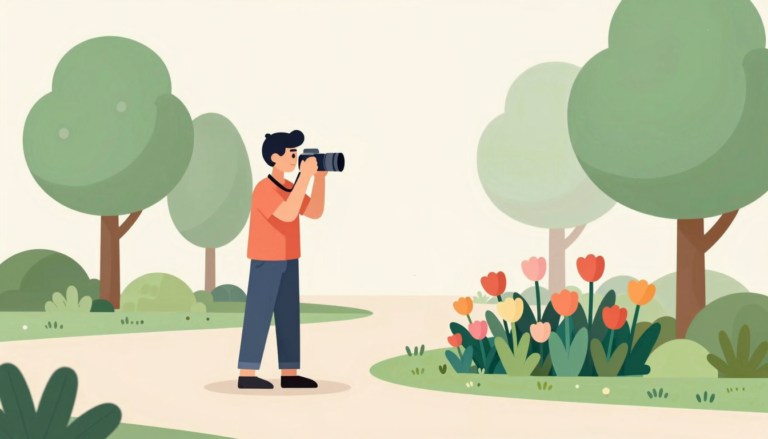
Awe may also be closer at hand than those vast landscapes suggest. With attentive observation, even a nearby park could offer enough to stop and wonder. A 2020 study published in Emotion, involving older adults, offers support for that possibility.
Sturm and colleagues’ study, published online in 2020, assigned older adults to weekly 15-minute outdoor walks for eight weeks, with or without instructions to notice things that evoked awe. The comparison group was not prescribed a distinct brisk-walking program. Awe walkers reported greater daily prosocial positive emotions and less daily distress over time; the groups did not differ significantly in change on anxiety, depression or life-satisfaction measures. This was a small study of healthy older adults, not evidence that the practice treats a mental disorder.
The selfie analysis found that awe walkers occupied less of the frame over time and showed increasing smile intensity. These were coded photographic measures; they do not establish that smiles became more natural or that control participants ignored their surroundings.
Attention Restoration Theory offers a related, but separate, account of how some environments may ease directed-attention fatigue. It distinguishes effortful focus from attention drawn more gently by the surroundings. The awe-walk study did not establish attention restoration as the mechanism behind its emotional findings.
Nature can offer what the theory calls “soft fascination.” Mountains and waterways, the sound of wind, and shadows cast by trees can draw our attention without requiring deliberate concentration. In this account, that more relaxed way of attending gives the mind room to recover from tension and mental fatigue.
A phone can easily fill that breathing room with fresh demands. Suppose you head to the park to relax but keep answering messages as you walk. Or you take fifty photographs of a flower for social media, then spend half an hour editing them. When those tasks consume the break, you have effectively moved the office onto the grass.
Repeatedly checking messages can interrupt an outdoor break, but awe does not require a complete absence of screens. The research discussed here does not establish that electronic images inevitably produce shallow processing or prevent awe. Choose how to use a device according to whether it helps you notice the surroundings or repeatedly diverts your attention.
Imagine briefly scrolling past a seaside photograph without giving it much thought. That is one possible way to use a screen, not evidence that every screen-based experience is superficial.
Standing beside the sea could be a different experience. You might smell the salty air and hear pebbles rolling as the waves retreat. Those sensations might bring back the excitement of seeing the sea for the first time as a child. Perhaps you would find yourself thinking about how small a person is before such an expanse.
Direct contact with a place can engage several senses and personal memories, but this does not prove that nature benefits people only through unmediated outdoor exposure. A photograph, recording or view through a window may also be meaningful. Treat the walk as an optional experience rather than a guaranteed healing mechanism.
On your next walk, try leaving your headphones off and keeping your phone in your pocket. Give yourself a few small things to notice: find leaves in three different colors, look at a cloud and consider which animal its shape resembles, and listen to the wind moving through the treetops. Paying attention this way may reveal how many small pleasures in an ordinary day we tend to overlook.
Life holds more than performance targets and unfinished homework. If a moment of wonder is available, give it some room; there is no need to force a particular feeling or assume everyone will experience awe in the same way.
If you feel tired or unhappy, try stepping outside. Look at a century-old tree or the evening clouds glowing with color. The world is still there, patiently holding its arms open, offering a place to rest and heal.
Look up. You are part of the scenery, too.
Frequently asked questions
Do awe walks require spectacular scenery?
With attentive observation, even a nearby park could offer enough to stop and wonder. Small discoveries might include shifting light and shadow on leaves or an unfamiliar wildflower.
How can I try an awe walk?
Try leaving your headphones off and keeping your phone in your pocket. Notice leaves in three different colors, consider which animal a cloud resembles, and listen to wind moving through the treetops.