Summary
A museum visit, a London tour, and a simulated road trip reveal how photography can focus attention—and how interference can weaken its contribution to enjoyment.
At a glance
Taking photos can increase enjoyment of positive experiences by drawing attention to what you are experiencing and increasing engagement. In the London tour experiment, mentally planning photographs also helped, with no statistically significant difference from taking them. Photography can interfere with activities that already require concentration; in the simulated road trip, greater interference weakened the benefit, although every photography group still reported more enjoyment than the group taking no pictures.
In a TED talk that has stayed with me, New York–based artist Cesar Kuriyama described a project called One Second Everyday. The idea was simple: record one second of your life each day, capturing a moment from ordinary life.
He joined those fragments into a continuous video. By the time he reached 80, he imagined having a five-hour film that condensed his life. He said the project made him wake up full of energy, thinking about what interesting things he could do that day.
After watching the talk, I started recording my own daily second. Before long, though, I wanted to capture too many things. I also worried that I would become so absorbed in video editing that I would neglect my studies—a convenient excuse for being lazy. I abandoned the ambitious project, but one habit remained: casually taking photographs to record my life.
For me, the greatest pleasure in photography is preserving interesting experiences. But can taking a picture also make the experience itself more enjoyable?
Why taking pictures can deepen an experience
Our lives consist of individual experiences. Some are milestones, such as an unforgettable graduation trip. Others are as ordinary as the three meals we eat each day. These experiences help define who we are, and our ability to enjoy them affects how satisfied we feel with our lives.
Photography gives us a way to capture them almost whenever we like. We take more pictures, and of more things: visits to popular attractions, gatherings with friends, everyday meals, outfits, workouts. What gives photography its appeal? Can it really help us enjoy life more?
Three researchers from the University of Southern California, Yale University, and the University of Pennsylvania explored this question through a series of experiments. They examined how taking photographs affected enjoyment during experiences including car trips, lunch, museum visits, and making handicrafts.
Across different positive experiences, they found that photography could increase enjoyment by increasing engagement. People paid closer attention to what they were experiencing and became more immersed in it. The more involved they became, the more they enjoyed themselves.
One experiment offers a particularly clear picture of this process. University students visiting an archaeology museum were randomly assigned to two groups. One group could take photographs whenever they wished; the other could visit the museum but could not take pictures.
During the visit, participants wore special glasses that tracked their eye movements. This allowed the researchers to measure engagement through observable behavior as well as through what participants later reported.
Those allowed to take photographs looked more frequently at the artifacts they wanted to photograph and kept their eyes on them for longer. Afterward, they also reported greater engagement with the visit and greater enjoyment than those who had not been allowed to take pictures.
The difference, then, was more than a subjective feeling. It appeared in where people directed their visual attention and how long they kept it there.
You do not always need to press the shutter
Was this greater attention simply a consequence of operating a camera—adjusting the lens, framing a shot, pressing the shutter?
To investigate further, the researchers conducted another experiment with people taking a car tour of London. Participants were randomly assigned to three groups. One could take photographs freely. Another took no photographs. The third was asked only to think about and mentally plan where they would take pictures.
Both the photography group and the planning group reported greater engagement and enjoyment than the group that did neither. There was no statistically significant difference in engagement or enjoyment between actually taking photographs and merely planning them.
This suggests that the benefit comes from the psychological process behind photography, rather than simply from its physical actions. Deciding that a moment is worth recording draws attention toward it. Even when no photograph results, concentrating on what we would like to capture can make the experience more enjoyable.
When photography gets in the way
Of course, taking pictures does not always help us concentrate. Sometimes it pulls our attention away.
I often see people taking photographs in movie theaters. Whenever someone beside me pulls out a phone, opens the camera, takes a picture, and then posts it to social media, I find myself lamenting the plot they are missing.
What happens to enjoyment when photography interferes with the experience it is supposed to record?
The researchers explored this through a simulated road trip in the laboratory. Participants watched scenes on a computer showing what they might see during an actual road trip and were asked to imagine that they were really traveling.
They were randomly assigned to four conditions, each involving a different degree of interference:
- No photography: Participants watched without taking pictures.
- Low interference: Participants could take a picture simply by clicking an onscreen camera button.
- Medium interference: Participants had to use the mouse to move a bulky simulated digital camera over the scene they wanted to photograph before taking the picture.
- High interference: Participants had to move the simulated camera and also had the option of deleting pictures they had already taken.
All three photography groups reported greater engagement and enjoyment than the group that took no pictures. Even with some interference, photography still offered a benefit in this experiment.
But the benefit grew smaller as interference increased. The more photography disrupted the simulated trip, the less engaged participants became and the less they enjoyed it.
Follow your attention
Taken together, these experiments point to a key ingredient in enjoying an experience: engagement.
Research has found that becoming highly engaged in an activity can substantially increase enjoyment. It can even lead to the peak experience known as flow: being so completely absorbed in what you are doing that you lose awareness of time passing.
Photography will not necessarily bring about flow. It can, however, help direct attention toward valuable experiences and reduce those moments when, in the middle of something interesting, your mind wanders off to consider what to eat for dinner.
The situation changes when an activity already requires considerable concentration—reading one of my articles, for instance. Taking photographs may interrupt your engagement and reduce the pleasure you get from reading.
Attention is a limited resource. When we keep switching it between two or more activities, distraction can leave us less happy.
There is another way photography can draw us away from the moment. Some of us become absorbed in producing the perfect picture. Taking it is only the beginning. Then come filters, retouching, collages, stickers, captions, and all the other adjustments. Once the picture is ready, we share it across social platforms and turn our attention to how many likes it receives.
That process can bring pleasure, too. But if it causes us to overlook the beauty of the experience itself, I do not think the tradeoff is worthwhile.
After all, one of photography's greatest pleasures is discovering and recording moments we might otherwise miss, preserving the fragments of life we want to remember. Bringing our attention back to what we are photographing can help us live with greater awareness.
Finding interest in an ordinary day
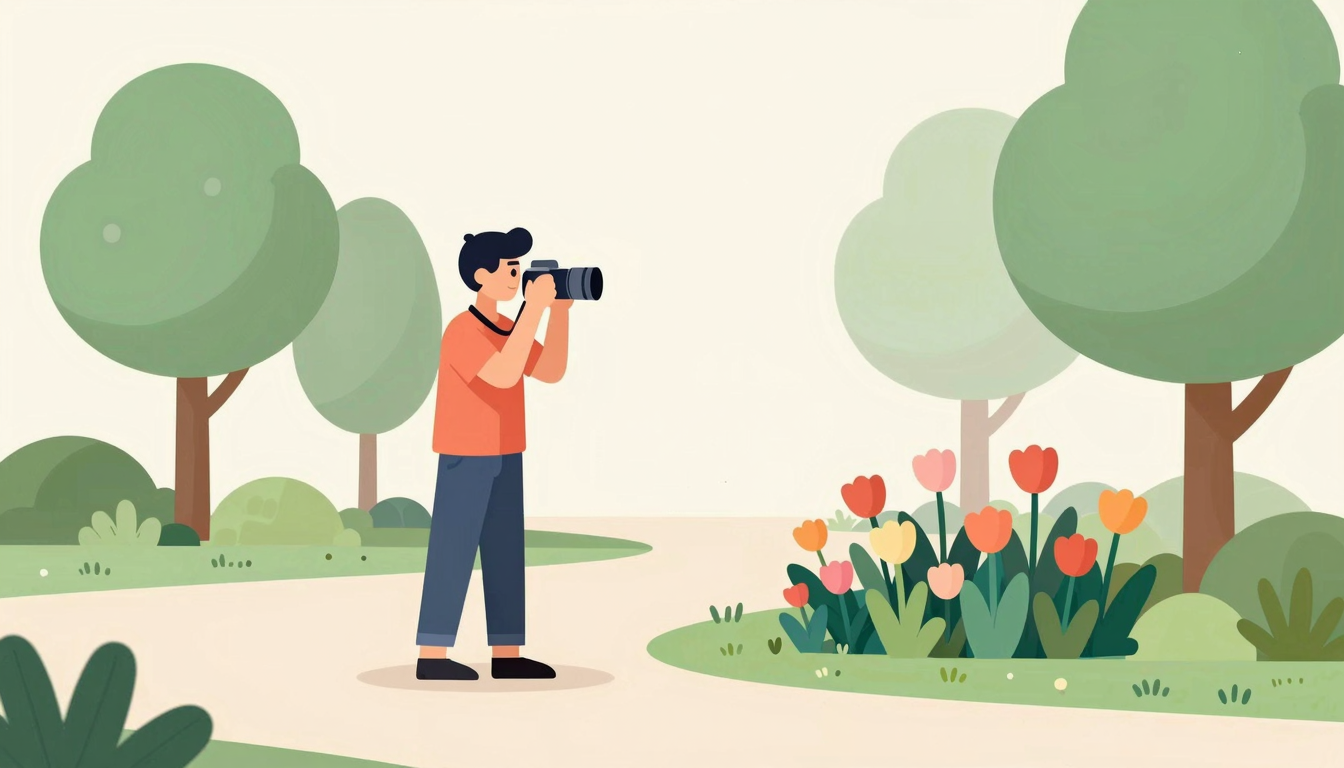
You begin to notice things you might never have looked at without a camera: a thoughtfully designed street sign, a lively patch of flowers in a park, a brilliant sunset overhead.
When photography draws you into your surroundings, life can begin to feel like a film. A friend's face tells an interesting story. A meal becomes a work of art. Even cracks in a wall take on a sense of rhythm.
What is the value of noticing these things?
There is a scene in The Big Bang Theory in which three friends sort through the belongings of a Caltech professor who has died. Leonard laments that the researcher devoted his entire life to work without making any outstanding scientific contribution. After all those years, he has left behind only boxes of research materials that seem useless.
Howard replies that not everyone achieves fame and success. Some of us have to find life's meaning in the details of everyday living.
To me, life's meaning is there in living itself. People who can find pleasure in the small details of an ordinary day are fortunate indeed. Taking photographs is one simple thing that can make our experiences richer and more enjoyable. Why not give it a place in the life we are already living?
Frequently asked questions
Do you have to take a photograph to benefit from planning one?
In the London car tour experiment, both taking photographs and mentally planning them increased reported engagement and enjoyment compared with doing neither. There was no statistically significant difference between the photography and planning groups; this does not establish that they were identical in every respect.
When can photography reduce enjoyment?
Photography may interrupt engagement when an activity already requires considerable concentration. In the simulated road trip, greater interference weakened the benefit, although all three photography groups still reported greater engagement and enjoyment than the group taking no pictures.
Does photography necessarily create flow?
Photography will not necessarily bring about flow. The article describes its potential to direct attention toward an experience, while flow involves deeper absorption and losing awareness of time passing.