Summary
After career success gave way to withdrawal, the writer began examining the fear behind her need to appear strong. Accepting her limits remains an uncertain, ongoing practice.
At a glance
The writer connects her constant giving and performed strength to a longstanding fear of abandonment. She begins questioning these patterns by acknowledging her limited energy, allowing others to see her vulnerability, and trying to stop proving that she is a “good person.” Her account describes an ongoing struggle to change, rather than completed recovery.
Looking back over the three or four years before writing her account, the writer recalls the pandemic, earthquakes, floods, and plane crashes. Those who were suddenly gone were ordinary people, moving through cities and working to make a living, just as she and those around her were. For her, the feeling that no one could control what happened in the next second brought a shared grief. They were people like us. They were us…
She turns to a psychology professor’s explanation of how people may respond when life disappoints them or takes a downward turn. Without realizing it, they can slip into the role of a “self-defender,” shutting themselves inside a “safety glass dome” of their own making. In the professor’s account, the enclosure seems to offer shelter, yet gradually draws them away from reality.
The writer came to recognize that retreat in her own life. For a few years before 2018, she enjoyed a brief period of career success at what she describes as the publishing industry’s largest e-commerce platform. She oversaw its main publicity channels. Publishers, prominent publishing figures, authors, and celebrities promoting their books all had to go through the channels she managed.
She attributes that success to rapid growth in new media, her own feel for content, and the brand recognition the platform had built over many years. By her account, every article drew more than a million views, the audience grew by millions of followers, and books she helped promote sold out with ease. Results like these felt almost routine.
She had come to book-related communications work by chance and found that she enjoyed it. She put herself into the work without seeking a particular return. Discovering that her writing could resonate with readers, attract followers and shares, and even generate revenue went well beyond anything she had expected.
Success, she now admits, went to her head. She insisted on leaving the platform to try her luck elsewhere, expecting another career high. Instead, her career took a steep downward turn. Once sought after by headhunters and major companies, she found herself attracting no interest and began to see herself as a workplace failure. She experienced two rounds of layoffs, along with open verbal abuse and exclusion from colleagues. Her enthusiasm and confidence gave way to retreat.
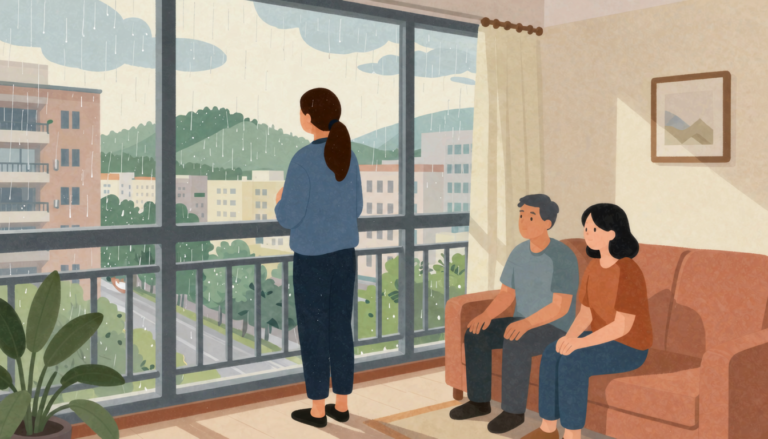
She describes what followed as her underlying “self-defense” mode taking over. For more than half a year, around 2019–2020, she stayed shut in her room, seeing no one and not speaking. She spent her days anxious and staring into space. At night she could not sleep; her hair fell out in handfuls, and during the day she had no energy for anything. She had long since stopped updating her personal account. The red dots marking unread WeChat messages only made her want to hide. She wanted everyone to leave her alone, yet she also wanted help. She did not know whom to ask.
Gray is the color she would choose for those four years of her working life. Still, she was grateful that, although her career had reached no new heights, she had grown in her understanding and outlook. In her own image, the gray had not turned completely black.
Against that experience, a passage at the beginning of the professor’s book on group counseling and psychotherapy holds particular meaning for her. The professor writes that it takes considerable courage to face oneself, ask others for help, and look carefully at one’s own difficulties or mistakes. These acts can open the way to breakthroughs, change, and renewal. Those willing to take them, in the professor’s view, are people who value themselves and long to change and grow.
The writer now feels ready to look directly at the fear and self-protection she recognizes in herself. She wants to stop concealing them and live more honestly as herself. It is time, she feels, to begin making that change.
That self-examination has altered how she sees the professional network she built during her successful years. She had gained those connections by continually making her presence felt, in what she calls an “unequal exchange.” In her view, the supposedly high-level contacts fell away once she no longer had something of value to offer them.
Yet she had approached relationships expecting the kind of care a mother gives her child. Growing up, her social world had largely consisted of school and home. Beyond her teachers, classmates, and mother, she had little experience of relationships or their boundaries. She believes that this narrow circle left her unprepared for the complexity of relationships at work.
She traces her fear of rejection and abandonment back to childhood. In her account, her extended family had not welcomed her birth, and she often heard talk of being “sent away.” Her mother, however, insisted on protecting her. She never looked down on her daughter; instead, she doted on her, even spoiled her, and gave her unlimited support in whatever she chose to do.
Looking back, the writer sees her choices as having revolved around proving that her existence had value. Her way of defending herself was to be strong and never ask for help. Beneath that stance lay a fear: if she lost her value, she would become the child who was sent away, separated from the mother who cared for her so completely.
She believes this deeply rooted defense led her to think that giving everything she could and continually proving her worth would keep others from abandoning her. Now she sees give-and-take as essential to a lasting relationship. What she calls an “equal exchange” has become, in her view, the foundation on which a relationship can endure.
Recently, reading a section on the “self-defender” in one of the professor’s psychology books helped her recognize how long these fears had held her captive. The fear of having no value, of being abandoned, had bound her like a spell throughout her life.
After her mother was no longer there, she had lost the person who loved and cared for her wholeheartedly. She describes the child within her as sealed away. To prove her worth, she began pretending to be strong, pretending she could look after everyone around her.
This defense became, in her reflection, a perfect dream she had constructed for herself. Everything about her had to be flawless: her behavior, her appearance, her figure. Even at meals, she had to sit with her back straight. With her younger brother, she felt she had to act as both eldest sister and mother. She could not let him see her falter.
She believes this lifelong pattern has shaped the course of her life. She missed opportunities with men she considers good partners. She kept giving and trying to prove her worth, yet those efforts did not bring her genuine friendship. Maintaining her flawless image left her ashamed to show vulnerability. She felt she had lost even the ability to ask for help—something a child can do.
The professor warns that if someone remains absorbed in this illusory way of living for too long, they will eventually lose touch with reality and may even develop mental illness.
For the writer, the strain remains present in everyday requests for help. She often feels a strong reluctance, but, afraid of being called cold or uncaring, pushes herself to do things she does not want to do. Looking back on the years spent sustaining her perfect dream, she feels exhausted—deeply exhausted.
Then something suddenly becomes clear to her. Her discomfort does not mean she lacks the willingness to help others. She simply does not have enough energy to manage her own affairs comfortably and still devote large amounts of time and effort to helping other people.
She is surprised and delighted to find herself becoming more aware of her own patterns. Like a baby learning to walk, she is feeling her way through the first steps of caring for herself, starting from the beginning.
She now sees acknowledging her limits as a prerequisite for mental health. Yet she is still struggling to learn how to take on only what she can manage. Her practice begins with admitting that her abilities are limited, letting others see her falter without being afraid, and daring to stop proving that she is a “good person”…
Frequently asked questions
Why did the writer feel compelled to keep proving her worth?
She traces this need to childhood fears of rejection and being sent away. In her retrospective understanding, appearing strong and giving everything she could seemed like ways to prevent abandonment.
How does the writer understand her reluctance to help others?
She comes to see her reluctance as a matter of limited energy: she cannot comfortably manage her own affairs while also devoting large amounts of time and effort to others. This is her explanation of her own experience.
What changes is the writer beginning to practice?
She is trying to acknowledge her limited abilities, let others see her falter, and stop proving that she is a “good person.” She describes these as tentative beginnings and remains engaged in the struggle to change.