Summary
A doctoral supervisor shares ways to get thesis writing underway, from building confidence through revision to protecting daily writing time and finding surroundings that help you concentrate.
At a glance
Treat academic writing as a skill you can improve through practice and revision. Protect roughly 90 minutes when your energy is best, tell others this time is reserved, limit online distractions, and try different writing environments. The article also recommends realistic commitments and room for rest, drawing on its presented account of self-control as a limited resource.
Tackling Thesis Procrastination: Guidance from a Doctoral Supervisor at Beijing Normal University
Every year around this time, the undergraduate, master's, and doctoral students I supervise all plunge into a frantic period of thesis preparation. Does that sound familiar? I know how miserable this can make students. Many find themselves trapped in a seemingly endless cycle of procrastination, eventually finishing their theses in tears at the last minute, with disappointing work and worrying prospects at review. Today, I want to share some practical, psychologically informed ways to break that cycle. These methods also apply beyond thesis writing: you can use them for other tasks that require sustained effort, willpower, and self-control.
Writing a Thesis Is Easier Than You Think
The first step is to believe that academic writing is a skill you can improve. Without that belief, it is easy to lose confidence, avoid putting words on the page, and keep postponing the work. The encouraging news is that writing is highly trainable. With the right methods, you can make a substantial leap in your ability.
Eight years ago, I was helping my first doctoral student write her first academic paper. After a long delay, she sent me a draft. I had a bad feeling about it and opened the file with some trepidation. For context, I had spent 15 years researching emotion regulation, so managing my emotions was something I felt rather confident about. Yet that draft still got the better of me. For a moment, I wanted to do unspeakable things to both my computer and my own eyes.
But she kept writing and revising in response to her supervisor's feedback, gradually developing the habits of academic writing. Eight years on, she has successfully completed her doctorate. Writing now seems almost like muscle memory for her: the words come readily, the logic is clear, and the structure is complete. Watching that change convinced me that writing is an ability you can train. I would even say that learning to write a good paper is easier than building good muscles. So do not let writing frighten you. Have confidence in your ability to improve, and believe that with the right methods, anyone can make it through to graduation.
Make Thesis Writing a Priority
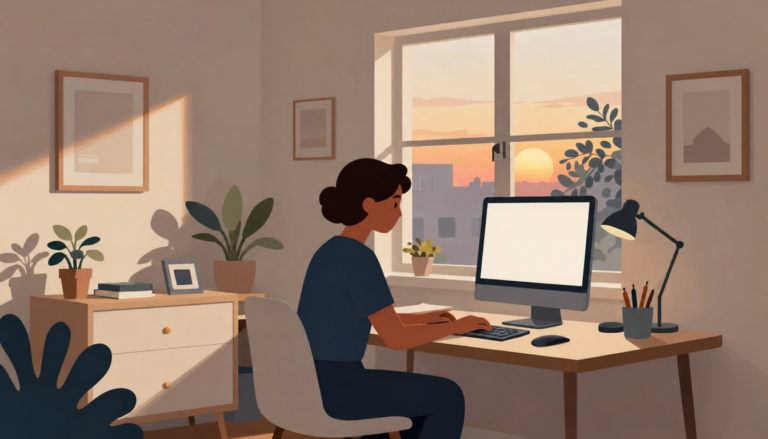
Give writing first claim on your day. Choose an early period that fits your study habits—for example, 9:00 to 10:30 a.m.—and reserve it for your thesis. This is also advice I draw from Roy Baumeister, the psychologist known for his work on willpower: protect roughly 90 minutes when your energy is at its best, because longer stretches are harder to sustain. During the run-up to graduation, give your thesis those best 90 minutes each day.
Once you have chosen that period, make it official. Tell your family, friends, and partner that this is your writing time, that you will make no other commitments during it, and that you will use it to read research and work on your thesis. Ask them to leave you uninterrupted. If your plan is always, “I'll really get down to writing when I have some free time,” that free time will keep slipping away. To get something important done, give it the highest priority and make sure the people around you know.
Avoid Taking On Other Tasks That Demand High Self-Control
The principle behind this advice is that self-control is a limited resource that can be exhausted. Do not stretch it too thin. While you are working on your thesis, try to avoid taking on other commitments that also require a great deal of self-control.
One intriguing social psychology experiment illustrates this idea. We called it the warm-cookie and carrot experiment; it was described as having been replicated many times, and a former fellow student of mine in social psychology also studied it specifically. The researchers installed an oven and a refrigerator in a laboratory, recruited very hungry university students, and randomly assigned them to two groups.
One group was given freshly baked cookies, still warm and fragrant from the oven. The other was given cold baby carrots straight from the refrigerator. After eating, both groups attempted very difficult geometry problems. They were told that correct answers would earn a reward, but the problems required sustained thought and effort. Which group do you think kept trying for longer?
The reported result was that the warm-cookie group persisted for more than twice as long as the cold-carrot group. The psychologists interpreted this as evidence that self-control is a resource that, within a given period, can be devoted to only one task. The practical lesson they drew was to avoid using it up before doing something truly important.
Applied to thesis writing, the advice is straightforward: writing demands substantial self-control, so avoid scheduling other demanding efforts over the same period and draining the capacity you need for it. Examples include dieting, restricting sugar, preparing for the TOEFL, or other activities that require strong restraint against your biological impulses. Save that capacity for your thesis, and build a realistic plan around your actual circumstances so that you can keep going. Leave some room in the schedule, too: flexible time, rest, videos for relaxation, socializing, and even time to sit and do nothing. These breaks can help you replenish the self-control you need.
Manage Your Internet Use—or Consider Going Offline While Writing
The internet gives us an endless supply of information and interesting new things to look at, making distraction almost effortless. It can feel as though we have forgotten how to sit quietly and concentrate on a single task. When writing a thesis, or doing any other work or study that requires deep concentration, I recommend limiting your use of the internet, your phone, and social media.
When my fellow students and I were writing our doctoral theses, we used to download an application for this purpose. I remember a skull-themed interface. You would set a period, and during that time it would restrict internet-dependent applications on your computer and phone, leaving you with tools such as Word for writing and Mendeley for organizing research papers. When the time was up, normal access returned. I found it very useful, and students who struggle badly with thesis procrastination might want to try something similar. When I searched, I found that comparable applications were still available to download to help people stay offline while writing.
Find a Writing Environment That Suits You
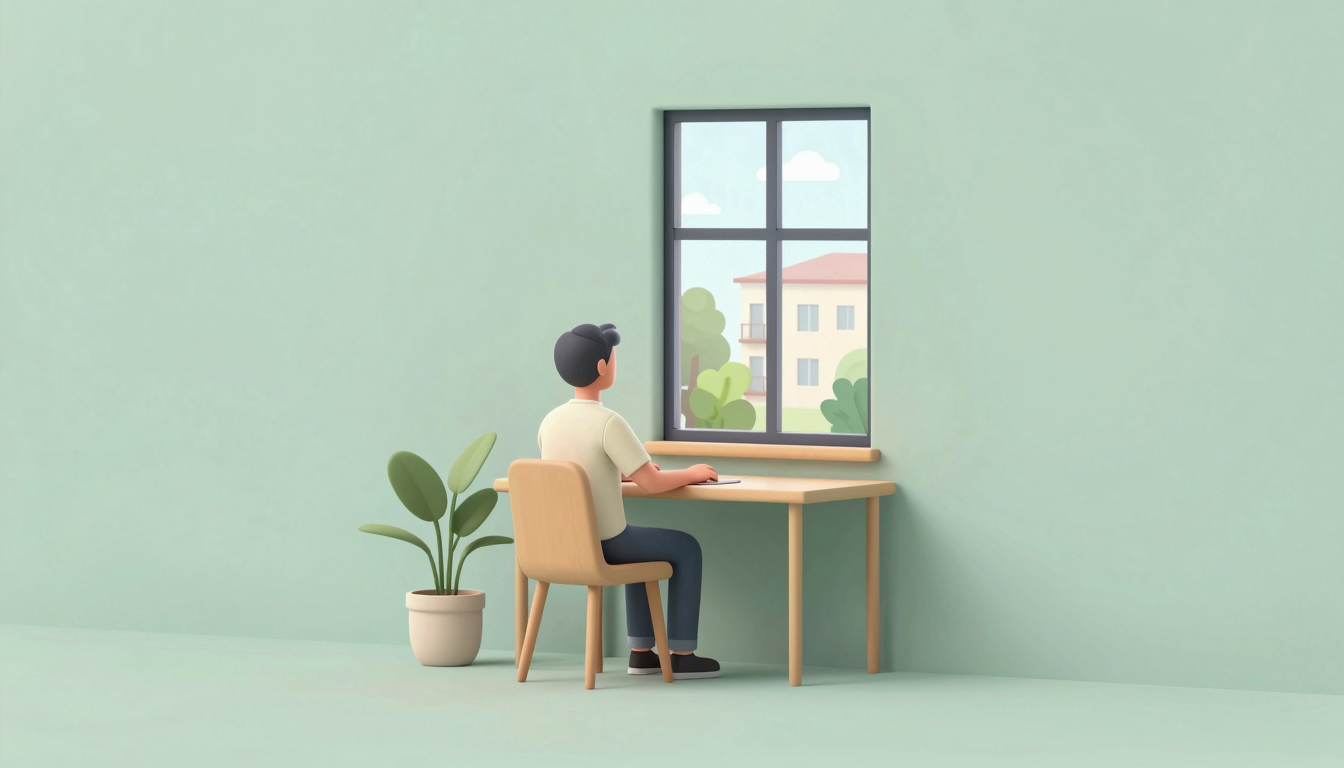
Students also ask me what kind of environment is best for thesis writing. The answer depends on the person. Some need a quiet, private space without interruptions before they can concentrate. Others work better in a library or study room, where a little peer pressure helps: when everyone around you is writing, you feel rather awkward playing on your phone. Still others prefer an open setting with some background noise, which helps them focus.
I belong to that third group. The noisier my surroundings become, the more I find myself trying to direct all my cognitive resources toward the words I am writing. That makes me feel more focused and efficient. Try different settings for yourself; quiet is not the only condition in which people can write well. One possible reason you have kept putting off writing is that you have yet to find an atmosphere that really suits you.
Remember: once you start writing, follow your plan, and stop putting it off, you are already halfway there. We will discuss specific writing techniques soon, but these essential preparations for getting started are work you must do yourself. I hope these approaches help you begin your thesis—and that you adapt them to other tasks to make your study and work more productive.
Frequently asked questions
How much time should I reserve for thesis writing each day?
The article recommends protecting roughly 90 minutes when your energy is at its best. Choose an early period suited to your study habits; 9:00 to 10:30 a.m. is an example rather than a required schedule.
Do I have to disconnect from the internet to write my thesis?
The article recommends limiting internet, phone, and social-media use during concentrated work. Timed blocking software is an option for students who struggle badly with procrastination; going offline is not presented as a universal requirement.
Is a quiet room always the best place to write a thesis?
The best setting depends on the person. Some students need quiet and privacy, others benefit from working around peers, and others prefer background noise. Try different settings to find an atmosphere that suits you.
How can I build confidence in academic writing?
Treat writing as an improvable skill. The supervisor describes a doctoral student developing clearer logic, structure, and writing habits through continued practice and revision in response to feedback.