Summary
Chronotype can help explain why morning productivity advice does not suit everyone. Observe sleep and performance, then match demanding tasks to workable alert periods.
At a glance
There is no universal most productive hour. Your preferred timing, sleep, task demands and environment all matter. Observe repeated patterns, use proper questionnaires if needed and adapt demanding work where possible without treating chronotype as destiny.
Advice to do your hardest work first thing in the morning sounds sensible until you try it and spend the morning struggling to begin. Then, late in the afternoon, the same work becomes easier to organize. The problem may be less about discipline than about treating one schedule as suitable for everyone.
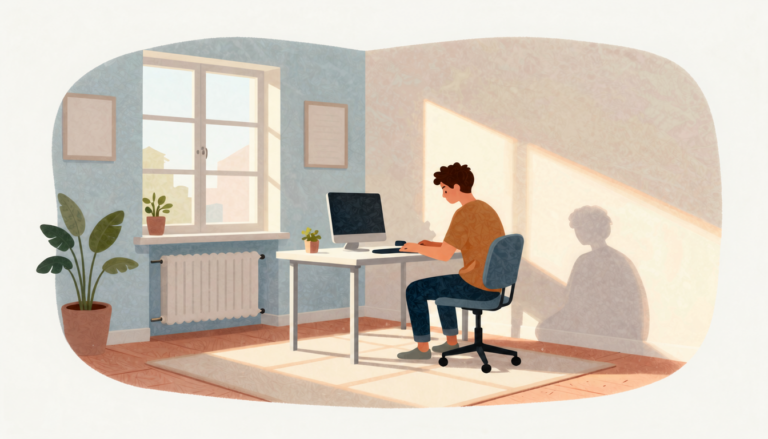
The original article begins with a student eager to follow productivity advice and excel at university. Morning work never feels as fluent as expected; much of the writing gets finished toward evening. That experience introduces a useful question: when does demanding work fit your own pattern of alertness?
Chronotype offers one part of the answer. It does not supply a perfect timetable or excuse every difficult morning, but it can help you plan with more attention to how you actually function.
Larks, owls and the space between
Circadian rhythms are roughly twenty-four-hour patterns in biological processes. The National Institute of General Medical Sciences describes their role in functions including sleep and hormone release, with environmental cues such as light helping to synchronize internal clocks.
Chronotype describes individual differences in preferred timing. Some people tend toward earlier sleep and waking; others prefer later hours. Morning types are often called larks and evening types owls, with intermediate patterns between them. These are convenient descriptions of variation rather than three boxes with perfectly sharp edges.
A person who feels bursting with energy in the middle of the night may recognize the owl description. But late-night wakefulness alone is not a complete assessment. Deadlines, habits and insufficient sleep can affect what a day looks like too.
Biology matters, so a different preference is not simply a failure of self-control. At the same time, a chronotype is not a lifelong verdict. Age, circumstances and exposure to daily cues can shape patterns. A label is useful only insofar as it helps you understand and manage the life you have.
Observe sleep timing without turning it into a quick diagnosis
The Munich Chronotype Questionnaire, or MCTQ, examines sleep timing on workdays and free days. The midpoint of sleep on a free day is a useful starting concept: sleeping from 10 p.m. to 8 a.m., for example, places the midpoint at 3 a.m.
The complication is recovery sleep. If the working week leaves you short of sleep, a long free-day sleep may partly reflect catching up rather than your preferred timing alone. That is why assessment needs to consider sleep duration as well as the clock.
A description of the MCTQ hosted by the University of Pennsylvania explains its use of reported sleep patterns. For a formal estimate, use the actual questionnaire and its scoring instructions rather than a shortcut that subtracts part of the workday/free-day difference and assigns everyone a fixed cutoff.
You can still learn from a simple diary. Record sleep timing, how rested you feel and when tasks go well. Note whether a “free day” was truly free of alarms or commitments. The point is to gather a pattern, not to produce an impressive-sounding label from one weekend.
Matching the time to the task
The possibility that performance improves at a time suited to someone’s chronotype is called the synchrony effect. A 2023 research review describes the most robust advantages for strong morning or evening types and tasks requiring effortful analytical processing or suppression of distraction. It does not make every person or task equally sensitive to timing.
That distinction matters when planning a day. Writing an article requires holding ideas in mind, deciding what matters and resisting distractions. Organizing routine reimbursement documents may require less of that particular kind of effort, although errors still matter. If writing reliably goes better in your later alert period, reserving that period for it may be sensible.
A morning-oriented person might make the opposite allocation. Neither schedule proves that one person works harder or is more capable. It reflects an attempt to place a demanding activity where it has a better chance of receiving good attention.
Creativity also includes different processes. Generating possibilities, checking an argument and completing routine editing are not identical tasks. Avoid assuming that every stage must peak together merely because they all belong to “creative work.”
Notice enjoyment and motivation as well as output
A difficult schedule may feel unpleasant before its effect appears in a completed task. If an early class repeatedly feels like a battle with alertness, consider that context before concluding that you dislike the subject. Equally, an evening struggle does not establish a lack of ability.
Mood, interest and confidence are worth noticing alongside accuracy and completion. They can affect your experience of the work, even though they do not by themselves demonstrate which biological mechanism is responsible. A diary can keep these observations separate: feeling enthusiastic is different from producing your clearest work.
Look for repeated patterns under reasonably comparable conditions. One unusually successful night is not enough to organize a whole life around, especially if it was followed by an exhausted day.
Make the available schedule more supportive
Where you have flexibility, try placing a demanding course or focused work block during a period that tends to suit you. Ask other people to reduce interruptions then. A protected hour at a workable time may matter more than an ideal hour that is constantly broken up.
Where you cannot change the timetable, prepare what you can in advance and protect getting enough sleep. Coffee may feel helpful for alertness, but it should not become the explanation for repeatedly shortening sleep; late use can also interfere with rest. Scheduling is a practical compromise, not a contest to defeat the body.
Finally, keep the conclusion modest. Owls can work in the morning and larks can work later. Preferences do not erase learning, motivation, task design or ordinary variation. The useful shift is from demanding that everyone become a morning productivity model to asking when your difficult work receives the best conditions you can realistically provide.
Frequently asked questions
What is chronotype?
A description of differences in preferred sleep and activity timing, often called morning, evening or intermediate preference.
Does one sleep midpoint identify my type?
No. Sleep debt, commitments and proper scoring need consideration.
Which tasks may benefit from timing?
Research reviews particularly discuss effortful analytical tasks and control of distraction, with differences across people and tasks.
Can an owl work in the morning?
Yes. Chronotype describes a tendency rather than an inability; sleep and preparation still matter.