Summary
What might staying in bed communicate? This parenting account explores sleep, motivation, time awareness and possible school stress before outlining a collaborative morning program.
At a glance
Begin with adequate, regular sleep and explore what makes mornings difficult, including motivation, developing time awareness or possible school-related stress. The parenting account proposes a 21-day family program that moves from enjoyable shared rewards to concrete routines and gradually greater independence. Twenty-one days is its working schedule, with no guaranteed habit-formation deadline.
“Just five more minutes.” The request can set off a familiar morning scramble: a rushed wash, breakfast gulped down, a late arrival at school and an angry parent. Helping a child get up ten minutes earlier takes both an understanding of what makes mornings difficult and the practical skill to change the routine. The costs extend beyond money. Repeated disorder can undermine a child’s developing sense of order, while constant urging and confrontation can wear away the warmth between parent and child.
A Chinese parenting account draws on two reports to question labels such as “lazy” or “disobedient.” The Chinese national mental-health development report for 2023–2024 reportedly found that 95.5% of primary-school pupils and 90.8% of junior-secondary pupils fell short of national sleep-duration standards. Separately, the 2024 Chinese family parenting-environment report is cited as finding that 73.6% of families ranked waking children as their foremost daily stressor, ahead of supervising homework. The writer uses these reported findings to draw attention to physiological, psychological and developmental needs that blame can obscure.
The approach developed in that account treats the recurring struggle as an opportunity for the family to grow together. Ten earlier minutes could become a step toward greater order and a child’s ability to manage themselves with less dependence on parental commands. It begins by asking what staying in bed might communicate. Resistance may signal several underlying needs; trying to force the behavior to stop can leave those needs unexplored.
What makes getting up difficult?
The first question is whether the child has had enough good-quality sleep. The account cites a sleep researcher whom it describes as a professor at a Stanford sleep research center. In his book about why people sleep, he emphasizes sleep’s importance for children’s brain development, memory consolidation and emotional regulation.
The writer then connects chronic sleep deprivation with impaired prefrontal functions involved in carrying out plans, controlling attention and managing emotions. In this explanation, a child may struggle to organize morning tasks or leave the comfort of bed because the brain’s “command center” is running low on battery. The image describes depleted capacity rather than a lack of willingness.
A late bedtime therefore deserves closer investigation. Is excessive schoolwork keeping the child awake? Could blue light from electronic screens be suppressing normal melatonin secretion? Has too little daytime exercise left energy unspent? Might eating before bed, bedroom light or noise be contributing? These questions leave the explanation open for each child. Ensuring enough good-quality sleep is often central to making it easier to get up.
Alongside the capacity to get up is the question of what getting up offers. Drawing on expectancy-value theory, the writer links motivation to how much someone values an outcome and how likely they believe success is. If leaving bed promises commands, pressure and dull tasks, while staying there offers comfort, safety and autonomy, delay may make sense from the child’s perspective. The proposed response is to offer something positive and immediate to look forward to, appealing enough to offset the psychological cost of leaving that comfort.
Parents may prioritize efficiency and order while their child hopes for connection and enjoyment. Where this difference helps explain morning reluctance, making room for something the child values can bridge those priorities.
Even an appealing use for extra time may be difficult to picture. The writer invokes a developmental theorist’s account of the concrete-operational stage, roughly ages seven to eleven, when children’s understanding of abstract time is still developing. Applied to mornings, “ten minutes” may remain vague. A parent can imagine how those minutes allow an unhurried breakfast, an enjoyable bike ride and an early arrival at school with time to relax. A child may struggle to connect the time saved with that whole sequence of benefits.
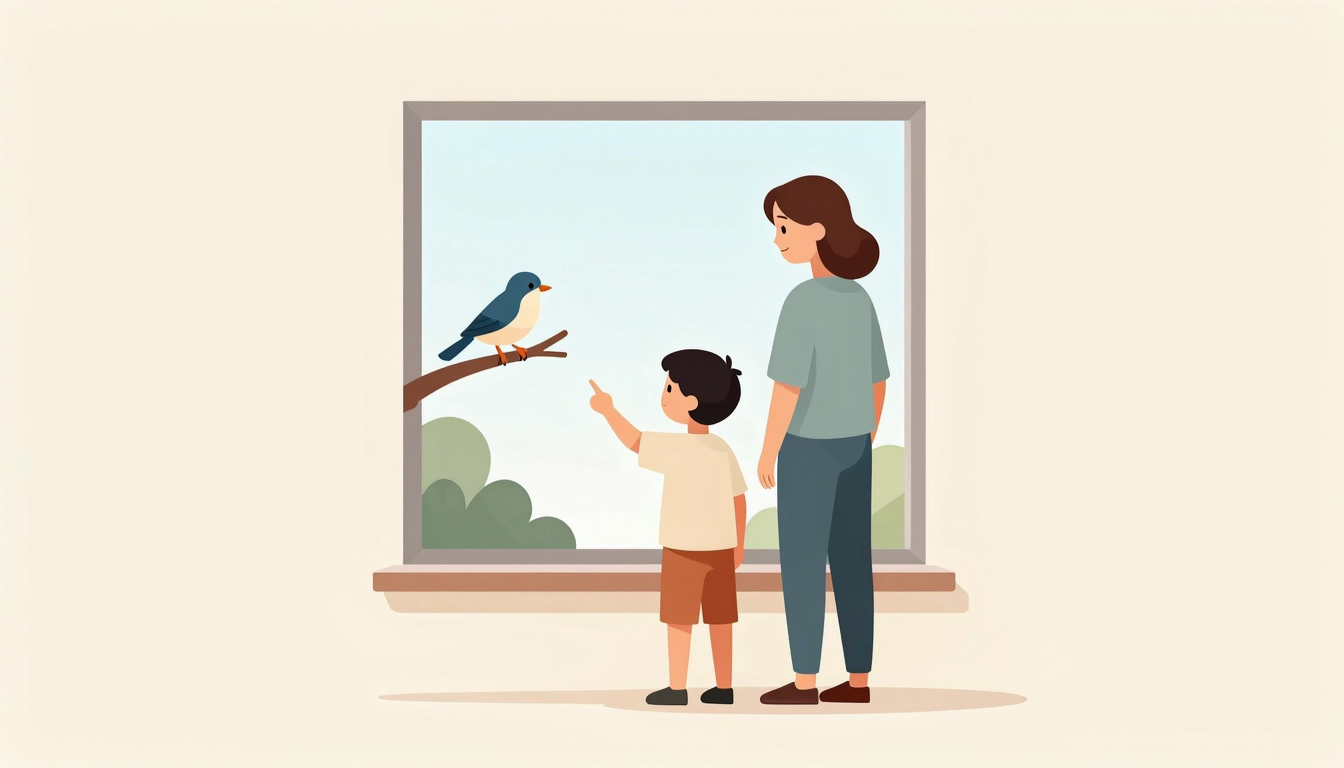
An anecdote in the account makes the distinction concrete. An unnamed mother used a three-minute sand timer to help her child experience time passing instead of repeatedly lecturing about it. They then spent the three minutes they had saved watching birds outside the window together. As the writer tells it, this gave the child a tangible sense of the enjoyable things a few minutes could make possible.
Reluctance to leave bed may also concern what awaits during the day. The writer suggests that when schoolwork, peer relationships or interactions with teachers create continuing anxiety, staying in bed may become an unconscious, nonverbal expression of distress. Delaying the day offers a brief escape from a stressful situation—a possible form of self-protection. In those circumstances, shouting and pressure may deepen the anxiety behind the resistance.
An unnamed psychological counselor cited in the account recommends gentle inquiry when morning difficulties persist: is the child experiencing something troubling during the day, especially at school, that they do not know how to express?
For the writer, these possibilities point toward a change in the parent’s role. Moving from “I need to correct you” to “How can I support you?” creates room for collaboration, with the aim of easing conflict and developing greater autonomy.
A proposed 21-day family program
To put that supportive approach into practice, the writer proposes a 21-day habit-building program. Its design draws on an author’s account of the habit loop—cue, routine and reward—and on self-determination theory’s three psychological needs: autonomy, competence and relatedness, or connection with others. The schedule and activities are the parenting writer’s own design.
The intended goal extends beyond obedience to a morning instruction. The writer hopes to establish a stable, positive way of starting the day, understood both as a behavioral routine and as a neural pathway supporting it. Twenty-one days supplies the proposed working schedule, without making habit or pathway formation a guaranteed achievement by its end.
Days 1–7: Give the morning something to offer
The first week aims to build a strong, steady and enjoyable association between getting up and a reward. Begin with a family planning meeting. The child could receive a playful title such as “chief morning experience officer” and help decide what those extra ten minutes will hold. That role should carry real choices: the next installment of a favorite adventure audio story, a surprise breakfast available only to early risers, or a five-minute quiet puzzle challenge with Dad.
Choice, exclusivity and immediacy are central to the proposal. The child has something special to enjoy straight away and a say in choosing it. In the writer’s rationale, limited availability and a sense of control help make these possibilities motivating.
Progress also becomes something the child can see and mark. Together, create a morning adventure map or a medal wall, then let the child personally add a star or hero badge after each successful morning. The writer explains this feedback in terms of dopamine release in the nucleus accumbens, linking visible progress to pleasure and a sense of achievement that reinforce the behavior.
After seven successful mornings in the first week, the proposed reward emphasizes experience and connection. The child might choose a family outdoor adventure or appoint Dad as cook for a day, giving the week’s effort a celebration shaped by their preferences and time together.
Days 8–14: Make the routine concrete
The second week gives the initial enjoyment a more dependable structure. The writer’s aim is to help the child make external rules part of their own sense of order while introducing natural, reasonable consequences that connect choices with responsibility.
Draw a visual route together to make the abstract ten-minute routine concrete. A favorite theme, such as space exploration or a jungle treasure hunt, can turn the tasks into a path the child can follow. In the space-themed example, getting dressed becomes a two-minute equipment inspection. Washing recharges the energy crystals for the length of one song. Next comes a two-minute supplies check of the schoolbag, followed by arrival at base and three minutes of privilege time to enjoy the reward.
The writer presents this sequence as practice in more than time management. Remembering the steps, switching between tasks and carrying out the plan are intended to exercise working memory, task switching and the ability to put plans into action.
Responsibility also enters through a jointly agreed family morning pact. Choose a time when everyone is calm and the relationship feels warm, then put the agreement in writing or pictures so its terms are clear in advance. One proposed condition concerns transport: only if the child’s own delay makes a taxi to school necessary would they contribute toward the additional transport cost from their pocket money or entertainment budget. Thirty percent is offered as an example.
Parents would follow through calmly, without accusation, allowing the connection between the choice and its cost to become tangible. The writer suggests inviting reflection with a comparison: “This choice means giving up a family tub of ice cream this weekend. Do you think it was worth it?” The question leaves room for the child’s answer. In the writer’s view, experiencing that tradeoff can teach the connection between resources and responsibility more effectively than a lecture.
Days 15–21: Let the child take the lead
During the final stage, the proposal is to step back gradually so the child can experience “I can do this” and begin to see managing mornings as part of who they are. A small ceremony could mark the transfer of responsibility, granting a playful title such as “time-management officer.” Parents would move from managers to coaches, then become supportive observers. Questions about the child’s own plan would replace commands: “Officer, where are we in your plan now?” The writer sees this expression of trust as a powerful way to encourage responsibility and autonomy.
For day twenty-one, the program includes a family celebration with a carefully handmade “Morning Self-Management Leader” certificate. Together, look back over the challenge, display the medal wall and show photographs of calm mornings, giving the child space to share how the experience felt. Drawing on narrative psychology’s account of how stories help people understand experience and construct identity, the writer intends this ritual to help the child gather those days into a positive self-story: “I can overcome delay and manage my time.”
Build a household that supports the routine
The child’s growing independence still depends on the household around them. The writer describes family life as an ecosystem in which habits develop, asking parents to design and nurture supportive conditions. Parental example matters within that environment. Invoking mirror-neuron theory, the writer explains children’s learning through observation and imitation of those closest to them. A parent who stays up scrolling on a phone and then rushes through the morning offers little example of the calm routine they hope their child will adopt. The recommendation begins with modeling stability, order and a positive attitude.
Adequate, regular sleep remains the foundation of this approach to earlier waking. Establish a consistent bedtime ritual, with electronic devices put away one hour before sleep. Shared reading, calming music or relaxed conversation can take the place of screens. Keep the bedroom dark, cool and quiet. Protecting the sleep a child needs is part of working toward an earlier start; the writer presents that care as an investment in daytime alertness, emotional functioning and the ability to think and learn.
When progress is uneven, the recommendation is to focus on effort and strategy rather than judge the result. A parent might say, “I noticed you set your alarm yourself today. That’s a big step toward independence. What could we do to make getting up at the first ring more appealing tomorrow?” This recognizes something the child has already done and invites them to help improve the next attempt. The intended message is that ability can grow through effort and better strategies, and that mistakes belong to learning.
The same approach gives the family a shared question: how can we make our mornings happier and more efficient? Invite the child to contribute as an equal collaborator. Even an impractical idea deserves to be heard and discussed, though listening does not mean every suggestion must be adopted. In the writer’s view, having a real part in decisions is a powerful source of intrinsic motivation and responsibility.
Changing an established habit is like opening a new channel for a river. Clear planning, sustained effort and suitable tools are needed at first; with time, the new routine may gather momentum of its own. The hope for those ten earlier minutes reaches beyond saving money and having a less hurried start.
The writer’s deeper aspiration is a seed of self-efficacy: the belief that “I can manage myself and influence the world around me.” That seed could grow into respect for time, a willingness to keep commitments, the ability to adapt under pressure and a sense of inner order when facing challenges. Calmer mornings would then contribute to a larger development toward confidence, independence and inner strength.
Begin tomorrow morning with informed understanding in place of habitual shouting, and empathetic support in place of anxious pressure. The hope is for more harmonious, efficient mornings and a child increasingly able to direct their own life. Learning to manage each morning gently and firmly can be a way of practicing that agency, with a wide world of possibilities still ahead.
Frequently asked questions
Does the proposed program guarantee a lasting habit in 21 days?
No. Twenty-one days is the parenting writer’s proposed working schedule. Habit or neural-pathway formation is an intended outcome, with no guaranteed achievement by its end.
What should parents consider before aiming for earlier waking?
Adequate, regular sleep is the foundation. The account suggests exploring bedtime demands, screen exposure, daytime activity and bedroom conditions, while considering motivation, developing time awareness and possible school-related anxiety.
How does the proposed program gradually transfer responsibility?
Days 1–7 emphasize enjoyable choices and visible progress. Days 8–14 introduce concrete routines and jointly agreed consequences. During days 15–21, parents gradually move from managers to coaches and supportive observers.