Summary
A familiar T-shirt, a salvaged object, or a repaired bowl can carry a private history. This reflection explores the everyday lives preserved in treasured possessions.
At a glance
Old belongings can offer familiar comfort and preserve memories of the lives we have shared with them. Keeping, repairing, repurposing, or passing them on can preserve their usefulness and emotional meaning. The article acknowledges the appeal of decluttering while suggesting that long companionship with possessions may also help some people find reconciliation with parts of their lives.
Without these old things, I would have lived my life for nothing.
There are countless truths in the world, but few inspire such ready agreement as this one: every well-worn T-shirt eventually becomes sleepwear.
Minimalism has become a familiar ideal. Many young people have grown accustomed to clearing out the old to make room for the new. Discard what you do not need, keep only what matters most, and perhaps you will leave more room for a better life.
Yet some of us could read the same decluttering guide ten times and still struggle to part with the small material traces of our lives. There is nothing wrong with loving old things.
Often, they are precisely what makes us feel secure: the old T-shirt we sleep in, the familiar shoes that never rub, the childhood stuffed animal that has occupied the bed for years. There are the towels and pillow covers we always pack for a trip, and the old wallet we still carry even though we can barely remember the last time we paid cash. Its texture and smell are reassuring.
If decluttering prepares us to welcome life in the future, those of us who love old belongings are already embracing life, attentively, in the present.
A scrapbook of a life
For freelance photographer Zhu Baolei, the most important event of 2019 was finally having a room entirely her own. More remarkable still, she spent nothing on transforming it.
Her interest in collecting old objects began in college. After graduating, she started exploring abandoned buildings awaiting demolition in different cities. Inside, she found discarded objects that were still beautiful. The thought of them disappearing beneath earth and rubble seemed such a waste.
Gradually, she began bringing home almost every attractive old thing she found. Those discoveries filled the corners of her own small world.
“I've always felt that things made in the past have a more lasting appeal and hold up better,” she says. “Perhaps, when material goods were scarce and an object had to last a long time, people put more thought into its design.”
What others throw away, Zhu sees as treasure. Each piece has a story and an emotional attachment that is difficult to surrender.
The writer Sanmao once described the pleasure of salvaging things in much the same way: people unknowingly discard good objects that still have a use, and the joy of scavenging lies in bringing those dust-covered discoveries back into the light.
In an age of rapid consumption, people buy new things in large quantities and discard them just as readily. But enthusiasts like Zhu continue to discover what old objects can become in a new chapter of life.
Mary Randolph Carter, a Ralph Lauren executive, offers another example. Her apartment has the comfort of a farmhouse, with an assortment of old belongings scattered throughout. She calls it “a scrapbook of our lives.”
Her attachment comes precisely from knowing that possessions do not last forever.
When Carter was 16, her family home burned down. The house became, as she describes it, a sandbox filled with ashes. Everything was gone, including books and photographs—the things that had helped define their family life. The experience taught her that objects can be replaced, but people cannot.
If belongings are replaceable, why do we still depend on familiar ones? Perhaps keeping them also gives us a way to heal through their long companionship.
Collecting life, without chasing the new
In The Museum of Innocence, Orhan Pamuk, winner of the 2006 Nobel Prize in Literature, describes two kinds of collectors. One, associated with Western civilization, takes pride in a collection and wants to display it. The other is shy, keeping accumulated possessions tucked away.
Pamuk also made The Museum of Innocence into a real museum. At its entrance, he expresses the belief that the daily lives of ordinary individuals are richer, more human, and more joyful than grand cultural narratives.
People devoted to old belongings are collectors of life in this everyday sense, whether they display their treasures or keep them privately.
Some interpret a preference for used things as a shift toward lower-cost consumption. Another reading is possible: surrounded by material abundance, people may want to return to what an object actually does, without constantly chasing the newest, coolest product.
Ultimately, the point of consumption is not to move up or down a ladder. It is to make life fuller. The growing enthusiasm for vintage goods described in this account reflects that desire to return to simpler qualities and rediscover what was beautiful in the past. Loving old things can save money and spare us the effort of keeping up.
A report by ThredUP, described as the largest US consignment and resale website, put the number of women worldwide who bought secondhand clothing in 2018 at approximately 56 million. It valued the secondhand apparel market at $24 billion and projected that it would reach $51 billion by 2023.
ThredUP attributed that rapid growth chiefly to resale: goods continuing to circulate rather than being discarded after one owner. Vintage clothing provides a characteristic example of this circular economy.
In the market described here, Generation Z—identified as people born after 1995—had become a core constituency for secondhand goods. And clothing was only part of the picture. Old books and magazines, used camera lenses, vinyl records, and secondhand modified cars all had thriving markets and devoted enthusiasts.
More consumers wanted distinctive things at prices they could afford. At the same time, they did not want overproduction to create unnecessary waste and mountains of discarded goods.
Once we loosen the hold of constant buying and replacing, old objects no longer seem out of place. The enduring memories they hold can survive the rush of change, passing into the hands of people who will let them shine again. That, too, is the meaning of a circular economy.
The secondhand book platform Duozhuayu, described at the time as the most frequently used platform of its kind, was selling 100,000 books a month. Its founder, Maozhu, expressed a wish for a circular shop that would take in everything that had once mattered deeply to the founder personally and pass it to someone who needed it.
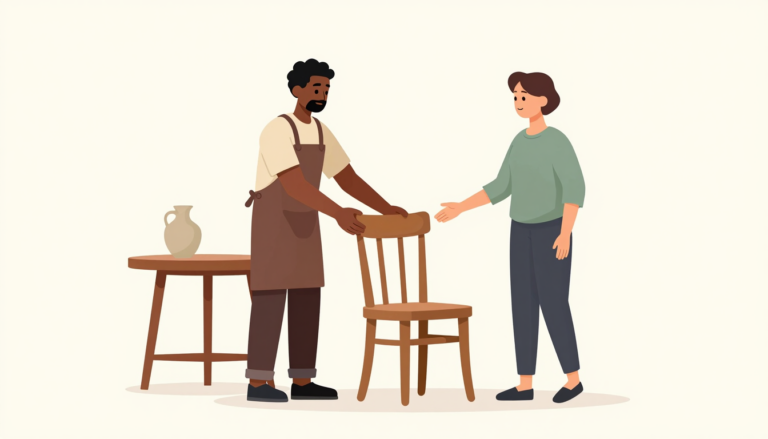
Whether we repurpose an object or pass it on, the process can take us back to an earlier stage of our lives. We can then place those warmly glowing pieces of the past into the hands of someone else worth cherishing.
The beauty held in such objects never goes out of style.
Broken things can begin again
In Japan, a growing number of people have been drawn to what might be called the landscape of scars.
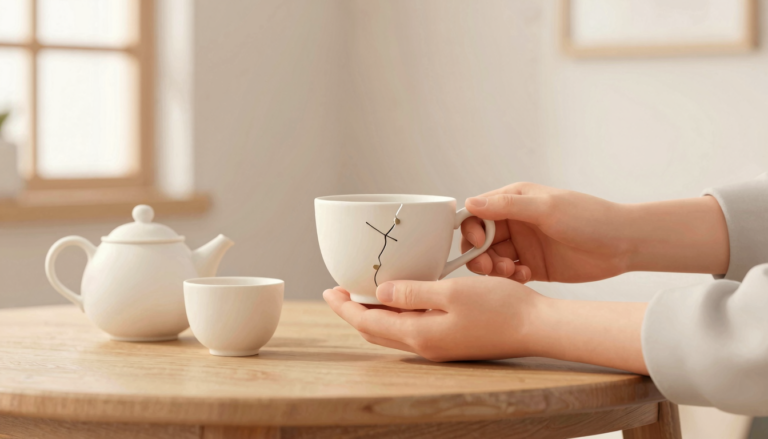
The repair craft known as kintsukuroi uses entirely natural materials to mend damaged objects. At its heart, it is a practice of restoration.
Throwing something away when it broke once seemed an obvious response. But after the March 11 Great East Japan Earthquake, many people began to feel that they could not go on losing things in this way. Why couldn't they say, “Let's keep going. Let's try once more”?
“Is there really nothing I can do?” The wish to resist loss became urgent. People wanted to preserve old belongings that carried memories and continue living with them.
Michihiro Hori, who runs a kintsukuroi classroom, noticed people beginning to train as professional practitioners after the earthquake. At the time described, his classroom had produced 400–500 graduates, with approximately 500 students still enrolled.
As they learned to repair objects, they were also tending to stories from the past. A painful experience had shown them that even when something is scarred, even when it inevitably breaks into pieces, there can still be a way to restore its vitality and go on living.
Perhaps this is what it means to say that we have more than one chance at life—that life can begin again.
In China, too, more people were turning to kintsukuroi to repair everyday possessions. Deng Bin, a teacher at Jiangnan University identified in this account as the first person to introduce the craft to China, said ordinary household objects accounted for half his repair commissions.
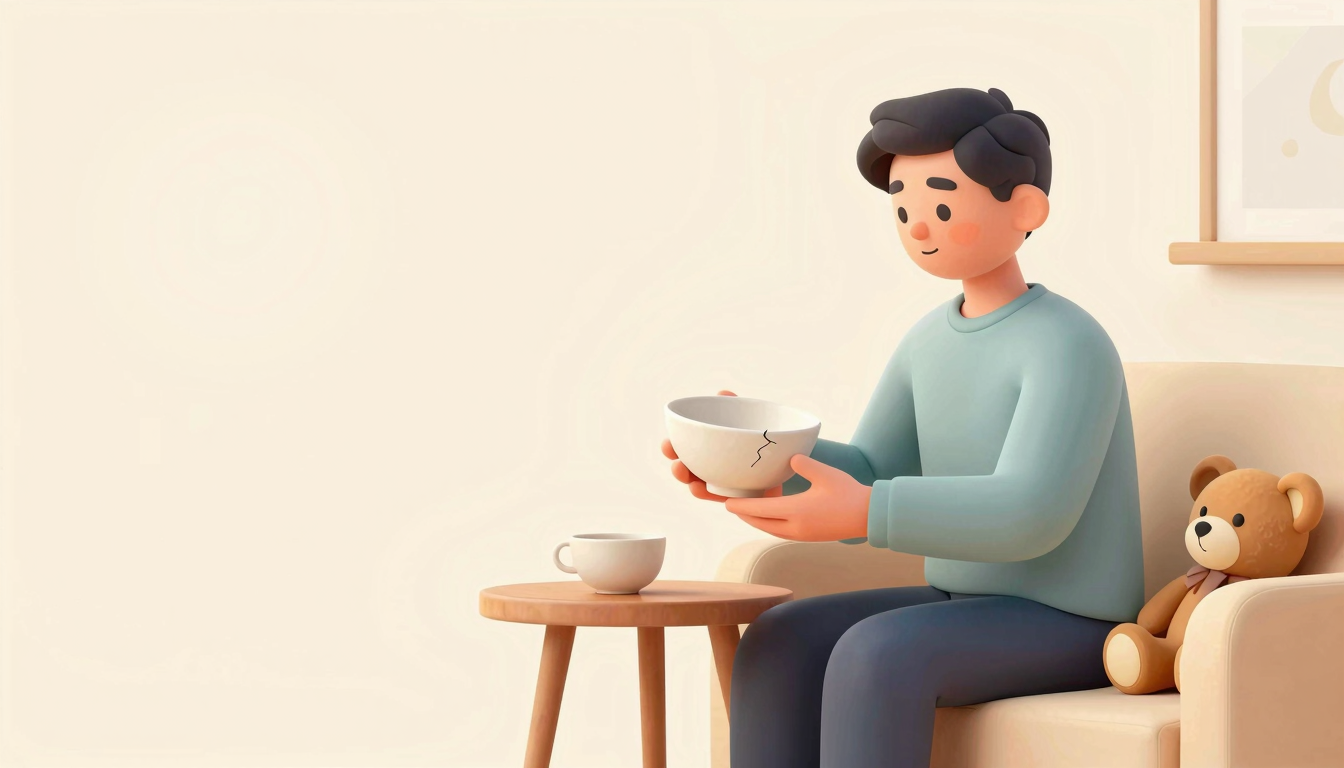
Among the thousands of objects he had repaired since 2013, the most memorable was a bowl originally made for microwave use.
Its owner was a young woman whose parents had divorced when she was a child. She had never lived with her mother. Later, while working in Shanghai, she became ill. Her mother traveled there especially to care for her and brought a set of tableware. The bowl was part of that set.
When it broke, the woman was determined to keep it. It held the memory of a rare experience of maternal care, and she did not want to lose that tangible connection.
Expensive or inexpensive, every beloved old possession bears traces of the life we have shared with it. Wanting to go on using it is also a way of expressing the longing we have entrusted to it.
The private worlds our belongings hold
In the film The Great Buddha+, the scavenger Ducai's only two friends enter his home for the first time after his death. There, they discover a bedroom resembling a space capsule, filled with the old belongings he treasured.
The film's narration observes that although we live in the space age and human beings have long been able to travel to the moon, we can never explore the universe inside another person's heart.
Fortunately, we still have old things.
For those who love them, looking closely at familiar possessions often means coming to terms with parts of their lives and finding some release.
Old belongings awaken another soul within us. They let us inhabit another identity and serve as talismans opening the way to another world.
These are the things we treasure.
Frequently asked questions
Why can familiar belongings feel reassuring?
The article connects that reassurance with long use, physical comfort, texture, smell, and memories. Its examples include comfortable shoes, a childhood stuffed animal, and an old wallet.
Does loving old belongings mean rejecting decluttering?
The article acknowledges that removing unnecessary possessions may make room for a better life. It also presents keeping meaningful old belongings as a way of embracing life in the present.
Why might someone repair an inexpensive possession?
An inexpensive possession can hold memories unrelated to its price. In the account of the broken bowl, its owner wanted to preserve a tangible connection to a rare experience of maternal care.
How does the article connect old belongings with a circular economy?
It describes resale, repeated use, repurposing, and passing objects to others as ways for belongings to remain useful and continue circulating. These practices can also carry memories into another chapter of an object's life.