Summary
After ten years of drinking tea, the author finds a deeper attachment to familiar vessels and discovers in juci a way to continue their stories.
At a glance
For the author, repairing cherished teaware preserves the memories, companionship and affection gathered through years of use. Learning juci deepens this personal appreciation of care and the beauty of imperfection. The outlook remains conditional: repair what can be repaired, consider another use if repair fails, and avoid letting possessions become burdens.
In my previous piece, I wrote about the hard lessons of ten years of drinking tea. Many fellow tea drinkers responded, “That could have been me.”
Only after a decade of mistakes did I realize that what I find hardest to let go of is less the question of whether a cup of tea is right or wrong than the vessels that have accompanied me through good times and bad.
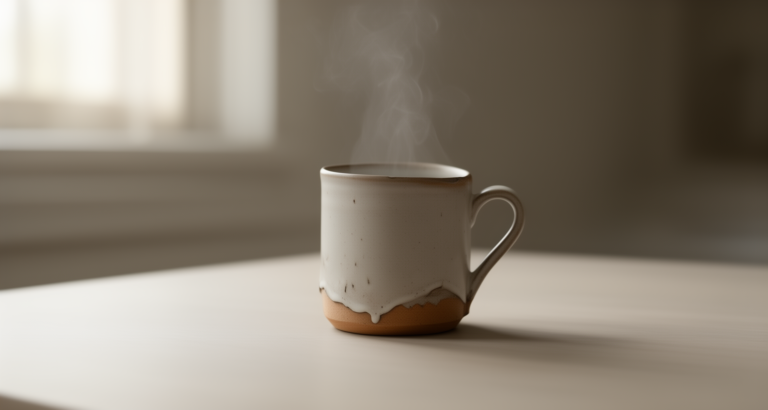
People part. Tea is eventually drunk. The vessels remain, quietly witnessing each sip and holding something of the time we have shared. Drinking tea means savoring the present; appreciating teaware is a practice of cultivating an eye for beauty.
That brings me to something quieter, rooted in Eastern tradition: juci, the craft of ceramic repair.
How a matching set becomes a life lived
Those of us who drink tea regularly know that everyday vessels wear out. Porcelain may be hard and durable, but daily use still takes its toll.
Adding water, putting on a lid, pouring tea, rinsing, wiping—every time we pick something up or set it down, there is a chance of a knock.
Over time, I have noticed that people who truly love drinking tea have hardly any complete matching sets left in their cabinets. At first, we buy whole sets because they look orderly and pleasing. Then one piece breaks, and we find another to take its place. Gradually, the cabinet fills with different shapes and styles.
To someone else, it may look like a jumble. A tea drinker recognizes vessels that are actually being used, taking their place in the ordinary business of living.
When a vessel becomes an old friend
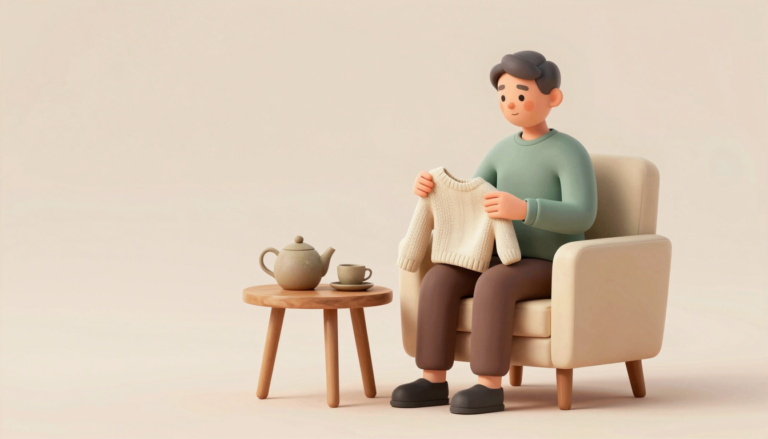
Many people throw away broken teaware and buy something new. I find that harder and harder to do.
This is especially true of hand-painted pieces, work from small kilns, and old vessels passed down through the years. Unlike mass-produced goods made with machine-pressed bodies and printed decoration, these pieces have an individuality of their own. Once one is damaged, finding another exactly like it is difficult.
But their uniqueness is only part of it. More than that, some vessels hold a period of our lives. Some hold a story. Others bring back someone we once knew.
Objects have no feelings of their own, yet long use gives them warmth. They become things we think of fondly, things we care about. Even their cracks hold memories of times we cannot forget. With a vessel like that, I would struggle to throw it away even if it broke into eight pieces.
Repairing the vessel, continuing the bond
Years ago, a chance encounter brought a good friend into my life. He has spent many years practicing juci. Last year, he received district-level intangible cultural heritage recognition; this year, he successfully submitted an application at the municipal level. His dedication to the craft shows in that progress.
As I learned juci from him and came to understand the care behind the work, I slowly began to grasp the deeper relationship between objects and time.
Juci is more than mending damage. It is a craft handed down by earlier generations, an intangible cultural heritage, and a practical wisdom woven deeply into life.
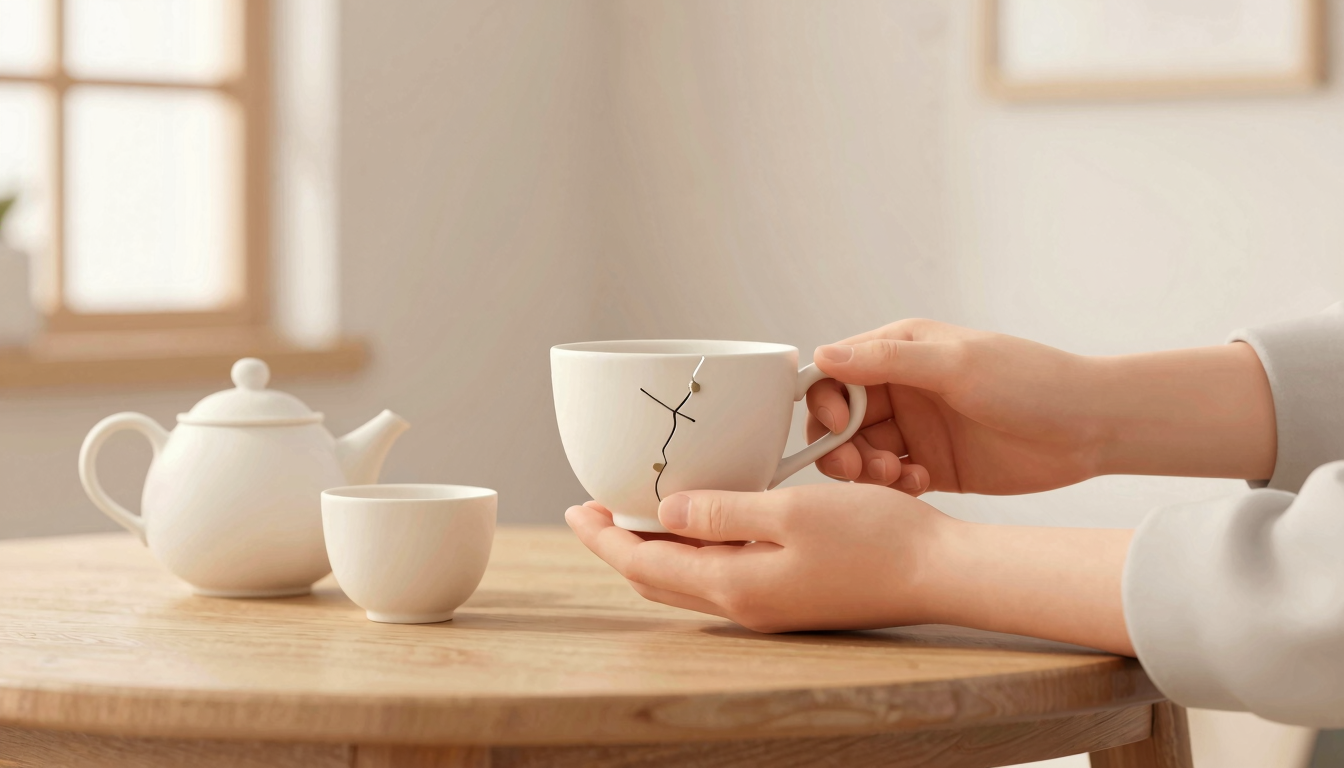
A cracked vessel need not be discarded or replaced. Repair can bring it back into everyday use. What someone else sees as a damaged piece becomes, through the craft, an old possession with a story and a warmth of its own.
Care as an everyday practice
What moves me most about juci has never been saving money. It is the Eastern philosophy I find behind it: use things fully, and make caring for them an ordinary part of life.
An old Chinese saying puts it this way: “Three years new, three years old; mend it and patch it for another three.”
To me, that expresses neither hardship nor a willingness to make do with anything. It expresses a way of living that avoids waste and restless consumption, without being swept along by the pressure to keep buying.
Caring for an object also means caring for the time, companionship, and affection it carries. It is a form of fond remembrance and regard, a reluctance to erase a part of the past too easily.
Many people interpret decluttering as an endless refrain of throw it out, throw it out, throw it out. That is not how I understand the Eastern philosophy of living. Meaningful letting go begins with buying thoughtfully and using things carefully. If something breaks and can be repaired, repair it. If repair does not work, look for another way to use it.
We need not let the demand for something new—or something perfect—dictate our choices. Objects should serve us; they should not become burdens we carry. To me, that is the clear judgment and wisdom at the heart of this outlook.
The beauty that repair reveals
When I look now at teaware that has been repaired, I do not see it as incomplete. I find it more beautiful.
Its marks make the passing years visible. Repair teaches us to cherish it. Imperfection makes it feel real.
For me, this is a refined expression of Eastern aesthetics: flaws do not eclipse worth; breakage need not mean abandonment; damage can leave something more beautiful.
Vessels carry the Way; objects convey affection. A cultivated person is not confined to a single function, and the great Way has no fixed form.
After ten years of drinking tea, I am slowly coming to understand that repair is a more enduring expression of affection than throwing something away.
May you, too, have an old vessel you cannot bear to discard—one that keeps you company as you drink tea, quiet your mind, and move peacefully through the years.
The teaware bears the marks. Time passes without a sound.
Frequently asked questions
What is juci in this reflection?
Juci is presented as a traditional craft of ceramic repair. Learning it from a longtime practitioner helps the author appreciate the relationship between objects, time and affection.
Does the author suggest keeping every broken possession?
The author recommends repairing what can be repaired and considering another use when repair fails, while maintaining that possessions should serve people without becoming burdens.
Why does the author find repaired teaware beautiful?
For the author, repair marks make passing time visible, encourage appreciation and give imperfection a sense of authenticity. This is a personal interpretation of the vessels and their history.