Summary
A familiar pan, a worn garment and childhood favorites reveal how ordinary possessions become woven into a family's remembered life.
At a glance
In Guo Jing's reflection, cherished belongings carry familiar usefulness, comfort, family connections and memories of particular experiences. Their personal value can outlast fashion, price or physical condition. Keeping meaningful objects can coexist with letting other possessions go: the author discards some clothes, and her son welcomes clearing out many schoolbooks while protecting childhood favorites.
By Guo Jing
Life is measured not by how many days we have lived, but by how many we remember. And in the days we remember, alongside the people, there are things.
The belongings that came along
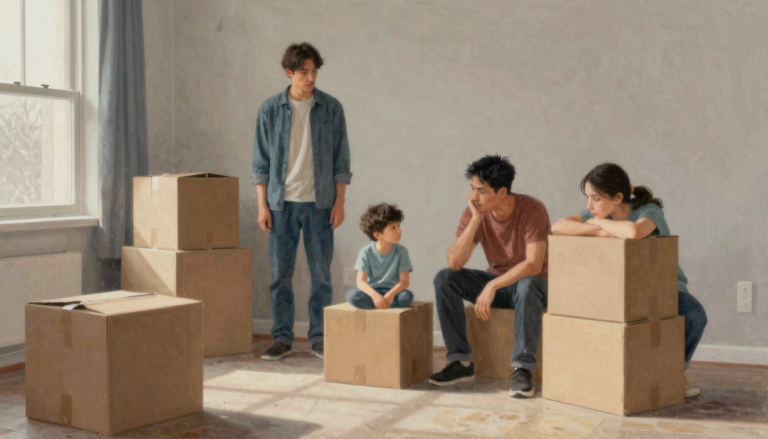
More than ten years ago, my brother and I bought our parents a new home so they could finally leave behind a life without heating or natural gas. One morning during the National Day holiday, we arrived early to help them move. Days beforehand, we had asked them to throw away whatever needed throwing away and pack whatever needed packing. They could leave the heavy, tiring work to us.
Yet everything stood exactly where it had always been. Every piece of furniture seemed to announce its intention to remain indefinitely, much like our parents, who stood there bewildered, unsure what to do.
We grumbled a little, but the excitement of moving them into their new home soon had us bustling about. We assumed that once we threw away some of the old things they had used for years, there would be little left to move. It did not work out that way. One by one, our parents retrieved the things we discarded, turning them over and examining them.
To save ourselves the wasted effort, we began asking them to approve things before we threw them away. The result was exactly the same. They stared at whatever we held as though it might be snatched away the moment they blinked, quickly coming up with reasons to keep it.
“This pan is old, yes, but it's easy to cook with. We're used to it!”
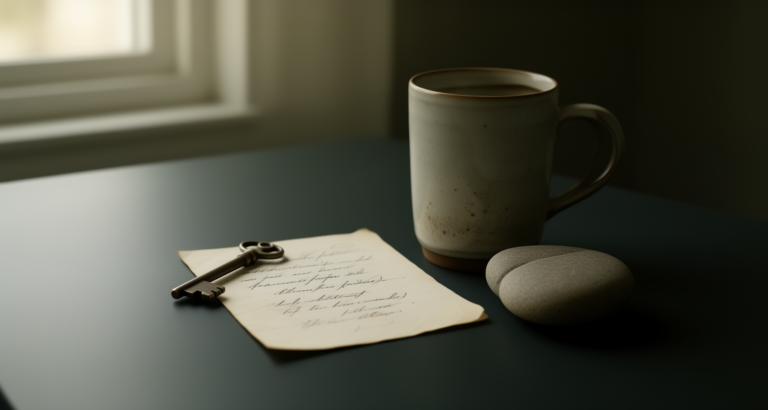
“The porcelain in this cup is especially good—so thin. Your father brought it back from Jingdezhen on a business trip years ago. Never mind the crack. It's still perfectly usable.”
“Oh, you can't throw out that folding stool! Your father's older brother wove the seat by hand, strand by strand. It feels solid when you sit on it!”
More exasperating still was the large wardrobe. We had spent months trying to persuade them to get rid of it. In the end, that heavy, cumbersome wardrobe went onto the moving truck, along with every last piece of old clothing inside it.
For a while after the move, our parents were delighted by the novelty of their new home. We had thought moving would sever their ties to the old place. Yet for a long time, they would allow us neither to sell it nor to rent it out.
When we visited on weekends, we sometimes heard them talking about the old house and their former neighbors. We could also see how distracted they seemed in their new surroundings, how awkward everyday tasks felt and how difficult it was for them to settle in.
Only later did we learn that they often went back without telling us. They changed buses several times and spent nearly two hours getting there. Then they returned with little reports about the old place, recounting them with relish.
“A glass window on the balcony had come loose. Your father and I secured it with wire.”
“There's a huge gap beside the kitchen extractor hood. We'll go back and patch it another day.”
They spoke as though they might move back in at any moment. Deeply rooted in familiar ground, they found it hard to leave. Their bodies were in the new home, but their hearts remained in the old one. I wondered how long they would go on living that way.
What the wardrobe holds
At every change of season, I sort through my clothes. At first, it was simply a routine chore. Gradually, I discovered that it had become a way of savoring the past.
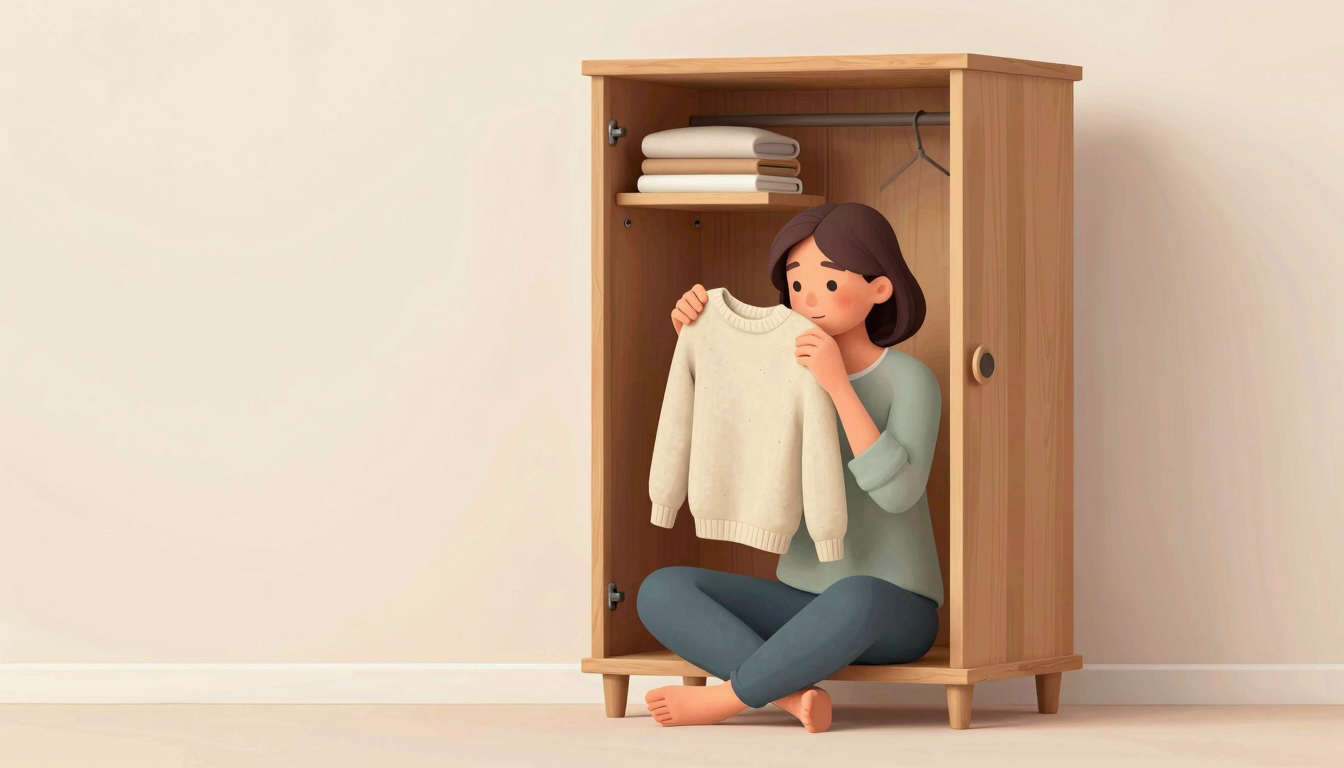
Sometimes I linger over a garment, lost in thought. Sometimes I lift one to my face and smell it again and again. Certain clothes immediately bring back the year I bought them, the place and the person who came with me. Even the happiness of buying them returns with startling clarity.
If I wore something to a particular occasion or in a photograph taken to mark a special moment, the scene and my feelings then flash through my mind. I find myself smiling at how silly or endearingly naive I was, and feeling an even deeper fondness for the sincerity and spirit I had. However old a garment may be, I can still dimly remember how it came into my life.
When I finish sorting, I always get rid of a few things I no longer intend to wear. Strangely, some clothes cost a great deal, yet I feel little attachment to them. Others are utterly ordinary, but even when repeated washing has faded them, wear has damaged them or moths have eaten holes in them, I cannot bear to throw them out. Year after year, they stay.
I keep them not because they are useful, but because of the comfort and pleasure they have left within my life.
A good book is much the same. Time may yellow its pages, curl their edges, loosen them or even leave the volume falling apart. It remains a classic, a treasure worth keeping.
Fashionable finery brings only a passing thrill; ordinary things hold a natural richness that lasts. Clothes need no hierarchy of prestige. When something feels right to both body and heart, when you love it too much to let it go, it becomes a classic of your own.
The things my son chose to keep
The summer my son finished junior high school, I helped him clear out his bookcase. It was crammed with reference books, textbooks, workbooks and all sorts of other reading. The bookcase did not look particularly large, but sorting it took considerable effort.
We went through everything, choosing and organizing. Useful books went back on the shelves. The rest we stacked, tied into bundles and sold as waste paper. In the end, we sold far more than we kept.
After more than half a day's work, we stood before the newly emptied shelves and both felt a weight lift. I was pleased to see the bookcase looking clear and orderly. My son felt that selling the old schoolbooks had relieved him of a burden.
Just as we thought we were finished, I noticed two dusty plastic bags on top of the bookcase. One held cards he had played with as a little boy. The other contained his favorite illustrated storybooks. Instinctively, I picked up both bags to throw them away.
“Mom, those are my favorite things from when I was little,” he said hurriedly. “I put them up there on purpose. Don't you remember?”
His words brought back an earlier clear-out, when he was still in elementary school. While sorting his toys, I had come across the contents of those same two bags and meant to throw them away. He had stopped me then, too.
“Mom, these are my favorite things. Please keep them for me.”
Another three to five years had slipped by since then.
I began wondering what had made him love those things so much. Perhaps he had secretly bought the cards at a roadside stall with his Lunar New Year gift money. Perhaps he had used the cards to beat so many other children that he still thought of himself, with a little private swagger, as a hero.
And the illustrated storybooks, most of them now missing their covers—perhaps they had been passed back and forth among his friends countless times. Perhaps he had traded beloved toys to get them.
Whatever their stories, as my son grew, his interests and affections would give him more things worth keeping and revisiting. Then let him keep them, one by one. Let them take their places in his album of memories, forming a landscape that belongs to his life alone. Each return to it could reveal something fresh, with a feeling all its own.
The old things woven into a life
Every age has its own flavor. Every stop along the way has its own scenery.
Whether we are young or old, the possessions we hold dear may have been a joy to play with, easy to use, comfortable to wear or part of a home where we could feel completely at ease. Or they may have shared an unforgettable experience with us and come to carry a special meaning.
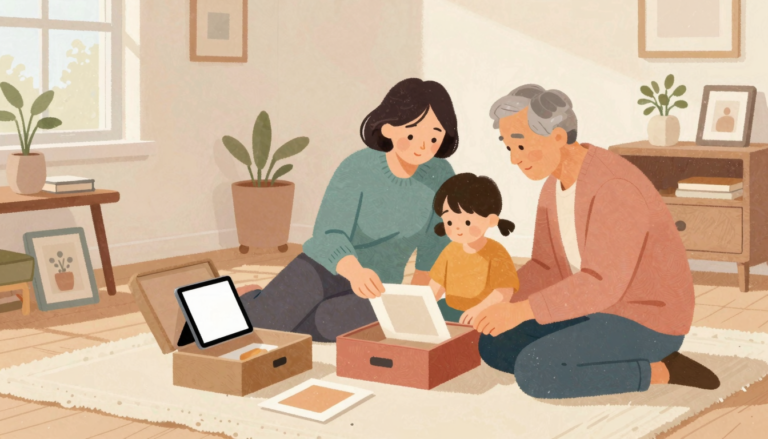
These old things become woven into our lives. Like vivid timestamps, they give color to distant, scattered memories and lend them wings. Like the opening pages of treasured books, they draw us into one unforgettable story after another.
Over the years, they become intimate companions, settling deep within our lives. They accompany us along the way, making life more vivid and giving it a sustaining richness.
The past can only be revisited in memory. And it is worth revisiting.
Frequently asked questions
Does the essay suggest keeping every old possession?
The author gets rid of clothes she no longer intends to wear and helps her son sell many old books. Her reflection leaves room for clearing things out while keeping particular objects that hold lasting personal meaning.
Why do the parents want to keep their old belongings?
Their reasons differ: the pan is familiar to cook with, the cracked cup has fine porcelain and a connection to the father's business trip, and the folding stool was woven by a relative and feels solid to sit on.
Does the author know why her son treasures his childhood cards and storybooks?
Her son says they are childhood favorites and that he deliberately kept them. The author imagines possible purchases, victories, sharing and trades behind his attachment, but those explanations remain possibilities.