Summary
A newly plump elephant can feel less familiar than one with a drooping head. For a Shanghai toy restorer, such details reveal what owners hope to recover.
At a glance
For some owners, restoring a childhood stuffed toy means recovering the familiar companion they remember. A Shanghai restorer’s work shows how careful repairs, restrained cleaning and consultation with owners can preserve the worn appearance that carries years of attachment. Making a toy look brand-new can leave it feeling unfamiliar.
As in Toy Story, a beloved stuffed toy can be a constant childhood companion, tucked into bed each night and included in games of house. As childhood recedes, many of these toys end up gathering dust in a forgotten corner.
For some people, though, the companionship lasts a lifetime. Someone in their twenties or thirties might work in finance or architecture, with all the prestige those careers suggest, and still love the same toy they grew up with.
Twenty or thirty years leave their marks. A hand or foot may have been torn off, an eye lost, a mouth come loose. There may be stains, thinning fur or stuffing that has flattened over time. These old companions begin to seem like people in need of care. A profile from Jianchang introduces a toy restorer whose Shanghai home offers somewhere to bring them for “treatment”—a place where the worn toys that accompanied their owners through childhood can be repaired.
By the time of the profile, he had been retired for more than a decade from his job as a parts worker at a research institute. He was comfortable working with his hands and had always enjoyed sewing and mending. Around 2016, he began learning how to repair stuffed toys, taking on orders and gradually building a reputation online.
Owners sent him old toys from across China, buying insurance for the shipments. Some were too anxious to entrust their companions to a delivery service and flew to Shanghai to hand them over in person.
He understands that these companions have a value their owners cannot measure in money. His approach resembles the conservation of an old city district: repair what has deteriorated while preserving its old character. Making a battered toy look brand-new can defeat the purpose.
To restore toys more than a decade old, he has visited a library to consult twentieth-century Shanghai fashion magazines, studying the toys pictured there and the fabrics people wore. Yet even that research has sometimes left owners dissatisfied. The appearance they want restored lives in their memory; neither a shop shelf nor a historical photograph necessarily holds the answer.
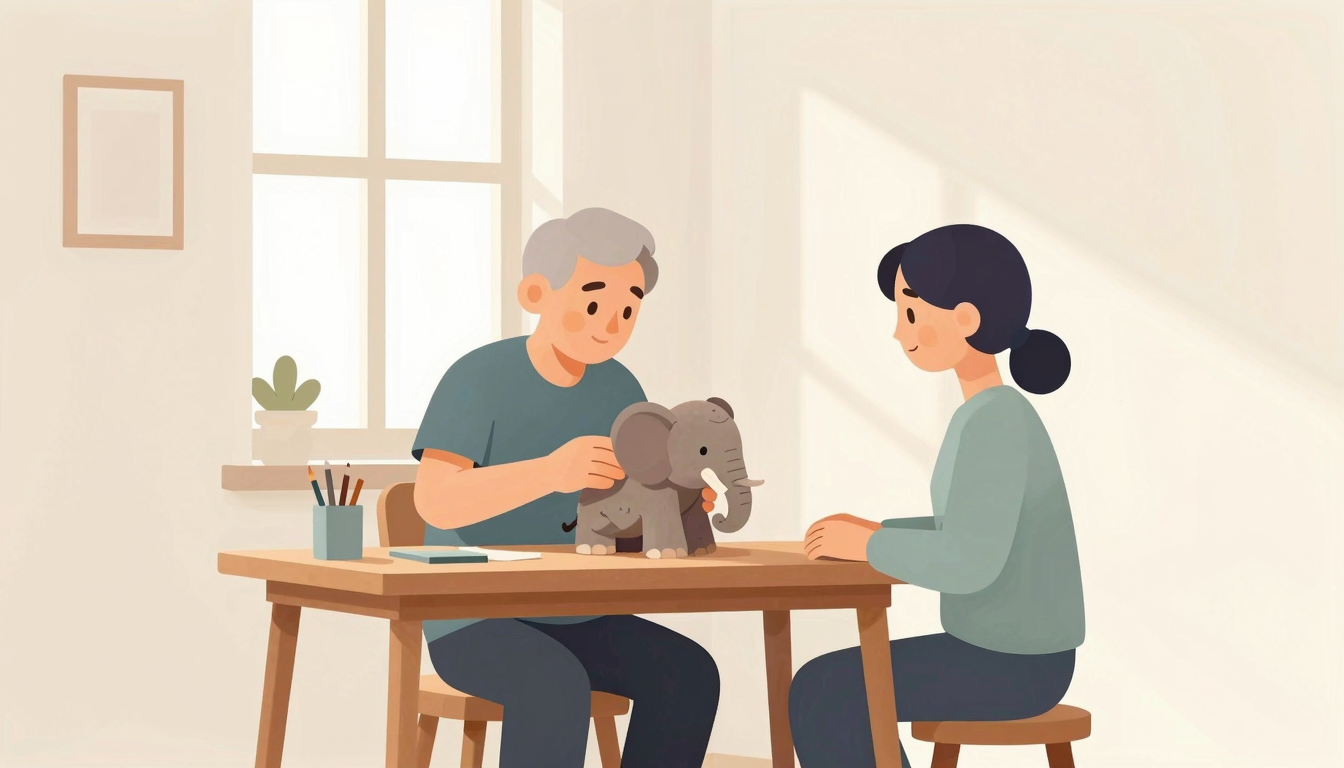
Once, he repaired a girl’s stuffed elephant, filling it with fresh stuffing to make it look lively again. When she received the newly plump elephant, she said it no longer felt like her toy. The companion she wanted back was the listless elephant she knew, with its head drooping.
Restoring the appearance most familiar to the owner became the guiding aim of his work. He cleans the toys gently with an oil-painting brush, taking care to preserve their shape. Even cleaning has its limits: washing away every trace of age would erase part of an old companion’s character.
Under fivefold magnification, he adds and trims fibers, carefully adjusting contours and tufts of fur. The profile describes his precision in terms of deviations no greater than the width of six human hairs. Finding suitable materials takes him through several of Shanghai’s fabric markets, in continuing consultation with owners as he chooses the closest possible match to the original.
Sometimes the material itself needs time and work to acquire the right worn appearance. In one case, restoring a single fabric doll’s head took about four months because he was aging the fabric to the condition he wanted.
For owners, recognition can be the measure of success. On Zhihu, a question asking whether anywhere in China repairs stuffed toys more than a decade old drew answers thanking him for his work. One respondent kept repeating the same point: “It really looks just as it did before! Just as it did before! Just as it did before!” They described the feeling as recovering something lost.
He often works day and night, absorbed in how to make the plush covering and which embroidery thread to choose. He takes the owners’ attachment seriously. “You may laugh at me for saying this,” he says, “but I know some of them can’t sleep without their toy.”
As he checks details with owners throughout a repair, they speak openly about how much the toys remain part of their daily lives: they hold them every night as they sleep, and they talk to them.
That continuing companionship also figures in a small study discussed on Guokr. The researcher jokingly called the work “teddy-bear anthropology” and reportedly found that years of companionship formed an emotional bond: the toy’s value lay in the time shared with it. A quotation accompanying the discussion captures the distinction: “It isn’t a symbol of childhood or a matter of nostalgia. It’s part of my life.”
One girl told the restorer that she often looked into her doll’s eyes. Whenever their eyes met, she said, all the pain in her body quickly disappeared. For years she had regarded the doll as her lucky charm and kept it with her.
Among a number of owners, he had noticed a shared childhood experience: separation from their parents because the parents worked away from home or had divorced. These owners had spent long stretches of childhood with their stuffed toys, and that companionship had continued into adulthood.
Every toy awaiting repair carries a story and an emotional attachment. Mending its fabric and stuffing restores the physical object that holds that attachment.
After repairing so many toys, he feels he can converse with them. They each have their own temperament, he says, as well as their own appearance. As he works, he reassures them: “Don’t be afraid of the pain. I’m not cutting you open—this is minimally invasive surgery, to make you well.” There, now they needn’t be frightened.
Facing the camera, he cheerfully holds up a stuffed panda. “You may not be able to tell,” he says, “but I know it’s looking sideways at me.”
Frequently asked questions
Why did the owner dislike her newly stuffed elephant?
She said the newly plump elephant no longer felt like her toy. She wanted the familiar, listless elephant with its head drooping.
Did one toy repair really take about four months?
In one reported case, restoring a single fabric doll’s head took about four months because the restorer was aging the fabric to the desired condition.