Summary
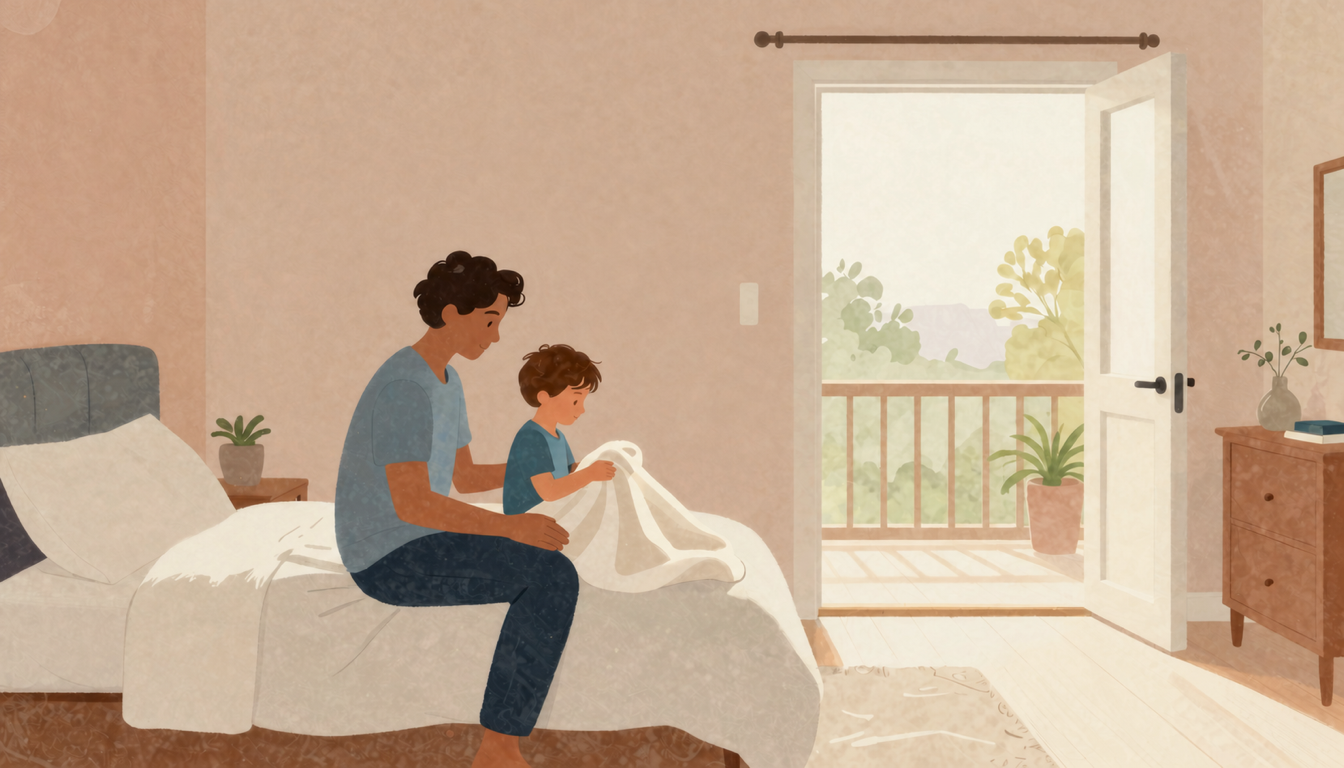
A familiar blanket or toy can offer comfort during separation and change. Respect its place in a child’s day while supporting safe care, companionship and wider experience.
At a glance
Attachment to a blanket or soft toy is not, by itself, a sign of a disorder. There is no automatic birthday deadline for removing it. Respond to distress or interference with daily life, and seek individualized advice when needed. Pacifiers have separate dental considerations; keep soft objects out of babies’ sleep spaces during the first year.
A worn blanket has to come on every outing. A soft toy occupies the same place in bed each night. When a broken toy goes into the trash, a child insists on retrieving it. To an adult, the attachment may seem out of proportion to the object. To the child, its familiarity matters.
A favorite blanket or toy can be an ordinary source of comfort during separation and change. Having one does not, by itself, mean that something is wrong. Parents can respect that attachment while helping children find other ways to feel settled. Pacifiers and thumb-sucking need separate consideration because prolonged sucking can affect dental development.
Not every child chooses a particular comfort object, and children who do may value it in different ways. The familiar examples in Peppa Pig capture the idea: Peppa loves her teddy bear, while George keeps his toy dinosaur close. At home, the object may be far less pristine—a blanket that will not do without its familiar smell, or a four- or five-year-old's battered stuffed companion.
Rather than label the behavior a “fetish” or a bad habit, start with a simpler question: when does the child reach for the object, and what makes that moment difficult?
What a Transitional Object Means
The psychoanalyst D. W. Winnicott introduced the concept of transitional objects in a paper published in 1953. His term “first not-me possession” describes a child's relationship with something outside their own body, such as a blanket or soft toy. He explored an intermediate area between subjective experience and the recognition of a separate external world, connecting it with play and creativity. This is a psychoanalytic account, rather than a diagnostic test or a timetable every child must follow. Read the original paper's bibliographic record.
Winnicott distinguished early finger-sucking from the later use of possessions outside the body. Calling a baby's thumb the first transitional object blurs that distinction. Nor does the concept require parents to believe that a toy literally replaces a mother or becomes more important than a caregiver.
An adult may buy or offer a toy; the child may choose to make it special. The practical point is to notice the child's relationship with it, rather than assume that any toy an adult supplies will provide the same reassurance.
From a Caregiver's Presence to Self-Soothing
A parent cannot be physically present at every moment. Starting preschool, spending time with another caregiver, weaning or moving into a separate bed can make that absence more noticeable. A familiar object gives the child something recognizable to hold while the surroundings or routine change.
In its guidance on transitional objects, the American Academy of Pediatrics explains that soft texture and familiar scent can offer reassurance during separation and unfamiliar situations. A child may keep a favored object for years; the attachment is not in itself a sign of insecurity.
That does not mean every child needs a blanket, or that carrying one proves a parent has been absent too often. Some children choose a specific object; others do not. Watch what helps the particular child in front of you.
Pacifiers, Blankets and Soft Toys
A blanket and a pacifier may both be comforting, but they raise different questions. A child can hold a soft toy without maintaining a sucking habit. Advice about when to stop using a pacifier should therefore not become a deadline for giving up a teddy bear.
The American Academy of Pediatric Dentistry's Policy on Pacifiers, revised in 2024, recognizes early benefits alongside risks from prolonged use. It recommends guidance on ending nonnutritive sucking habits by 36 months. Use after 12 months can increase ear-infection risk, and beyond 18 months can affect developing teeth and jaws. Discuss a plan with your child's dentist or pediatrician.
Evidence linking pacifiers with speech delay is limited, according to the same policy. Language concerns deserve individual assessment rather than a blanket explanation. When reducing pacifier use, the policy favors positive rewards over criticism or restraint.
For blankets and soft toys, think about their familiar smell, texture and portability. These qualities can explain why an old object matters more than a new replacement. Keep the object in usable condition and follow its care instructions when washing it.
Comfort also has to fit safe sleep. For babies under one, keep blankets, stuffed toys and other soft objects out of the sleep space, following the AAP's safe-sleep guidance.
How Comfort Objects Help with Separation
A child may reach for the same object when entering preschool, staying with a relative or traveling without their usual caregiver. The need may become especially noticeable around a change. That is a useful moment to observe and offer support, rather than make the object itself the focus of an argument.
The blanket does not make the parent unimportant. It can accompany the child through a period apart. A familiar goodbye and a dependable return still matter; a toy is one part of the arrangement, rather than a substitute for a responsive relationship.
If an object has become a source of reassurance, secretly throwing it away may be upsetting. Respecting its importance is a kinder starting point. Approach any change gently, paying attention to how the child responds.
A third or fifth birthday is not, on its own, a reason to remove a favorite blanket. Focus on the child's distress and daily functioning. If the attachment is making ordinary activities or relationships persistently difficult, seek advice instead of simply forcing a withdrawal.
Four Ways Parents Can Offer Support
Respect the Attachment and Keep the Object Clean
Notice when the object is needed most. Explain practical limits calmly and involve the child in caring for it. Washing does not have to become a surprise disappearance. Where possible, plan for cleaning at a time the child can manage without it. Follow the object's care instructions rather than assume every fabric needs the same disinfectant or treatment.
Offer Companionship That a Toy Cannot Replace
Spend time together in ways that allow you to notice the child's feelings: reading, talking, playing or doing an ordinary task side by side. Buying another toy does not answer every request for attention. Equally, a child's fondness for a blanket is not evidence that you have failed to provide enough love.
Help Attachment Become an Act of Care
If carrying the object everywhere is causing practical problems, look for a manageable arrangement together. One idea is to give it a “home,” such as a basket or a small play tent, and invite the child to look after it there. Treat this as an option to try, not a proven treatment or a demand that the child immediately stop needing it.
Seek individualized help if distress or interference continues. A pediatrician can help you decide whether there are concerns beyond the object itself.
Broaden Sensory and Hands-On Experience
Offer other things to explore: outdoor play, making something, helping with a small household task or spending time with other children. Let the child do tasks within their abilities. These experiences give them more to engage with without turning the favorite toy into a forbidden possession.
Give the Child Time to Grow
You do not have to choose between allowing an object without any limits and removing it all at once. Begin by understanding its place in the child's day. Keep it safe and clean, make room for companionship and play, and respond to difficulties when they affect everyday life.
For a child holding a shabby blanket, its value is already clear. The adult's task is to recognize that value while helping the child's world grow larger.
Frequently asked questions
Is a child’s attachment to a blanket or soft toy a fetish?
A favored blanket or toy can be an ordinary source of comfort. Having one does not, by itself, show a disorder. Consider how the child is feeling and functioning rather than applying a label.
Should parents take away a child’s comfort object?
Start by understanding its role and discussing practical limits gently. A favorite toy has different considerations from a pacifier; removal is not automatically required at a particular birthday.
When may a child need guidance about a comfort object?
Seek individualized advice when distress or attachment persistently interferes with ordinary activities or relationships. The article does not set a universal three-to-five-year cutoff.
How should parents care for blankets and soft comfort toys?
Keep them clean and usable, following their care instructions and explaining washing to the child. For babies under one, keep blankets and stuffed toys out of the sleep space, as the linked AAP guidance recommends.