Summary
Late-night work may gain hours while reducing next-day engagement. Realistic task control, purpose and sleep routines can help without replacing recovery.
At a glance
Late-night work can reduce the opportunity for sleep and leave the next day harder. Motivation and work control may support effort, but neither restores lost sleep or makes chronic sleep restriction harmless.
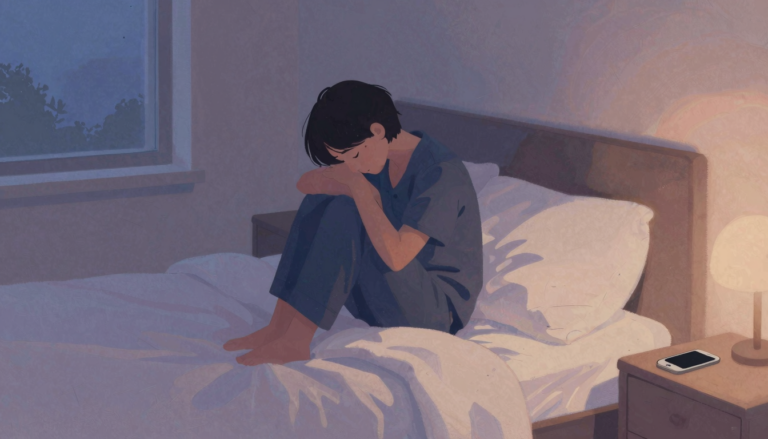
Late-night work can feel unusually productive. The messages stop, the room is quiet and a task finally begins to move. For someone disappointed with an unproductive day, finishing something after midnight also offers relief: at least the day was not wasted.
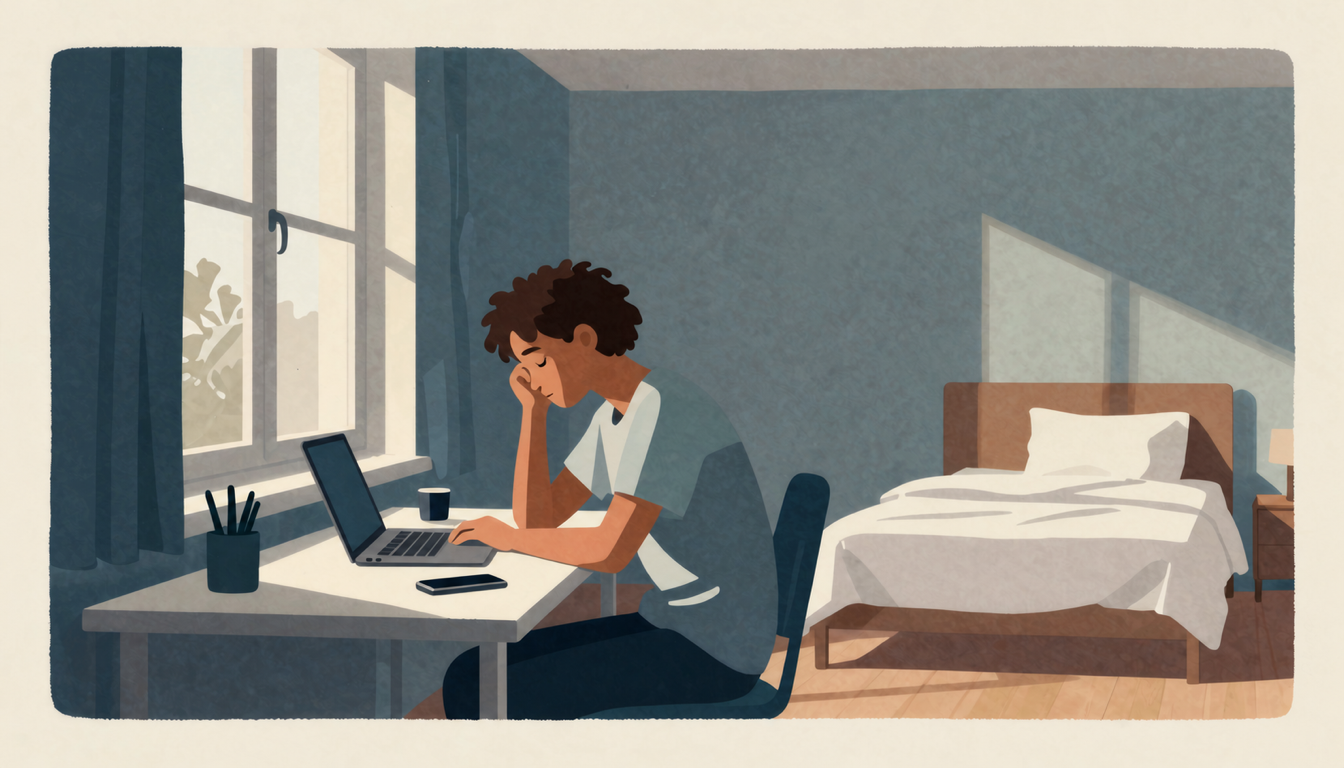
That gain is real enough to be tempting. The question is what it costs when morning obligations remain unchanged. A completed assignment may be followed by slower work, repeated mistakes or difficulty staying engaged the next day. Counting only the extra hours at night can hide the hours spent compensating afterward.
When the Phone Extends the Workday
A smartphone makes it possible to keep working long after leaving a desk. An email becomes a reply, the reply prompts another check and bedtime moves back. Work may also remain mentally present after the screen goes dark.
Klodiana Lanaj, Russell Johnson and Christopher Barnes examined this pattern in their 2014 paper, Beginning the workday yet already depleted?. Across two experience-sampling studies, nighttime smartphone work was associated with poorer subsequent recovery through sleep, greater morning depletion and reduced daily work engagement. The authors also examined other electronic-device use and found some support for job control as a buffer.
These were studies of employees’ experiences over time, rather than a rule that every minute on a phone produces a fixed loss of performance. Work engagement also concerns attention and investment in work; it is not identical to an objective count of everything a person accomplishes. The source describes one study following 82 managers for ten days, including questions about phone work after 9 p.m. That clock time was a measurement boundary, not a universal biological deadline.
The relevant pattern is easy to overlook: work enters the time available for sleep, and the next workday begins with less capacity to engage. Another night of catching up can then seem necessary. What looks like extra productivity may become a repeating compensation cycle.
What “Depletion” Can and Cannot Explain
The original discussion uses ego-depletion theory, which proposes that exerting self-control leaves fewer resources for later effort. Its reservoir image is intuitive: a demanding day seems to drain a tank that rest can refill.
But the tank is a model, not a measured store of psychological fuel. Evidence for the classic ego-depletion effect is contested. A large preregistered multisite test did not find the predicted effect in its confirmatory analysis. Feeling tired after demanding work and explaining all self-control through one finite resource are different claims.
You do not need to settle that theoretical debate to notice whether cutting sleep leaves you foggy. Nor should the theory be used to decide that you have no control left or that failure to concentrate is a moral weakness. Sleep opportunity, task demands, motivation and working conditions all deserve attention.
When a Late Night Is Difficult to Avoid
A deadline may leave imperfect choices. In that situation, aim to reduce the load and protect the sleep that remains. Decide what must be completed tonight and what can wait. Finishing an essential section may be more useful than continuing until every detail feels polished.
Look for usable control over work
Work control means having some choice over how tasks are arranged or carried out. The Lanaj paper found qualified support for the idea that control could buffer the relationship between morning depletion and engagement. It did not establish that autonomy removes the effects of insufficient sleep.
Consider the choices genuinely available. Could you move a demanding task to a better time, change the order of smaller tasks, alternate with something more manageable or ask a teammate to coordinate priorities? A request for flexibility may help more than trying to persuade yourself that an inflexible situation feels free.
Perceived control matters to experience, but it should not be used to deny a real lack of control. A person with fixed shifts or heavy care responsibilities may need practical changes and support rather than another instruction to think positively.
Make the purpose concrete
A task can feel easier to approach when you can name why it matters. Perhaps it builds a skill for future work, helps others understand psychology or saves a group member from carrying an unfair share. These were the sorts of purposes offered in the source’s motivation discussion.
Use that purpose to choose a next step, rather than to justify endless work. “I want to support the group, so I will finish this section and tell them what remains” is more workable than “This matters, so I must ignore exhaustion.” Motivation may change willingness to persist; it does not supply the recovery that sleep provides.
Replace defeat with a realistic first step
When you are tired, “I cannot do any of this” can make starting harder. Break the task into a small action: identify the missing reference, outline the next paragraph or review one calculation. Acknowledging what is possible is different from promising that confidence will overcome every limitation.
Check the quality of work as well as whether you have kept going. If you repeatedly reread the same material without understanding it, more persistence may not be the best response. Seek an extension, reduce the scope or stop when that is the safer and more effective choice.
Making Repeated Late Nights Less Necessary
The appeal of an uninterrupted night often reveals a daytime need. You may want quiet, autonomy or a period when nobody asks anything of you. If the night is your only protected time, simply banning the phone leaves that need unanswered. Try to create some protected time earlier, even if it requires changing expectations with other people.
Keep a sustainable sleep routine
A fairly regular schedule can help avoid large swings between late nights and late mornings. That does not mean you should force an early start regardless of how little you slept. Plan enough opportunity for sleep and account for immediate safety: severe sleepiness is a reason to avoid driving or other hazardous activity.
If you repeatedly cannot fall asleep at a suitable time, consider whether the issue is bedtime habits, schedule mismatch or persistent insomnia. These may call for different responses. A clinician can help when difficulties continue or daytime functioning suffers.
Choose a realistic lights-out plan
A shared ten-o’clock lights-out rule may suit some dormitories, but ten is not a universal bedtime. Agree on a quiet, dark period that fits the people using the room. Put work away early enough that going to bed is possible, and reduce the invitations to keep checking.
You might charge the phone away from bed, silence nonessential notifications or set an agreed response window for work. The NHLBI’s healthy-sleep guidance recommends a calm pre-bed period, a suitable bedroom and regular sleep timing. These habits support rest; none promises instant sleep.
Include activity without making exhaustion the goal
Basketball, walking, yoga or running can make activity part of daily life. Choose something manageable and notice how its timing affects you. The goal is a sustainable routine, rather than wearing yourself out enough to force unconsciousness.
A useful measure of a night’s productivity is how it fits into the following day. When demanding work awaits, protecting sleep is part of preparing to do that work well. Occasional compromises happen; turning them into a permanent demonstration of determination can make the next compromise more likely.
Frequently asked questions
Does late bedtime always mean insufficient sleep?
No. Sleep opportunity and required waking time matter; a late schedule and sleep loss are different.
Can motivation replace sleep?
No. It may support willingness to work but does not provide sleep recovery.
Is self-control a literal energy tank?
That is a theoretical metaphor; classic ego-depletion findings are contested.
Must everyone turn out lights at ten?
No. Choose a sustainable schedule with adequate opportunity for sleep.