Summary
A standing chest opener and an overhead stretch form the writer’s proposed transition from sleep to work, followed by a modest increase in walking pace on the commute.
At a glance
The writer proposes a standing chest opener held for five long, deep abdominal breaths, followed by an overhead extension with a slow rise onto the toes. Hold the extension for three seconds, lower slowly and repeat three to five times. The routine is framed as three minutes before leaving home, followed by slightly faster walking during the commute; the writer claims it can improve alertness and make the working day feel less tiring.
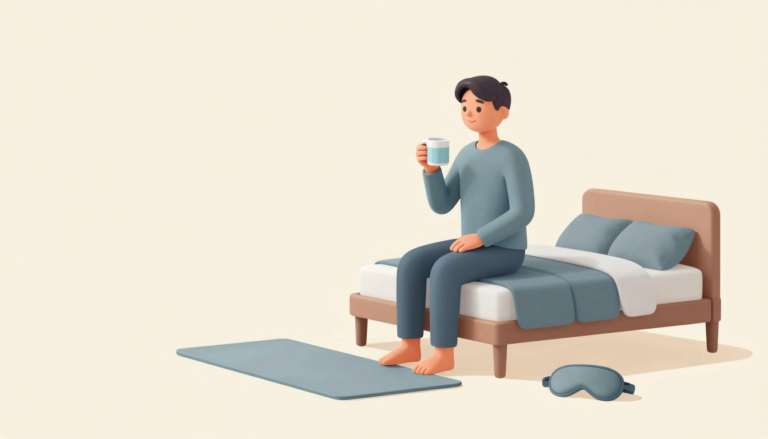
The alarm has gone off several times before you finally struggle out of bed. You rush through washing and getting ready, grab your bag, and hurry toward the subway. For many people heading to work, this may be a familiar morning.
Even when the previous night’s sleep did not seem especially short, your body can feel heavy as you leave home, as though its battery never quite finished charging. At your desk, the grogginess lingers; it takes several iced Americanos just to muster enough alertness.
The writer proposing this routine argues that the body needs a brief startup ritual between sleep and work: three minutes of gentle movement before leaving home. The promise is that this transition can quickly clear drowsiness, awaken metabolism throughout the body and keep basal metabolism at a higher level all day, making fatigue less likely.
That morning heaviness can feel as though your body has not yet stretched out or fully woken up. The writer’s explanation is that after a night spent lying down, circulation is slower, while fascia and muscles are relatively contracted and dehydrated, perhaps even adhering to one another. They compare this with a car left outside through a cold winter night: press the accelerator hard without warming it up, the analogy goes, and it struggles to perform while risking wear on its parts.
The parallel, in this account, is the near absence of a transition in many people’s mornings. They go straight from lying down to standing and walking, without first engaging the core muscles or extending the spine. The writer attributes unusual bodily fatigue to this abrupt “startup.”
The proposed alternative is three minutes of “physical coffee”: a few simple awakening stretches to fit in before putting on your shoes and heading out. There is no need, the writer suggests, to get up half an hour earlier for a run.
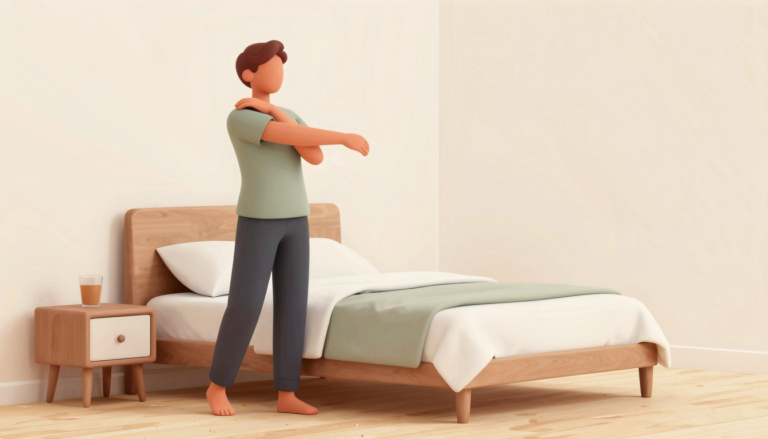
Begin with a standing chest opener. Stand with your feet shoulder-width apart and interlace your fingers behind your back. As you inhale, extend your arms firmly backward and downward while lifting your chest, feeling a pronounced stretch through your chest muscles and the fronts of your shoulders. Hold this position for five long, deep abdominal breaths.
The writer claims this movement immediately opens a chest drawn tight by sleeping curled up, allowing more oxygen into the lungs and supplying it directly to the brain. In their account, the resulting lift in alertness comes faster than it would from drinking coffee.
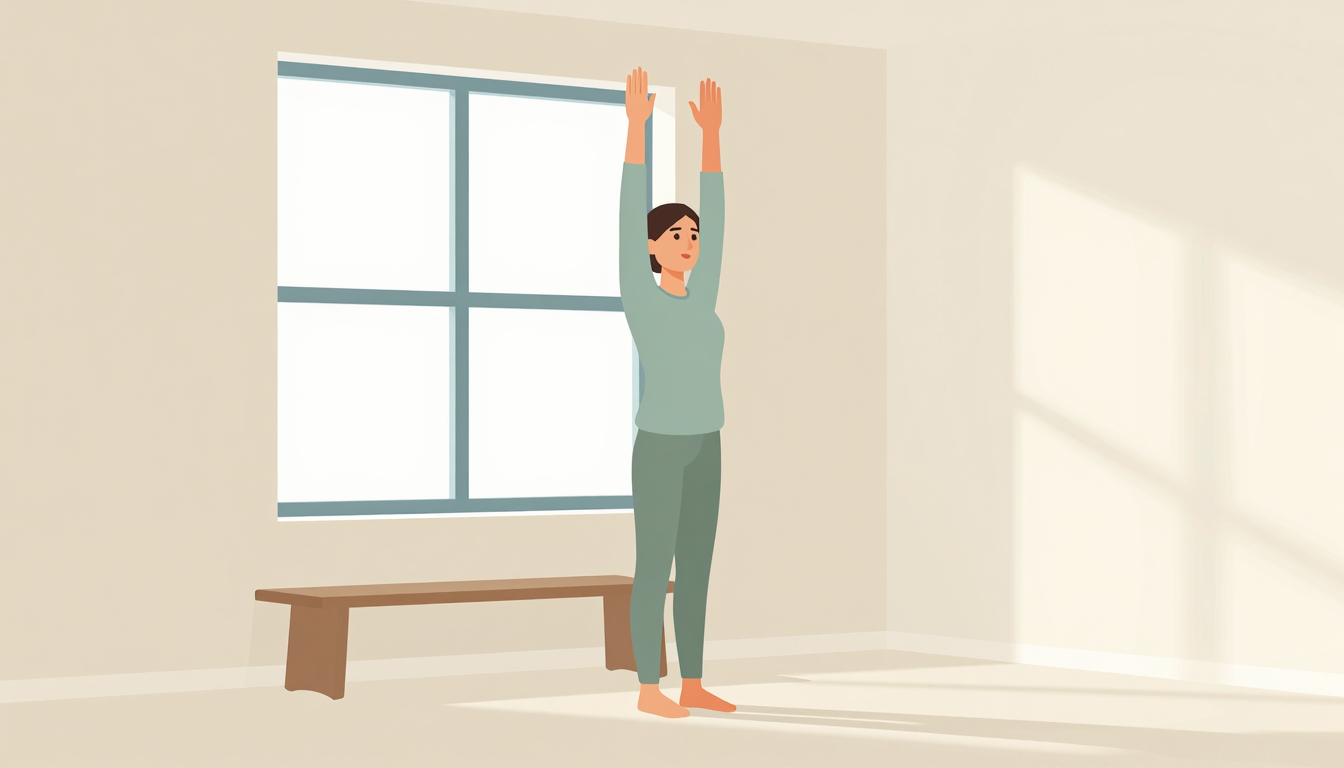
Follow with a dynamic whole-body extension. Raise both hands overhead, palms facing upward, as though reaching for the ceiling. Slowly rise onto your toes, forming a taut line from your fingertips to your toes. Hold for three seconds, then slowly lower. Repeat three to five times. The writer describes this movement as waking up “sleeping” fascia throughout the body and claims that it encourages blood to return quickly toward the body’s core.
The routine then continues on the walk to the subway or bus stop. According to the writer, the stretches have already put the body into a favorable state of mild fat burning, making this ordinary part of the commute an opportunity for light exercise. Their advice is to engage your core consciously by drawing your abdomen inward slightly, then walk a little faster so that your heart rate rises slightly. A very light trace of perspiration on your back is described as ideal.
Small as this change may seem, the writer argues that it deserves attention. Their claim is that three minutes of gentle morning movement can get metabolism going earlier and leave you feeling lighter and holding yourself more upright. This fits their broader view of healthy living: small habits that slip easily into daily life are more sustainable than ambitious goals that are hard to maintain.
The invitation is to set aside those three minutes for your body tomorrow morning, with the writer’s expectation that the working day will feel less exhausting.
Frequently asked questions
How many breaths does the standing chest opener involve?
The writer instructs readers to hold the chest-opening position for five long, deep abdominal breaths.
How many times is the overhead extension repeated?
The writer specifies three to five repetitions, with a three-second hold on the toes and a slow lowering each time.
How does the writer suggest changing the walk to public transport?
The writer recommends drawing the abdomen inward slightly and walking a little faster, with a slight rise in heart rate and very light perspiration on the back described as ideal.