Summary
From looking for a phone to celebrating a dance movement, self-talk appears throughout ordinary life. This discussion follows its childhood beginnings, reported benefits and practical limits.
At a glance
Everyday self-talk is normal and begins in childhood. The account describes potential benefits for thinking, encouragement and emotional expression, while qualifying its broad benefits discussion as concerning self-talk not caused by mental illness. Setting, volume and wording matter; its recommendation to seek help concerns frequently recurring negative self-talk.
Try making your first words of the morning a little encouragement to yourself. Self-talk can give voice to frustration—“Ugh, this is hard”—a search for something missing—“Why can’t I find it?”—or determination: “I know I can finish writing this!” None of these remarks needs an audience.
For the writer whose experiences run through this discussion, a holiday home alone offered the freedom to indulge the habit. They unconsciously repeated what they were writing, praised themselves after completing an exercise movement and commented aloud on television characters and events.
They enjoyed it, but some relatives and friends found it strange. Searching for self-talk on Zhihu, the writer found many questions expressing similar suspicion, along with comments harsher than those they had heard from people they knew. Those reactions raise two questions: Is talking to yourself normal? And why do some people do it so often?
Where self-talk begins
Self-talk means speaking to yourself to express your inner feelings, thoughts and experiences. The everyday behavior described here is normal, and its beginnings reach back to childhood. A child playing with toys may seem absorbed in a private world, asking aloud, “What comes next?” Parents may struggle to make sense of what they hear, but that kind of talk is normal too.
The writer credits Piaget with the earliest systematic explanation of children’s self-talk. In a book published in 1923, he introduced the concept of “egocentric speech” and distinguished three forms: repeating words or syllables simply for the pleasure of speaking; carrying on a monologue addressed only to oneself; and speaking in a monologue prompted by someone else’s presence, without needing that person to join in or understand.
The developmental explanation the writer goes on to give treats this speech as a natural part of language development that reflects children’s still-immature cognition. At this stage, children cannot yet fully control which thoughts they say aloud and which they keep to themselves, so they may voice what is on their minds without realizing it. Speaking may also spur them into action or reinforce what they are doing, like an accompaniment to the melody of their activity.
As we grow older, we become better at keeping our inner speech unspoken. Yet self-talk persists and continues to serve important functions. The writer suggests that what seems strange to an observer may simply be talk whose purpose they do not understand. Their discussion of its benefits concerns self-talk that is not caused by mental illness: in most circumstances, they argue, it has many advantages.
Thinking, performing and expressing emotion
As final exams approach, corridors fill with the sound of students reciting their study material. Studying silently can leave you feeling that the words simply will not stick. The writer cites research reporting significantly better memorization when the same material is read aloud rather than rehearsed silently. The explanation offered is that repeatedly saying the words aloud increases attention, helping people remember them.
Reciting aloud is not self-talk in the strict sense, however. Beyond recitation, the writer cites separate research reporting that talking to oneself in other circumstances can significantly improve problem-solving ability.
One everyday example is searching for a missing object. “Where’s my phone? Where’s my phone?” is a familiar refrain for the writer, who describes looking for it every day. They cite research reporting that self-talk improves performance on visual-search tasks, helping people find the object they want more quickly. Quietly naming an item while looking for it in a shopping center is one possible application; it might help you finish the search sooner.
Other research cited in the account reports an even stronger effect on more difficult tasks involving logical relationships. In the writer’s own experience, talking through the steps of a calculation feels like a way to concentrate more fully and solve the problem more effectively. They also observe that many mathematicians talk through calculations.
Vocal encouragement extends into physical activity, too. Russian tennis player Maria Sharapova’s distinctive on-court cries offer a sporting example. The writer reports that women’s singles tennis introduced a restriction described as a “silence ban” in 2014. Separately, they recount Sharapova’s explanation in 2019: vocalizing helped her maintain a smooth breathing rhythm and generate force when returning the ball. She also said it helped her stay focused and active during play and could disrupt her opponent’s rhythm.
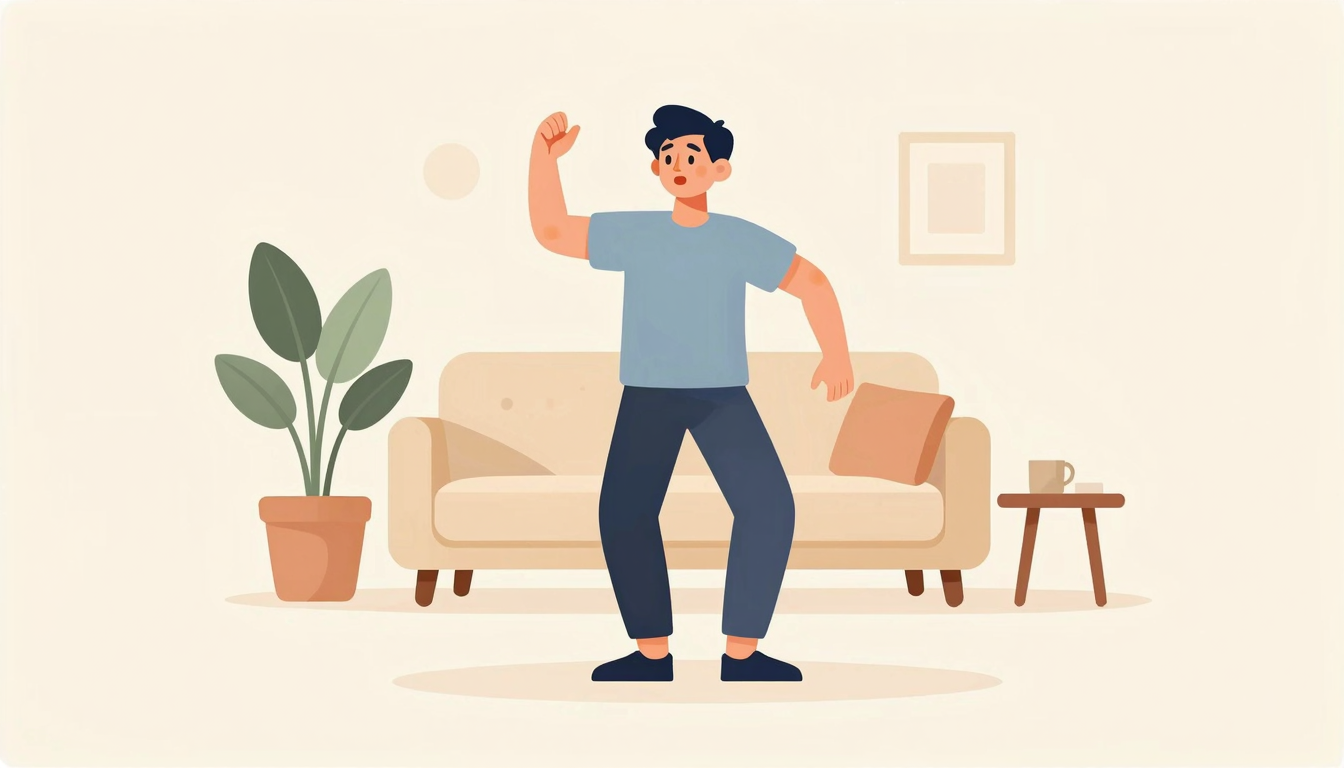
The writer sees a similar purpose in the brief exclamations table-tennis players shout after winning a point, interpreting them as ways to concentrate and spur themselves on. Their own version comes while learning a dance movement: after mastering one part, they celebrate aloud with “Yes! Got it!” As they playfully caution, though, shouting too hard might leave you with less energy for the exercise itself.
Even watching from the couch can bring words tumbling out. Do you know someone who talks back to the television—“How can he act like that?”—then voices sympathy a moment later: “Oh, poor guy”? Or someone who watches a game calling, “Pass the ball!” before celebrating with “Great play! Beautiful!”?
The writer sees these reactions as everyday expressions of emotion. When feelings run high, words sometimes escape before we consciously choose to speak. They compare this difficulty holding back speech to the way children voice their thoughts without fully controlling what they say. In their interpretation, giving feelings a voice can release emotion and help us recognize, express and regulate what we feel.
That is also the spirit of the morning encouragement: try saying “You can do this!” to yourself when you wake up, as a small way to begin the day with energy.
Beyond this everyday emotional expression, the writer cites research reporting that self-talk can significantly reduce anxiety, with possible benefits for people with anxiety disorders, including social anxiety disorder. The technique described is to refer to yourself in the third person. This can create some distance from painful emotions and the processes involved, making it easier to examine and regulate those feelings in ways that may help ease anxiety.
Choosing the setting—and the words
Common and useful as self-talk can be, staying absorbed in your own world can trouble the people around you. The writer recalls sometimes being criticized for disturbing others by saying calculation steps aloud. A quiet study room calls for keeping rehearsal unspoken, while a small garden or corridor may offer somewhere to recite without interrupting other people’s concentration.
The same consideration applies when emotions spill out during a show. If a group is watching together and a stream of commentary drowns out the program, everyone else’s viewing experience suffers.
Sometimes, simply mouthing the words offers a way to enjoy your private commentary without disturbing anyone. If you do make a sound, a faint, breathy voice that only you can hear may be enough. Keep the accompanying movements modest, too; exaggerated gestures could lead to misunderstandings.
What you say to yourself matters as well. The writer contrasts encouragement that supports a more upbeat outlook with repeatedly telling yourself, “I’m really not good enough” or “I can’t do it.” Returning to those negative statements day after day can make things worse. If you frequently find yourself talking to yourself this way, or often notice a friend doing so, the writer recommends seeking help promptly.
We are social beings, but we still spend time alone. For the writer, talking to themselves in those moments offers both companionship and a chance for dialogue with themselves. Sometimes they reflect on something that happened: “Hey, that could have gone better today.” At other times, they offer themselves comfort, acknowledge the day’s efforts and find encouragement to continue: “You did really well today. Keep going!”
Perhaps someone who often talks to themselves is also exploring who they are.
Frequently asked questions
What is self-talk?
Self-talk means speaking to yourself to express your inner feelings, thoughts and experiences.
How can you talk to yourself without disturbing others?
Sometimes mouthing the words or using a faint, breathy voice audible only to yourself may be enough. Choose a suitable setting and keep accompanying movements modest.
When does the article recommend seeking help for negative self-talk?
The writer recommends seeking help promptly when negative statements about being inadequate or incapable recur frequently in yourself or a friend.