Summary
Persistent school avoidance can reflect discouragement, exhaustion, anxiety, relationships or unmet learning needs. Listen to the child, make support concrete and coordinate with school and qualified professionals when needed.
At a glance
Look for a persistent pattern of distress or avoidance and ask which parts of learning or attendance are difficult. Confidence and burnout are possible contributors, alongside safety, mood and learning needs. Match practical help to the problem and coordinate family, school and clinical care rather than assuming laziness.
A child who delays homework or resists school is often described as lazy, rebellious or too interested in playing. Those labels offer an explanation before anyone has asked what is difficult. The same outward behavior can arise from very different experiences.
“School aversion” is a broad way of describing negative feelings toward learning or school, together with avoidance. It is not one diagnosis. Disliking a lesson, being academically exhausted and experiencing severe distress about attending school are related concerns to investigate, rather than interchangeable conditions.
The aim is to understand the pattern early enough to offer useful support, while taking the child’s account seriously.
Recognize what is changing
Avoidance can appear as repeated postponement, withdrawing from assignments, skipping lessons or missing school. Notice the accompanying thoughts and feelings. Does the child expect failure, seem overwhelmed or become distressed at a particular point in the day?
One delayed assignment does not establish a serious problem. A persistent change that affects attendance, learning, relationships or well-being deserves attention. Compare the behavior with the child’s usual pattern and ask what has changed around it.
Academic burnout offers one lens. It is commonly discussed through exhaustion, cynicism and reduced academic efficacy. Exhaustion means feeling worn down by demands. Cynicism involves detachment or a sense that the work no longer matters. Reduced efficacy means doubting the ability to do it successfully.
These ideas can help adults recognize that apparent indifference may coexist with discouragement. They do not allow a parent to diagnose burnout from a refusal to open a textbook.
Physical complaints matter too. The American Academy of Pediatrics’ guidance on school avoidance discusses concerns such as headaches or stomachaches around school. Symptoms should be assessed rather than dismissed as pretending, even when their timing suggests an emotional component.
Understand confidence and exhaustion together
Belief in being able to manage a task
Academic self-efficacy concerns what a student believes they can do in a learning situation. A child who expects that a useful strategy will help has a different starting point from one who expects effort to end in humiliation.
“I cannot do it” can mean several things. The child may lack a specific skill, not understand the instruction, fear making a mistake or feel exhausted by repeated setbacks. Ask which part feels impossible before answering with general encouragement.
When children are seeing themselves as a failure, criticism can make a specific difficulty feel like a permanent identity. More demands alone may deepen the wish to avoid the situation. Confidence is better supported by help that makes progress possible and visible.
That does not mean confidence alone determines achievement or protects against depression. Learning, mood and beliefs can influence one another. A child needs more than a positive message when the task or environment remains unsuitable.
Demands, belonging and other conditions
Heavy workload, harsh expectations and little opportunity to recover may contribute to exhaustion. Difficult peer or teacher relationships can make the school day feel unsafe or isolating. A lack of purpose can make work seem pointless even when the child is capable of it.
There may also be learning or attention needs, anxiety, depression, bullying, family stress or problems around a transition. Electronic entertainment can become an attractive alternative without being the whole explanation. Do not assume that removing a device resolves what made school hard.
The American Academy of Child and Adolescent Psychiatry’s school-refusal guidance emphasizes possible anxiety and stressful events. A broad refusal label should lead to questions about the individual child, not a single theory about discipline.
Belonging and predictable expectations both matter. But a class that needs more support is not necessarily one that simply needs stricter rules. The goal is a safe, understandable environment with relationships the child can rely on.
Help with both beliefs and practical abilities
Listen before challenging a conclusion
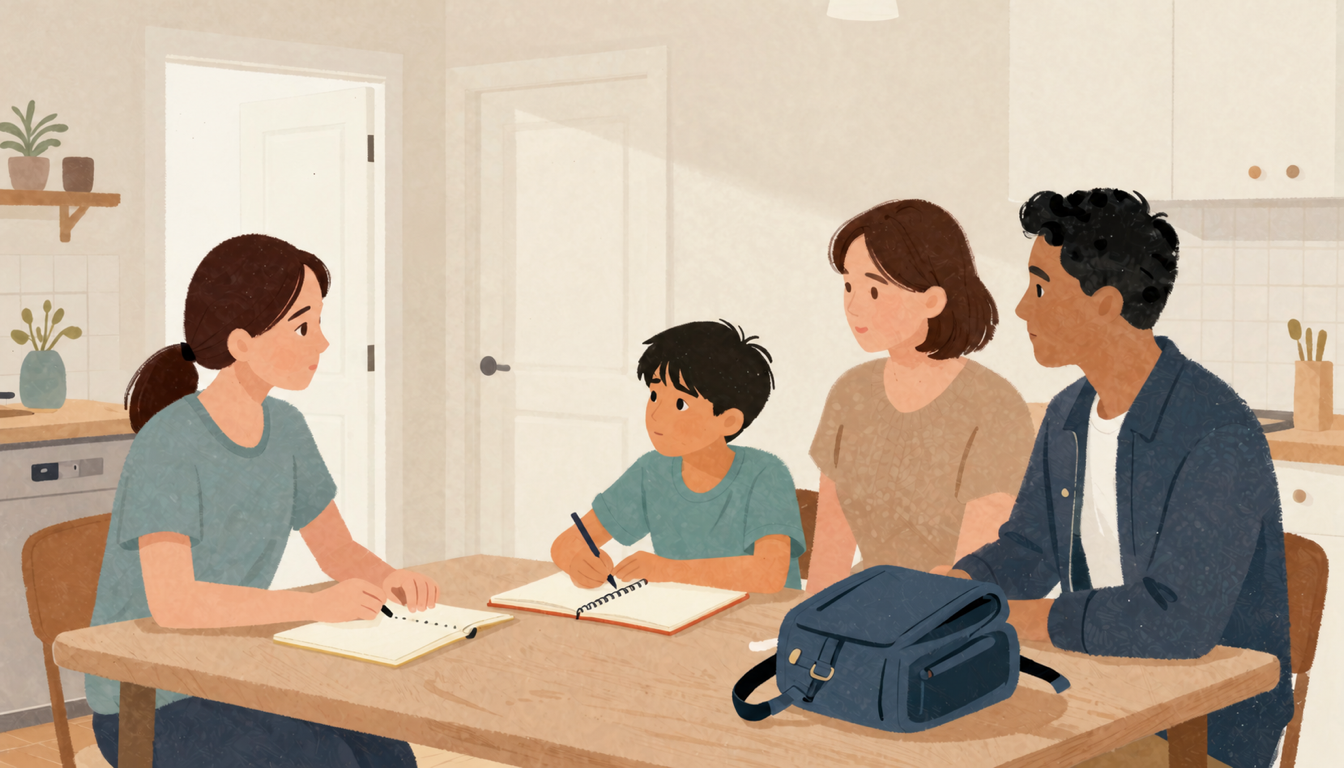
Choose a calmer time to ask what is happening. “Which part of tomorrow feels hardest?” may be easier to answer than “Why do you hate school?” Listen for the specific situation behind the general refusal.
If the child says everyone thinks they are stupid, do not immediately endorse the conclusion or insist that it is distorted. Find out what happened. There may be a misunderstanding to examine, but there may also be a real incident that needs action.
Constructive conversation can borrow the idea of checking a thought against evidence. It is not the same as providing cognitive behavioral therapy at home. When clinical treatment is needed, a qualified professional can help select and deliver it.
Make learning support concrete
A child with difficulty with their studies may need a different explanation, an adjusted task or help organizing the next step. Encourage useful strategies such as preparing materials, reviewing what the lesson will cover and checking understanding after class, where those fit the child’s needs.
Keep the plan manageable. A complete overhaul of study habits may add another intimidating task. Agree on one obstacle and one support, then find out whether it helped.
Relationships belong in the plan too. Parents can ask how their child gets along with classmates, listen to conflicts without immediate judgment and help seek an appropriate response. Warmth at home offers security, but serious peer problems also require action in the setting where they occur.
Coordinate the adults around the child
Family members do not need to agree on a blame label such as spoiled or immature. They need a shared account of the observed difficulty and a consistent response. Conflicting punishments or repeated arguments about who caused it can leave the child in the middle.
Notice your own anxiety as well. It is understandable to fear missed learning or future consequences. Try to turn that concern into a specific action: contact the teacher, arrange an assessment or agree on a daily check-in, instead of repeating alarming predictions.
Talk with school staff about attendance, workload, learning needs, relationships and any safety concern. Where needed, involve a pediatrician or mental-health professional. A coordinated plan can identify who will do what and how progress will be reviewed.
Changing schools may sometimes be appropriate, but it is a major decision rather than a standard first response. Understand the problem and available supports so that an underlying need is not simply carried into a new setting.
Support may take time, and the plan may need revision. The most useful progress is concrete: understanding a task, attending with less distress, reconnecting with a trusted adult or asking for help sooner. A child does not have to become enthusiastic about every lesson before the adults around them can make school more manageable.
Frequently asked questions
Is school aversion one diagnosis?
No. It is a broad description covering different feelings and behaviors; the underlying causes need assessment.
What can academic burnout look like?
Exhaustion, detachment from studies and reduced belief in academic competence are useful dimensions to consider.
Should I immediately correct negative beliefs?
Listen to the incident behind them first. A conclusion may be inaccurate, but a real problem such as bullying may need action.
Who should help?
The child, caregivers and school should coordinate; a pediatrician or mental-health professional may be needed when symptoms, distress or attendance problems persist.