Summary
Recognize sustained parenting exhaustion and emotional distance, understand demands and resources, and build practical support.
At a glance
Parental burnout involves sustained exhaustion, lost enjoyment, emotional distance and a change from one’s former parental self. Reduce excessive demands, share responsibility and seek professional help for persistent or unsafe distress.
Thinking about a full day with your child can sometimes feel exhausting before the day has begun. More worrying is a continuing sense that parenting has become unbearable: you feel unlike yourself, cannot find enjoyment in being together, or struggle to express the love you know you have.
These experiences deserve attention. They do not establish a diagnosis on their own, and a difficult afternoon is different from a persistent pattern. But treating them as evidence that you should simply try harder can leave a parent carrying an unsustainable load for even longer.
What Is Parental Burnout?
Parental burnout concerns severe, sustained exhaustion connected with the parenting role. It can involve feeling emotionally depleted, losing pleasure or fulfillment in parenting, and becoming more emotionally distant from children. Another important feature is the contrast with how you used to feel or function as a parent: “This is no longer like me.” The American Psychological Association’s account of the research describes these features and the importance of recognizing them.
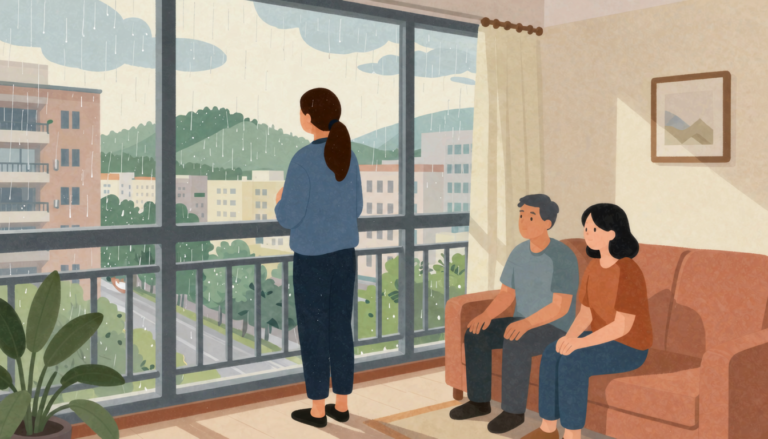
Exhaustion can mean more than wanting an early night. A parent may struggle to face the next demand or feel that they have nothing left to offer. Losing fulfillment can make ordinary time together feel like another obligation. Emotional distance may show up as getting through practical care while having little energy for affection, curiosity or conversation.
Guilt and shame can accompany this pattern. Parents are often expected to give endlessly and enjoy doing so. When actual experience falls far short of that ideal, admitting exhaustion may feel disloyal to a child. Yet naming a problem is one way to begin protecting the relationship.
The consequences can extend beyond the parent’s mood to daily functioning and family interactions. Burnout should therefore be taken seriously without assuming that every tired parent has it. Depression, anxiety, physical illness and other difficulties may also need assessment, including when distress extends well beyond parenting.
How Does Parental Burnout Develop?
The Balance Between Risks and Resources model, developed by Moïra Mikolajczak and Isabelle Roskam, offers a useful way to think about sustained overload. Parenting creates demands, while support and other resources help parents meet them. Problems become more likely when the demands repeatedly outweigh what is available to manage them.
Resources include more than the rewarding moments a child provides. Practical help, workable routines, emotional support and ways of handling stress matter too. A parent cannot be expected to balance an impossible workload simply by appreciating family life more. The authors’ 2018 study linked the balance of risks and resources with parental burnout and distinguished factors shared with job burnout from those specific to parenting. These relationships help explain risk; they do not determine an individual parent’s future.
When standards leave no room for being human
Perfectionism can raise the demands on both parent and child. Every meal, school result or interaction becomes something that must be done correctly. Mistakes then create another task: repairing your image of yourself as a parent. Overly demanding parenting standards can make ordinary setbacks feel like major failures.
Reducing perfectionism does not mean giving up care or boundaries. It means distinguishing what a child needs from an ideal that requires everyone to perform flawlessly. A routine that is safe and workable may be more helpful than one that looks impressive but exhausts the household.
When pressure has nowhere to go
Household responsibilities and paid work can compete for the same hours and attention. A parent may finish one shift only to begin another. When there is no reliable recovery time, advice to manage emotions can sound like one more demand.
Ways of coping matter, but so do the conditions in which coping is expected. Managing stress on an ongoing basis may require fewer commitments, clearer work boundaries or another adult taking responsibility for a recurring task. It is not solely an exercise in becoming more resilient.
When support is missing
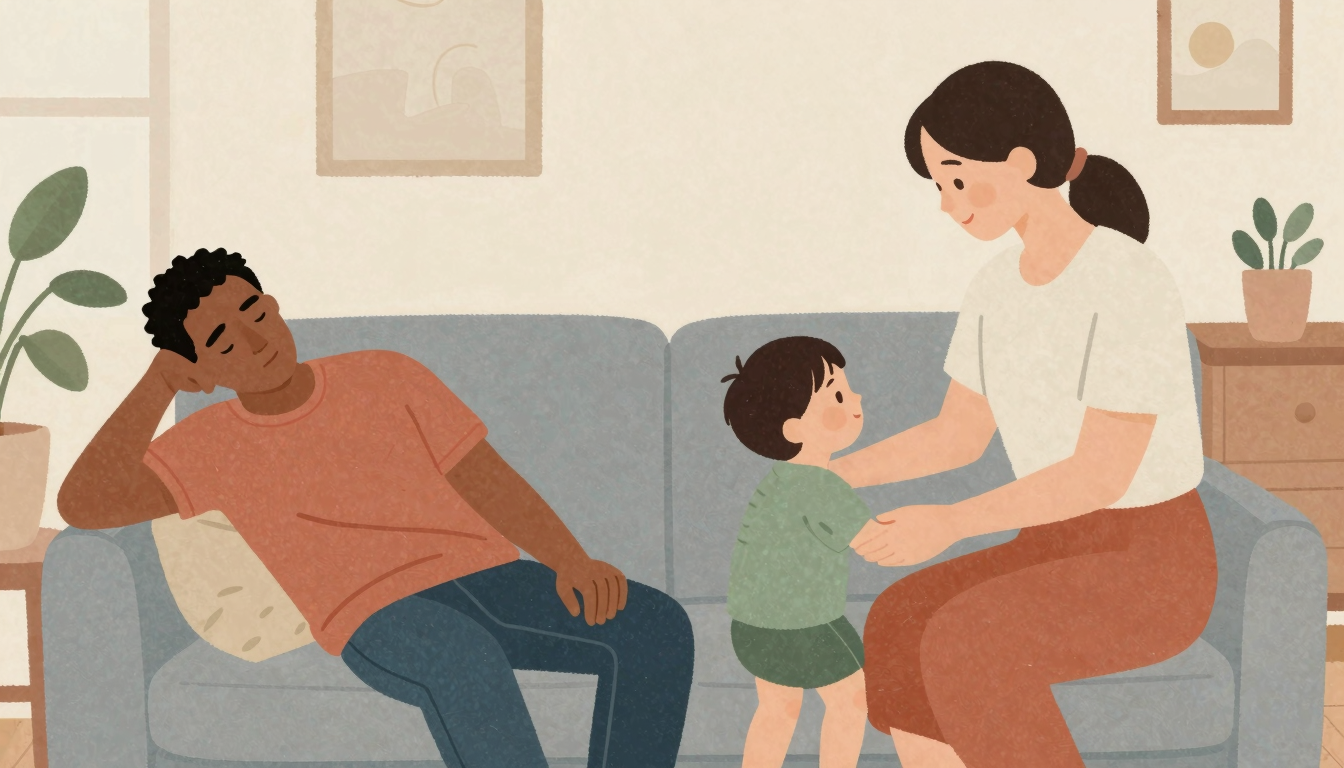
A parent who carries most childcare alone may have little chance to rest, even when another adult technically lives in the home. Loneliness can add to the practical strain. Help from relatives may be valuable when it is available and welcome, but not every family has safe or accessible extended-family support.
Co-parenting also concerns how adults work together. Repeated disagreement, criticism or an unequal distribution of responsibility can drain resources. A parent’s own health difficulties, depression or anxiety may further reduce what they can manage. These are reasons to arrange help, rather than to blame someone for failing at stress management.
What Can You Do About Parental Burnout?
Start by asking what would reduce the load and what would add usable support. “Take a break” is incomplete advice if nobody has agreed to care for the child during that break. A useful plan names who will do what, when it will happen and how reliably it can continue.
Allow room for mistakes in yourself and your child. Choose one standard that is costing more than it contributes, and consider a more manageable version. Repair a sharp exchange when needed without expecting yourself never to feel frustrated. Repeated harmful behavior still requires action; self-compassion does not replace responsibility.
Notice the pattern before you reach the point of feeling unable to continue. Ask whether exhaustion, withdrawal or lost enjoyment has become frequent. Talk with someone who can help assess the situation, especially if symptoms persist. A mental health professional can help distinguish overlapping problems and discuss support suited to the family.
Protect adult relationships where doing so is safe. Time for conversation that is not entirely about a child’s progress can help co-parents understand each other’s capacity. More importantly, agree on responsibilities rather than relying on one parent to request every small piece of help. Supporting a child’s growing independence can also prevent appropriate care from becoming constant supervision.
Widen the support network where possible: a trusted relative, friend, community service or childcare arrangement may offer different kinds of relief. Grandparents can contribute without becoming the only acceptable solution. Single parents and other family arrangements need support just as much as couples do.
If you fear that you may harm yourself or a child, seek urgent local help and involve a trusted adult in immediate care. Do not wait for ordinary self-care to solve an unsafe situation.
Recognizing burnout is a reason to change the conditions around parenting. The aim is to restore enough capacity for care, connection and life beyond getting through the next demand.
Frequently asked questions
Is ordinary tiredness parental burnout?
Not necessarily. Look for a sustained pattern affecting parenting and functioning, and seek assessment when concerned.
Is guilt one of the defining dimensions?
Guilt may accompany burnout; the measured dimensions also include contrast with one’s previous parental self.
What support helps?
Reliable practical care, shared responsibilities, realistic standards and appropriate professional help can address the load.
Must grandparents be involved?
No. Help should be safe and available; friends, services and other arrangements can also contribute.