Summary
A phone can provide information, reassurance and even a sense of identity. Three theoretical explanations explore why separation may feel unsettling, followed by reported effects on attention, sleep and communication between partners.
At a glance
Nomophobia, also called mobile phone separation anxiety, describes distress when someone is separated from their phone or cannot use its services. Fear of missing information or contact, emotional attachment and seeing the phone as part of the self offer possible explanations. The reported research also connects nomophobia with problematic phone use, attention difficulties and sleep problems, while technology interference can affect relationship satisfaction.
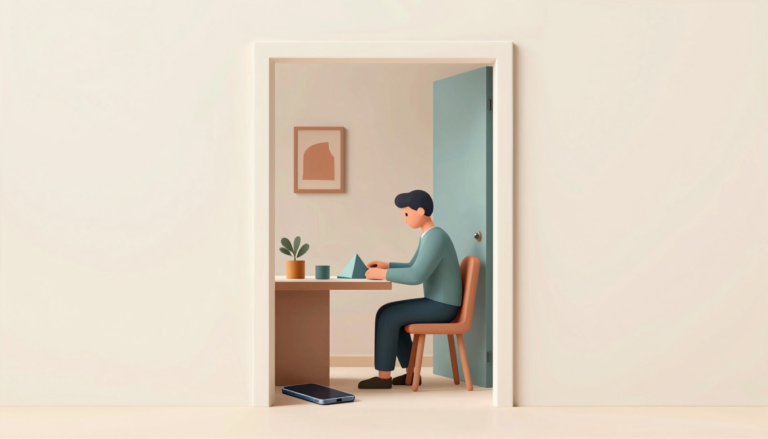
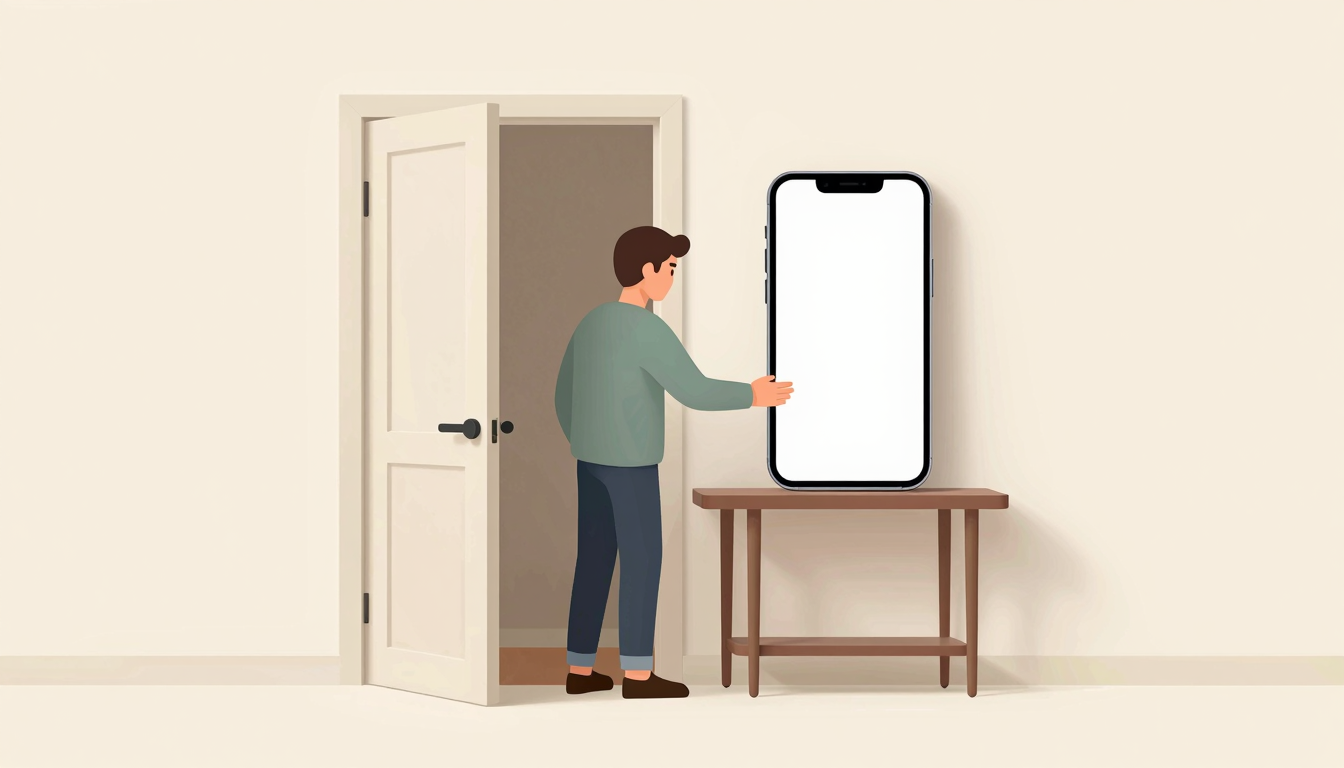
“How am I supposed to live without my phone?” It is a dramatic question, but it captures the place a phone can occupy among the essentials for leaving home. A showcase of modern going-out gear might as well come with the verdict: today is definitely not a day to go out. Beneath the joke is a question: why can being apart from a phone feel so difficult?
Nomophobia is a research term for discomfort or anxiety when someone cannot access or use a phone. It should not be treated here as an established psychiatric diagnosis or an automatic subtype of anxiety disorder. Recent research distinguishes the construct from a formal diagnosis. Frequent checking alone does not establish illness; the distress, circumstances and effect on daily life matter.
We may give little thought to whether our wallet is still with us, yet keep checking that our phone is nearby. Having enough money may worry us less than a battery running low. What does being without the phone seem to threaten?
Fear of missing out offers one explanation. In this account, separation threatens access to information and the ability to contact other people. When we can no longer receive or send information through the phone, that interruption brings anxiety and discomfort: we fear what we might miss and whom we might be unable to reach.
Self-determination theory identifies autonomy, competence and relatedness as basic psychological needs. A phone can help people pursue those needs, but access to information or a device is not itself one of the theory’s three basic needs. Applying the framework to fear of missing out is an interpretation, not proof that losing phone access necessarily causes anxiety.
John Bowlby’s attachment framework concerns emotional bonds and the security associated with attachment figures. Researchers have extended aspects of this framework to object attachment, including phones. The analogy may help describe proximity-seeking and separation distress, but it does not mean attachment to a device is identical to a child-caregiver relationship.
Konok and colleagues extended attachment theory by proposing the concept of “phone attachment,” identifying the desire to keep a phone close and anxiety on separation as important features. Within this explanation, a strong emotional attachment to a phone creates a psychological connection that can provide a sense of security. Separation interrupts that connection, which may explain the resulting distress.
An extended-self account suggests that some possessions can become important to identity. A phone may hold memories, contacts and tools through which a person acts, so losing access can feel personally disruptive. This is not the claim that every possession automatically becomes part of the self, nor that separation necessarily produces a fixed psychological contraction.
Perhaps even the move from 256GB of phone storage to 512GB could, in some playful sense, suggest that the self keeps expanding.
Together, these theories offer progressively deeper explanations. Dependence on a phone for communication and information may help it become an object of emotional attachment and eventually part of an expanded self. This proposed progression connects the explanations rather than describing fixed stages everyone follows: the phone’s significance can reach from what it allows us to do, through the security it provides, into our sense of who we are.
That significance can also shape how people use their phones. “Problematic smartphone use” describes maladaptive patterns that include excessive use and dependence, use where it is prohibited, dangerous use and use that harms the body. Each form can pose risks to physical and mental health.
Research links phone-separation distress with some patterns of problematic use, but associations do not establish that nomophobia causes each behavior. Check the rules of the particular setting rather than assuming all phone functions are prohibited on aircraft or in libraries. Avoid interacting with a phone while driving or navigating a hazard, whatever the reason for wanting to check it.
In Mendoza and colleagues’ lecture research, participants watched a 20-minute video and later answered questions about its content. Phone possession and higher nomophobia were associated with poorer performance, with a notable pattern in the third quarter of the lecture. This concerns learning in a particular distraction setup, not proof that phone anxiety broadly damages cognitive function or that three separate factors each independently caused impairment.
Checking a phone near bedtime or after waking does not by itself show that separation anxiety caused a sleep problem. The source’s 77.4% and 53.9% figures lack a verifiable primary citation here and are not a sound basis for separate bedtime and waking estimates. A more useful question is whether your own use delays sleep, interrupts it or responds to already being awake.
Longitudinal research in adolescents has examined links between nomophobia, addictive social-media use and insomnia. Such findings do not mean everyone with a high questionnaire score has a clinical anxiety disorder, nor do they establish a single direction of causation for every person. Persistent insomnia or distress merits assessment beyond a phone-use label.
Using a phone in bed, then, comes with more than the risk of dropping it on your face. There is also the possibility of sleeping poorly. Instead of a bridge into sleep, the phone can turn out to be a broken one.
The costs can reach beyond the person holding the device. Heavy phone use can crowd out offline interaction and harm intimate relationships through “technology interference.” This occurs when a phone, computer or other electronic device distracts someone during a face-to-face exchange, drawing attention away from the interaction and making it difficult to focus on communicating with the other person. Frequently checking a phone or another mobile device during a meal with a partner is one example: attention keeps returning to the device at the expense of the person sharing the table.
A questionnaire study of 454 unmarried people in romantic relationships found associations consistent with a model linking technology interference, communication quality and relationship satisfaction, with trust moderating parts of the model. It did not experimentally show that interruptions caused dissatisfaction or that increasing trust would reverse it.
Uncertainty-reduction theory provides one account of why people seek information while getting to know each other. Communication can help partners understand each other, but reducing uncertainty is not necessarily the central motivation for every date or every relationship.
Repeated phone use during a date can complicate that exchange. A partner may read it as reluctance to talk or dissatisfaction with the date and consequently judge the communication more poorly. Those interpretations need not reflect the phone user’s actual intentions, but they can shape how the interaction feels to the other person.
Discussing expectations around interruptions may help a couple understand each other. The trust findings concern relationship perceptions; they are not evidence that trust treats phone-separation anxiety. Agree on practical boundaries while allowing for caregiving, work or other necessary contact.
The researchers propose that trust may influence how an interruption or a difficult conversation is interpreted. That is a possible explanation for the survey pattern, not a tested prescription. If phone-related distress substantially interferes with daily life, seek appropriate support rather than relying on a partner to compensate for it.
What connects us has never been the phone itself, nor should it be.
Frequently asked questions
What is phone attachment?
Konok and colleagues proposed phone attachment as an extension of attachment theory, identifying the desire to keep a phone close and anxiety on separation as important features. Within this explanation, the emotional connection to a phone can provide a sense of security.
Can trust reduce the relationship harm of phone interruptions?
A questionnaire study found that trust moderated associations among technology interference, communication quality and satisfaction. It did not test a trust-building treatment or prove that trust prevents harm. Discussing expectations can be useful, but it is not an established treatment for phone-separation anxiety.