Summary
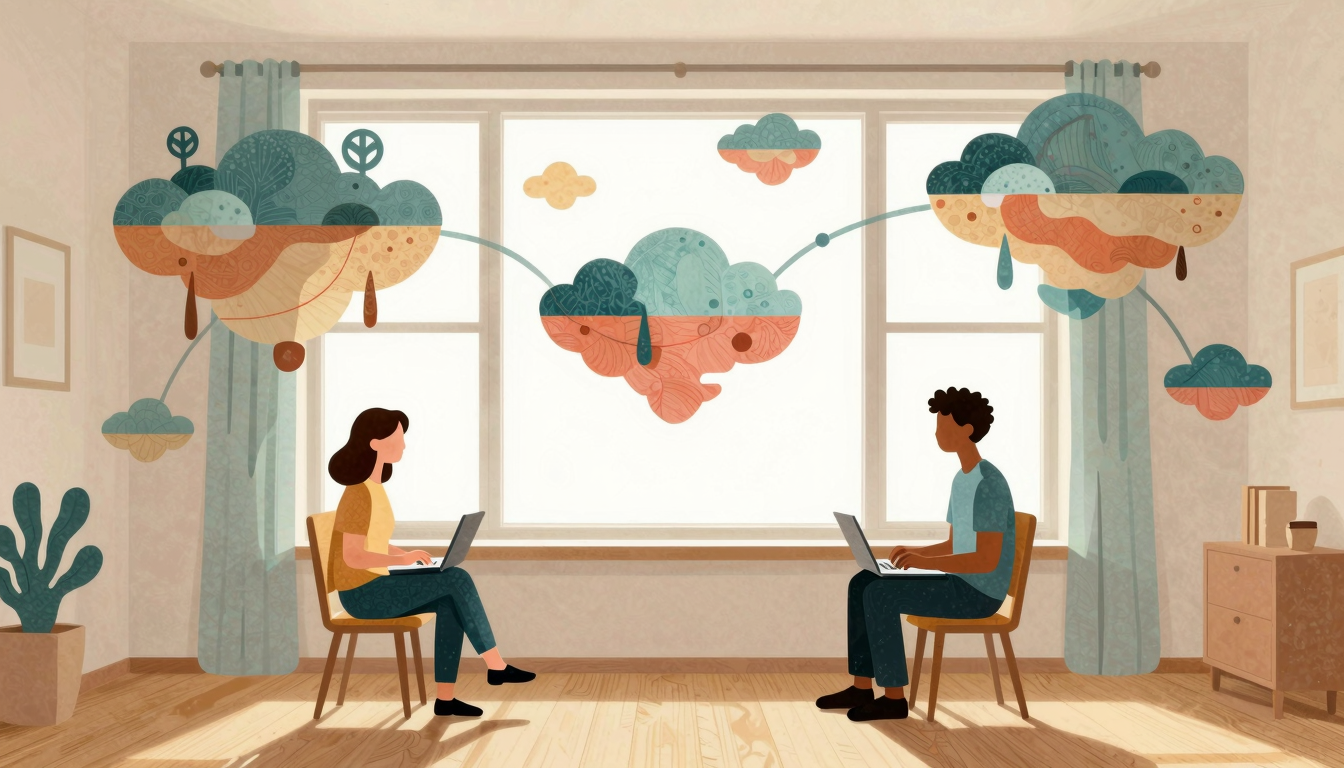
Daydreaming may offer comfort, ideas and imagined connection, but persistent loss of control and interference with daily life deserve support.
At a glance
Daydreaming is helpful or harmful according to its content, context, controllability and consequences. Vivid imagination alone is not a diagnosis; repeated interference with study, work, sleep or relationships is a reason to seek qualified help.
The narrator of the source essay describes a childhood kingdom built entirely in imagination. Between ages four and ten, they sometimes spent hours pacing in circles or climbing stairs while imagining a Pacific island with abundant water and food. They arrived with followers, became king and lawgiver, and created a civilization that offered a dependable place of retreat.
By high school, the imagined triumphs had changed: a perfect college-entrance examination at twenty, a Nobel Prize at thirty. The problem was no longer whether the fantasies were enjoyable. They were taking time from study and daily life, leaving the narrator worried about how much they relied on them.
That tension captures why daydreaming cannot be judged simply as useful or wasteful. An inner world may provide pleasure, possibility and relief. It can also become difficult to leave. The important questions concern its content, the setting in which it happens, how much choice you have and what it displaces.
What Counts as Daydreaming?
Daydreaming takes place while awake. It may arrive spontaneously or be deliberately entered; it is not necessarily a halfway state between wakefulness and sleep. Attention shifts toward internally generated thoughts or images instead of remaining wholly with the immediate environment.
Mind wandering is a broader term for thought moving away from a current task or focus. It can involve memories, practical plans or elaborate possibilities. Ordinary mind wandering is not defined by the absence of fantasy, and not every instance is unconscious. You may notice the drift as it begins, or discover only later that you missed part of a lesson.
Imagining future situations can help you explore what might happen or what you want. It can also keep you occupied with imagined success while the task needed for real progress remains untouched. The same general capacity can therefore serve different purposes on different occasions.
“Maladaptive daydreaming” refers to a proposed pattern of excessive, immersive fantasy that is hard to control and causes distress or interference with life. Vividness alone is insufficient: the concern is lost time, impaired functioning and difficulty disengaging. Someone need not dislike their imagination to want help with its consequences.
How Rumination Differs
Consider repeatedly replaying being called on in class. You ask why you answered as you did, imagine different responses and return to the embarrassment without reaching a useful decision. That pattern resembles rumination: repetitive thought that circles a difficulty rather than helping resolve it.
The distinction is not simply past versus future, or negative versus positive. Daydreams can contain either, and repetitive negative thinking can also concern what might happen next. Ask what the thinking is doing. Does it open possibilities, produce a next step or offer a chosen period of enjoyment? Or does it return to the same distress while becoming harder to stop?
Movement, conversation or a manageable activity may help interrupt a loop. Some people find mindfulness useful for noticing where attention has gone. Persistent, distressing repetitive thinking deserves support rather than an instruction to suppress every unwanted thought.
What Brain Networks Can Tell Us
Daydreaming is often discussed in relation to the default mode network, a group of interacting brain regions involved in internally oriented thought. The source highlights medial prefrontal, posterior cingulate and parietal regions, together with connections involved in memory. It uses a universe of remembered scenes and mental movies as an image for this activity.
In an experience-sampling brain-imaging study by Christoff and colleagues, mind wandering was associated with recruitment of both default and executive networks. The association was strongest when people lacked awareness that their minds had wandered. This is more complex than a single daydreaming switch: each region does not have just one job, and network findings do not reveal the meaning of a particular person's fantasy.
They also do not establish that daydreaming is evidence of a faulty brain, or that people with depression or schizophrenia all confuse imagination with reality. A vivid fantasy recognized as imagined is different from losing that distinction. The practical question for an absorbed daydreamer remains how the experience affects their life, rather than what diagnosis an appealing brain explanation might suggest.
Self-Esteem Can Shape an Imagined World
Fantasy can supply something reality has withheld: admiration, competence, love, power or a sense of being understood. The source discusses narcissistic themes through images of achievement, heroism, sexual success, hostility, revenge and exceptional suffering. A fantasy may place someone at the center of events even when the role is that of a uniquely wronged victim.
These are possible themes, not a test for narcissism. Wanting applause or imagining a dramatic victory cannot diagnose a personality disorder. Nor does the existence of such a fantasy tell us that someone is manipulating others or secretly enjoying real suffering.
The more useful connection is with self-esteem. Under daily stress, imagining oneself admired or capable may provide temporary relief from feeling diminished. A wish for perfection can make an imagined world particularly attractive because nothing there has to resist the script. Whether that relief helps depends partly on what happens when the person returns to ordinary life.
What Daydreaming May Offer—and What It Can Cost
Emotional Protection
After a rejected invitation to a date, someone may find themselves imagining victory in an important basketball game. The scene moves from rejection to competence and recognition. As an illustration, it shows how fantasy can change an emotional position without changing the event that hurt.
That can provide breathing room. It may soften painful emotions or let a person imagine a self that is more than the latest setback. But comfort and avoidance can coexist. If every difficult encounter ends in a long retreat, the relief may come at the cost of addressing the situation, seeking support or attempting something new.
Creative Possibility
An idea sometimes appears after you stop struggling directly with a problem—perhaps while showering and humming. A less tightly directed interval may allow associations that did not arise during concentrated effort. Writers and other creative workers can use imagined scenes as material, but an abundance of scenes is not the same as a finished work.
A 2012 experiment by Baird and colleagues offers a more specific example. An undemanding task during an incubation interval improved performance on creative-use problems participants had already encountered, compared with a demanding task, rest or no break. That condition involved more mind wandering, rather than more explicit thought about the problems. It does not show that any fantasy improves any new task.
A travel-imagery exercise provides another concrete way to generate material: picture an unfamiliar destination and explore its details before writing. The source associates such an exercise with Jampole's writing research. Treat it as a possible prompt to try, rather than a guarantee that imagination training will make a story original.
It is reasonable to leave occasional low-demand space in the day if you enjoy it. Reaching automatically for short videos can fill time that might otherwise allow thought to drift. That observation does not establish that phones suppress creativity in everyone, or that every idle interval must be turned into a productivity technique. An interesting idea still needs selection, testing and work.
A Sense of Connection
Imagining a distant partner beside you may bring comfort. In Poerio and colleagues' experience-sampling study, 101 people reported 371 naturally occurring daydreams. Social daydreams were associated with improvements in happiness, love and connection when those feelings were initially low and the imagined relationships were high quality. Nonsocial daydreams did not show the same pattern. This is an association, not proof that fantasy repairs relationships.
That possibility should not be promoted as a three-minute treatment for loneliness, depression or social anxiety. A momentary feeling of connection differs from a lasting change in a person's relationships or symptoms. Imagined company is also more controllable than an actual encounter, which includes another person's needs and unpredictable responses.
The source raises a useful tension: feeling connected in imagination might encourage warmth toward others, yet it might also satisfy the urge to interact without an actual conversation. Those outcomes need not occur for everyone. Notice your own pattern: does the imagined encounter help you reach out, sustain you until you can, or repeatedly replace contact you otherwise want?
When Fantasy Becomes Hard to Leave
Some people describe immersive fantasy as compulsive or addiction-like. They may lose hours, struggle to concentrate or withdraw from relationships in favor of invented characters. Describing that suffering does not require equating it with heroin dependence or assuming a fixed percentage of the population has the same experience.
The source recounts a person called Rose who found fictional relationships compelling and had difficulty controlling daydreaming. It also describes the Wild Minds online forum as a place where people shared experiences of misunderstanding, shame and prolonged absorption. These are source-reported histories, rather than a current recommendation of that forum. Finding a name for an experience can reduce isolation, but an online account cannot diagnose another reader.
The same source account describes strong academic results, law-school study and a successful career alongside periods of focused work. Outward success and private distress can coexist. Good grades do not make loss of control irrelevant, just as imaginative absorption does not make achievement impossible.
If fantasy repeatedly interferes with sleep, work, study or relationships, discuss the pattern with a qualified mental health professional. Describe the time involved, triggers, difficulty stopping and effects on daily life. You can seek help for distress and impairment without waiting for agreement about a label.
Keep Imagination and Daily Life in Conversation
Daydreaming need not be an enemy to defeat or a gift that must never be questioned. It can be enjoyable, comforting and creatively useful while still needing boundaries in a particular setting. Even a chosen fantasy can be poorly timed when a task requires your attention.
Notice what your imagined world supplies and what returning from it costs. Room for fantasy and room for action can exist in the same life. The aim is enough freedom to enter an inner world when you choose, and enough freedom to leave it for the people, responsibilities and possibilities you also value.
Frequently asked questions
Is daydreaming a halfway state between sleep and waking?
It occurs while awake and may be spontaneous or deliberate; it is not necessarily drowsiness.
Is rumination simply thinking about the past?
No. The useful distinction is repetitive distress that circles without helping, rather than past versus future alone.
Can a break improve creativity?
One experiment found benefits for previously encountered creative-use problems after an undemanding incubation task; this is not a guarantee for all fantasy or tasks.
Can imagined company replace a relationship?
It may offer comfort, but direct interaction includes another person and cannot be assumed equivalent.
When should I seek support?
When fantasy is hard to control, causes distress or repeatedly interferes with daily functioning.