Summary
Aging-related worries may give fraudulent promises emotional leverage. Support, dignity and independent checks are more useful than demographic stereotypes or incomplete self-tests.
At a glance
Scammers can exploit worries about health, security or connection through urgency and promises of relief. Aging anxiety is a possible concern, not an established sole cause or a prediction that someone will be deceived. Combine honest discussion with independent verification and trusted support.
A supplement promises renewed health. An investment promises retirement security. A new online relationship promises companionship. Other approaches involve cheap tours, supposed benefit assistance, prizes, care services or offers involving a home. The subject changes, but the appeal often touches something a person genuinely wants to protect.
Worry about growing older can make those promises emotionally significant. That doesn't make an older person gullible, and it doesn't place responsibility for deception on the victim. It makes understanding the concern part of prevention, alongside checking the offer itself.
What aging anxiety involves
Aging anxiety refers to worry about the process of growing older and its possible losses. Concerns may involve health, independence, appearance, finances or relationships. A person may be especially worried about becoming isolated, needing care or losing control over decisions.
These concerns don't all occur together or belong only to older adults. They also aren't the same as a clinical anxiety diagnosis. Some worry reflects real uncertainty that deserves practical help rather than an instruction to be more positive.
Kathleen Lasher and Patricia Faulkender's 1993 scale-development research treated anxiety about aging as a multidimensional subject. That matters because two people of the same age may fear very different changes.
How a scam can use a real concern
A fraudulent offer can promise relief from a worry, then create urgency around accepting that relief. Someone concerned about health may be pressed to buy before a supposed opportunity disappears. Someone worried about financial security may be promised exceptional returns or told a benefit is at risk.
The Federal Trade Commission describes common scam tactics that include invented problems or prizes, pressure to act immediately and demands for particular payment methods. Those tactics can matter at any age. An aging-related concern may give the message a personal point of entry, rather than being the sole reason a scam succeeds.
Research language also needs care. “Fraud susceptibility” describes a measured vulnerability or tendency; it isn't automatically a record of actual financial victimization. Its meaning depends on how a study measures it. Neither an anxiety score nor a susceptibility score can tell you with certainty whether a person will encounter or believe a particular fraud.
The available evidence here doesn't establish aging anxiety as the main cause of fraud. Treat it as a possible concern to address, while assessing the caller's claims, the transaction and the pressure being applied.
Circumstances matter more than a stereotype
Health, finances, social connection, living arrangements and opportunities for activity can all be relevant to how someone experiences later life. Cultural expectations matter too. But these aren't a reliable checklist that tells you anxious men, younger retirees or people living alone will be deceived, while other groups are safe.
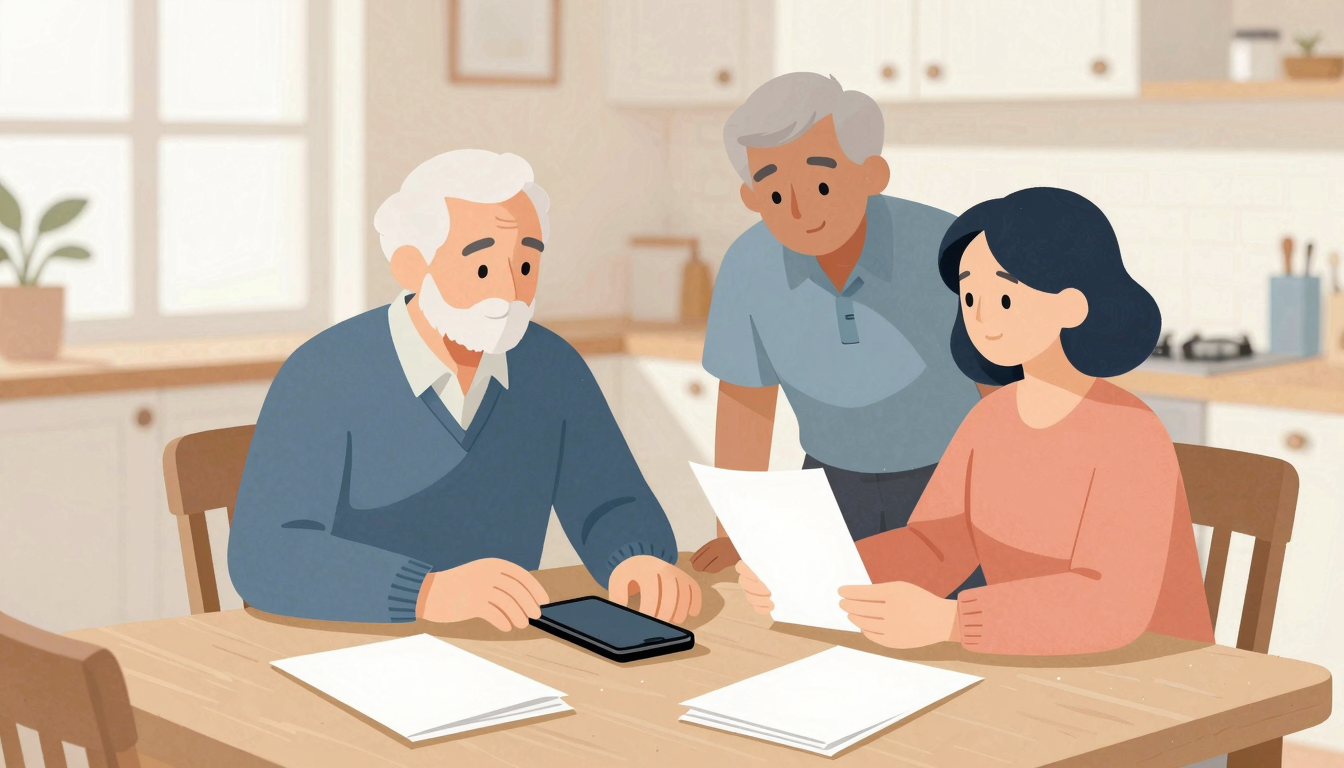
Ask the person what worries them and what support would make a difference. Living alone doesn't necessarily mean being lonely; living with family doesn't guarantee emotional support. A confident person still needs safeguards, and an anxious person may be careful and well-informed.
This approach also makes it easier to talk after a scam. Shame and self-blame can make disclosure painful. Responding with ridicule or taking over every decision can add another loss of control. Begin with what happened and what assistance is wanted.
Reflect without inventing a test score
A proper questionnaire requires its complete items, response options and scoring instructions. A few demographic facts or an incomplete scale excerpt can't provide an accurate personal score. Different versions and item directions also make a simple rule such as “lower means more anxious” unsafe to apply without the instrument.
For ordinary reflection, more useful questions are specific: What change am I afraid of? Is someone using that fear to rush me? Can I check this claim independently? Who could discuss it with me without judging?
The answers can identify practical needs—reliable health information, financial guidance or more contact with people you trust—without labeling you as deficient.
Combine emotional support with external checks
Pause when an offer uses fear or excitement to demand an immediate decision. Verify a claimed organization through contact details you obtain independently. Talk to someone you trust before sending money or sensitive information, and consider the FTC's warning about unusual payment demands.
If fraud has occurred, prompt reporting and help from the relevant financial institution or local authorities may preserve options. Emotional support matters alongside those practical steps. Persistent distress deserves attention rather than being dismissed as embarrassment.
Accepting aging doesn't mean accepting exploitation or pretending losses don't matter. It means allowing uncertainty and change to be discussed without letting a stranger sell instant relief from them. Support the person's dignity, make decisions checkable and leave room to ask for help before pressure becomes action.
Frequently asked questions
What is aging anxiety?
Worry about changes and possible losses associated with growing older, including health, independence and relationships.
Does anxiety prove fraud risk?
No. An anxiety score cannot establish that a person will be deceived, and susceptibility measures depend on their design.
Can I score myself from a short excerpt?
No. Valid scoring requires the complete instrument and its instructions.
What helps prevent pressure-based decisions?
Pause, verify through independently obtained contacts and discuss the offer with a trusted person before paying or sharing sensitive information.