Summary
A reflection on maternal love’s nourishment and pain, the expectations children may inherit, and the possibility of making room for both generations to live as separate people.
At a glance
Maternal love can nourish development while also carrying expectations that constrain a child’s separate identity. These reflections propose listening to your own feelings, questioning imposed emotional obligations, and understanding your mother’s history and wishes. Changing a relationship pattern does not necessarily mean ending the relationship; the hope is that both generations can pursue meaning in lives of their own.
The Pain Behind Maternal Love: Reflections on a Book About Maternal Love
In Everything Everywhere All at Once, Evelyn, played by Michelle Yeoh, is intensely controlling in her marriage and in her relationship with her daughter, Joy. Her dissatisfaction with her own life spills into their everyday interactions. Joy grows up under pressure, frustrated by being neither understood nor heard and repeatedly having her feelings and choices invalidated. Within the film’s fantastical world, she eventually becomes a threat to the entire multiverse.
Beneath the absurd imagery lies a troubling way to read their relationship: in celebrating maternal love, we can overlook the profound wounds it may leave in children. The film gives that possibility an extravagant fictional form, but the question reaches beyond the screen. If that harm has already occurred, how do we face the injuries bound up with a mother’s love?
A mother’s love forms a bond that is not easily severed, and family is an unavoidable part of the background against which we develop. From a family therapy perspective, a family is a network of relationships, more than a collection of individuals. Therapy therefore attends to interactions within that network rather than reducing the family to a single, simplified whole.
The writer of these reflections on a book about maternal love gives mothers a particularly central place within this network, both in shaping the next generation and in providing fundamental psychological resources for a child’s relationships. This emphasis runs through the developmental discussion without making mothers solely responsible for how children develop.
How Early Relationships Shape Development
Attachment offers a more specific way to understand these psychological resources. The writer draws on Mary Ainsworth’s Strange Situation findings, which identified three childhood attachment patterns: secure, insecure-avoidant, and insecure-ambivalent. In the writer’s explanation, securely attached people tend to be more emotionally stable, more trusting of others, and more confident in their ability to build close relationships. They also tend to form positive social connections and are more likely to receive support at work and in everyday life.
The account also draws on Harlow’s experiment with rhesus monkeys. As recounted here, attachment in these animals was relatively weakly related to food provision, while tactile contact exerted a strong influence. The comparison emphasizes the importance of touch without making food irrelevant. Turning to human infancy, the writer describes secure attachment as developing gradually through positive responses to an infant’s needs, including close physical contact and other responsive interaction with the mother.
The developmental account reaches back to pregnancy, presenting mothers as important guides and supports for physical and cognitive development even before birth. The writer reports that stress experienced during pregnancy directly affects how an infant responds to the environment and regulates those responses at six months of age. Some physiological evidence is also cited as suggesting direct effects on the development of the child’s nervous and immune systems. Those effects may persist for a considerable time, even if the child’s environment becomes substantially less stressful after birth.
As children grow, everyday interaction with their parents becomes an important influence on early development. The writer cites a study of low-income families across 20 U.S. cities comparing children in stable housing with children experiencing homelessness. According to this account, housing instability itself had no direct developmental effect within the group studied. The key factor was positive interaction between children and their parents, including deliberate verbal communication and time spent playing together.
That study concerns parents generally. Drawing together the wider developmental discussion, the writer places particular emphasis on mothers’ influence across cognitive development, social abilities, and growth into adulthood. The importance assigned to this bond raises a further question: how does it allow a child to become a separate person?
Becoming a Person in Your Own Right
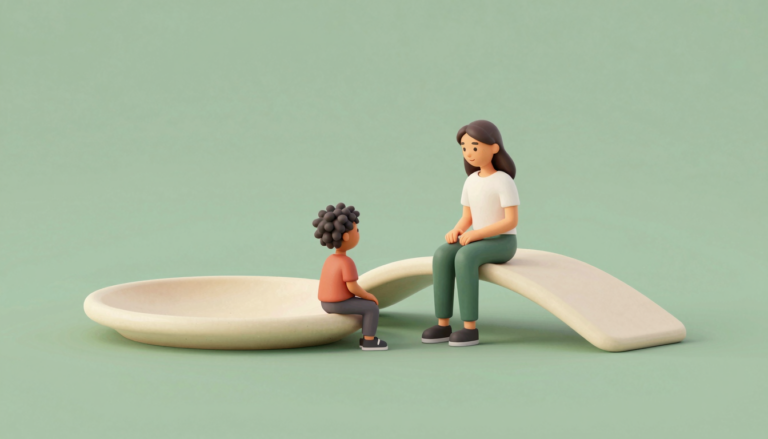
A bond experienced as inseparable also affects the mother. In the writer’s account, it repeatedly confronts her with a difficult question: Is my child an extension of me, someone who belongs to me, or a separate individual? How she approaches that question matters for the child’s development of an independent personality.
The writer turns here to differentiation, a central concept for American counselor Murray Bowen. In this explanation of his view, children gradually develop self-awareness through interactions with parents or other influential people and separate themselves from the family system as individuals. The writer puts it more simply: growing up involves recognizing that you are a person in your own right. That recognition does not, in itself, mean ending contact with your family.
The pressures that complicate this process appear in familiar maternal voices from everyday life and stories on screen. The writer offers examples such as:
“I’ve sacrificed so much for you. Can’t you make me proud?”
“I’m doing all this for you! I work myself to exhaustion every day. Why can’t you understand what I’m going through?”
“I couldn’t become a dancer because we didn’t have the money. Now that we can afford it, you must fulfill that dream for me—you can perform on the big stage and become a famous dancer!”
These are some of the ways a mother’s sacrifices, feelings, or unrealized ambitions can become demands on her child. In the writer’s explanation, a young child may hear a parent’s words as commands that cannot be questioned. Some parents assume that their dreams are also their children’s dreams, insist that their children share their emotional experience, or make their own sense of success depend on what their children achieve. When children cannot meet those expectations, they may blame themselves. That self-blame can take root early and remain difficult to escape well into adulthood.
The writer likens maternal love without differentiation to shackles binding mother and child together. Loosening those constraints calls for reexamining both the love and the expectations bound up with it.
Listening to Your Own Feelings
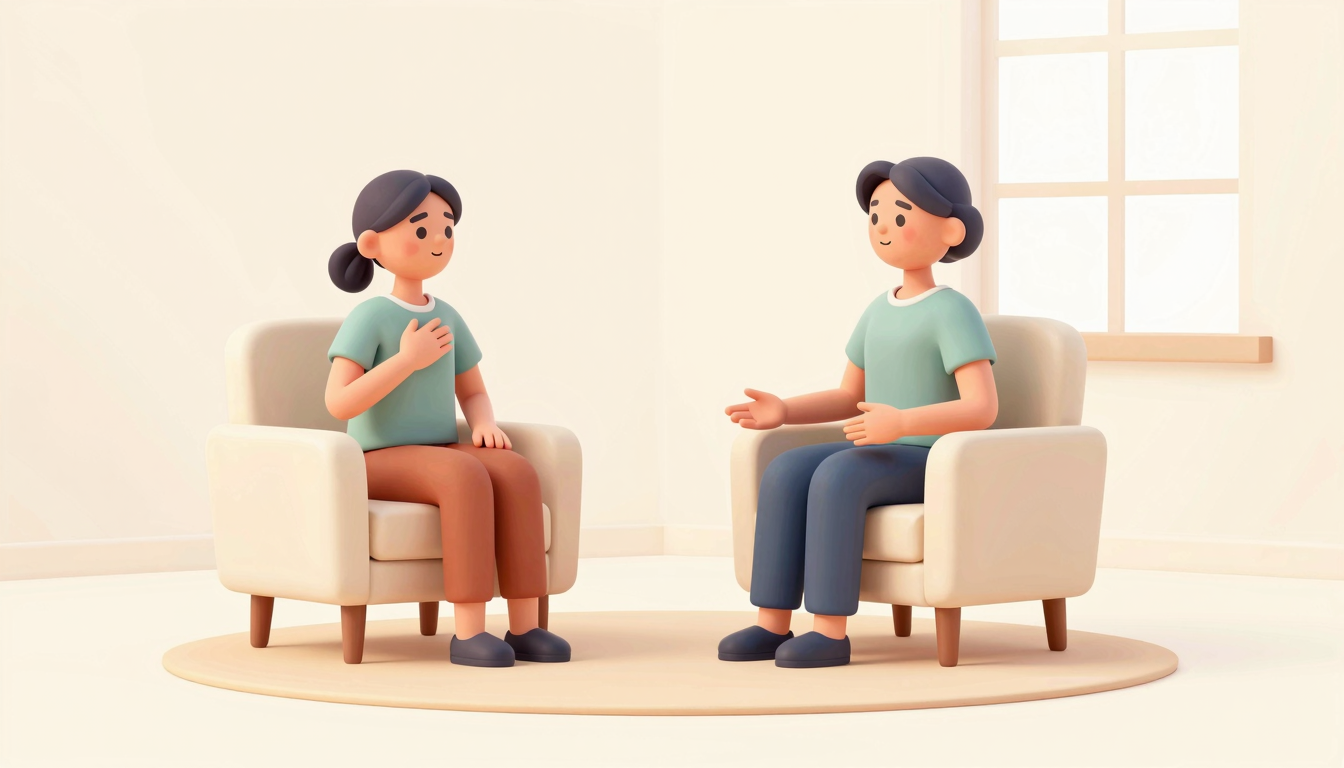
The first recommendation is to listen to your inner voice and attend to your feelings. Recognizing yourself as a separate individual calls for a fuller understanding of yourself and a clear self-concept: a sense of who you are.
Drawing on the psychological view that self-concept comes in large part from self-perception—how we understand ourselves—the writer suggests asking questions such as:
- Is this something I want to do?
- What kind of person am I now?
- What kind of person do I want to become?
Returning to these questions over time can help you recognize more clearly that you and your mother are separate people. The proposal is to give greater attention to what you actually feel, rather than organize your emotional life around what your mother might feel when her feelings remain unknown to you. Distinguishing your emotional experience from hers can help you approach the relationship on more equal terms and stop giving your parents an outsized standing in your life.
Following your own feelings and saying no to emotions your mother insists you share can help you understand what her love means to you. You have the right to continue a particular pattern of relating or bring that pattern to an end. Changing how you relate to your mother does not necessarily mean ending the relationship itself.
Understanding Your Mother’s Predicament
The writer’s second recommendation is to consider your mother’s predicament. She, too, has the right to be true to herself and seek meaning beyond motherhood. The writer suggests that many mothers struggle to recognize their children’s individuality because they are so eager to see their own unfulfilled wishes realized through them. Believing that their own opportunities have passed, they look to their children to fulfill those wishes.
This explanation also reaches back to the families in which mothers themselves grew up. Before becoming mothers, they were daughters. In the writer’s account, daughters who faced misunderstanding and disapproval from their own mothers forced themselves, as they grew older, to accept the previous generation’s views to avoid being hurt again. When those daughters became mothers, the suffering bound up with that acceptance could pass to their children. This is one way the writer understands how pain associated with maternal love travels between generations.
Understanding how these patterns developed can open up a choice: to face their harmful consequences alongside your mother rather than approach her as an opponent. The writer proposes confronting the suffering together, a choice that can coexist with refusing imposed emotions and exercising your right to change a pattern of relating.
We often celebrate the nourishment a mother’s love provides while overlooking the suffering it can also hold. Reexamining a bond in which mother and child struggle to recognize each other as separate people offers an opportunity for both: children may gain freedom from expectations that constrain them, and mothers may find room to pursue lives of their own. The hope is that both generations can leave behind the injuries bound up with that love and find meaning in lives each can call their own.
Frequently asked questions
Does differentiation mean ending contact with your mother?
Differentiation involves recognizing yourself as a separate individual. Changing how you relate to your mother does not necessarily mean ending the relationship itself.
Can understanding your mother coexist with changing a relationship pattern?
The writer proposes confronting the suffering together, a choice that can coexist with refusing imposed emotions and exercising your right to change a pattern of relating.