Summary
Many visible faces can coexist with missing social cues. This account connects that mismatch with unfamiliar gaze patterns, apparent proximity and the recurring distraction of seeing yourself.
At a glance
Camera use can contribute to fatigue, as a field experiment suggests. Gaze patterns, large on-screen faces and self-view offer possible explanations, but the cited mechanisms are not all directly established. The demands vary with the meeting, setup and person.
An invitation to an evening online gathering might read, “Please turn on your video tonight, everyone.” A workplace request might be more direct: “We’re meeting online with another department shortly to discuss an issue. Please turn your cameras on and take an active part in the discussion.” Both make being visible part of participating.
Camera-on meetings can feel tiring, but that does not show that the brain inherently dislikes them or has failed to evolve fast enough. Bailenson’s nonverbal-overload account proposes possible explanations involving gaze, self-view and communication demands. It was explicitly presented as a theoretical argument requiring direct tests.
Video meetings, the writer argues, offer too much information and too little at once. The visual system must keep working to monitor the screen. In person, the limits of our horizontal field of view mean we ordinarily attend to only a few participants at a time. A video meeting can present a dozen or even dozens of faces together, creating an overload of nonverbal information.
Yet those faces provide only part of the picture. With much of the body outside the camera frame, important social cues are missing. There are more faces to process, but less information to help interpret each person’s nonverbal communication. Processing visual information while managing social interaction already takes energy; in this explanation, fatigue becomes especially pronounced when communication is limited to facial expressions and text.
Gaze can signal attention, but its meaning depends on context and the people involved. There is no universal 1.2-second threshold for being ignored or 3.2-second threshold for discomfort. On a video call, looking at a face on screen also differs from looking into the camera, which complicates the appearance of eye contact.
A person’s eye-contact preferences do not establish their attention, respect or psychological health. A discussion of meeting comfort does not need to turn gaze into a diagnostic test.
Video meetings reverse the ordinary pattern of looking. Participants watch others for prolonged periods, especially when the screen contains only camera feeds, with no shared presentation slides. At the same time, they often cannot tell whether anyone is actually looking at them. That uncertainty may still bring a worry—or even an assumption—that others are staring. In the writer’s explanation, both prolonged looking and the feeling of being watched place unfamiliar demands on the brain.
The size of the faces being watched can feel unnatural as well. Imagine a participant beginning to speak and their video automatically expanding to fill most of the display. The sudden enlargement may bring a moment of surprise or discomfort.
An enlarged face can create an impression of unusual proximity. That is one hypothesis in the nonverbal-overload account; it does not demonstrate a brain “proximity sensor” triggering an imminent fight-or-sex response. Screen size and layout are worth considering without treating this evolutionary story as a measured mechanism.
People differ in how they respond to a large face on screen. An automatic response is possible, but repeated internal alarm and reassurance have not been established by the explanation given here.
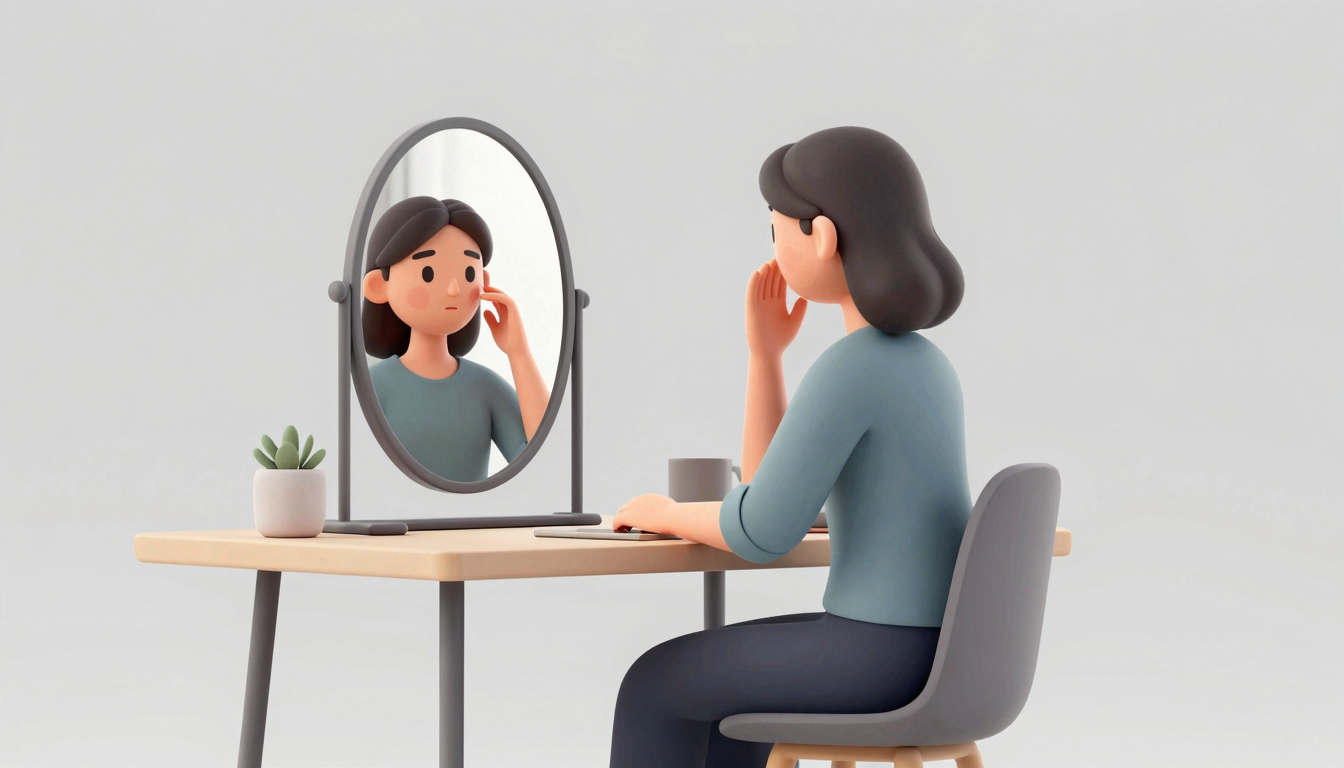
Other people’s faces are not the only distraction. Why should an enlarged view of your own face also draw your attention? The writer turns to the myth of Narcissus, the beautiful young man who saw his reflection in water and fell in love with it. He kept watching his own image, unable to turn away. In the version recounted here, his fixation eventually led him into the water, where he drowned. The account connects the story with the English word “narcissism.”
Studies of self-face processing and attention to one’s own face suggest that self-images can receive distinctive processing under laboratory conditions. They do not show that everyone is unable to look away, and attending to a self-image is not evidence of narcissism.
Self-view may draw attention away from the conversation, adding another demand while you try to stay focused. In a field experiment with 103 employees, camera use was linked to greater daily fatigue. That supports taking camera demands seriously without proving every proposed neural explanation. When the task allows, discuss camera flexibility or try hiding your own preview and notice whether it helps.
Frequently asked questions
How can video meetings provide too much and too little information?
In the writer’s explanation, numerous visible faces create an overload of nonverbal information, while camera framing hides important bodily cues. Participants have more faces to process but fewer cues for interpreting each person.
Why might seeing your own face make concentration harder?
Your own image can attract attention in laboratory tasks, and self-view may distract during a call. This does not prove everyone must struggle to look away. Hiding your own preview is an option to try when the meeting setup allows it.