Summary
Even a favorite song can feel intrusive during the wrong task. Music misfit offers an explanation for how an office playlist may strain attention and enthusiasm—and why the same soundtrack affects colleagues differently.
At a glance
Office background music may interfere with focus and mood when it conflicts with an employee’s current psychological, physiological, or task needs—a mismatch described as music misfit. The proposed explanation involves effort spent filtering distractions and a loss of positive emotion, with susceptibility varying across people and circumstances. Options include discussing playlists, using noise-canceling headphones, taking quiet breaks, and allowing periods without music.
Another day of not wanting to work. A possible culprit? The company’s damn background music.
Picture yourself at your desk, thoroughly caffeinated yet feeling as though your soul has left the building. You’re so irritated that pulling the Ctrl and C keys off your keyboard and gluing them together starts to seem reasonable. You might blame the oppressive office atmosphere, the Monday blues, or Mercury retrograde. But your boss’s playlist may also be helping you check out.
Imagine arriving at 9:00 a.m. on Monday with the enthusiasm of someone heading to a funeral, ready to battle a mountain of work. Then a singer’s breakup song drifts from the office speakers. You glance at the project proposal in your hands. Suddenly, it looks like a lousy boyfriend, and all you want is to break up with it.
Or imagine it’s 3:14 p.m. Afternoon sleepiness is washing over you, and you need electronic music energetic enough to blast you awake. As if hearing your silent plea, the office administrator helpfully selects a children’s lullaby. Fine, then. Apparently, staying awake and doing your job was too much to ask.
Is that irritation simply oversensitivity, or could there be a psychological explanation? Psychologists have described a concept called music misfit: the negative cognitive and emotional effects that can arise when background music conflicts with an employee’s current psychological, physiological, or task needs. Put casually, you and the office speakers are on different wavelengths.
The mismatch involves more than taste. Imagine that a particular singer’s song is your favorite song. When you’re racing a deadline and need to concentrate intensely on writing code, even that familiar favorite might feel like a gentle soundtrack to your undoing. Or suppose you love the infectious energy of a band’s rock: it could still clash spectacularly with the friendly conversation you’re trying to have with a client. Enjoyable music can become psychological noise when it arrives at the wrong moment.
To picture what working through that interference might cost, imagine two invisible energy bars: one for cognitive resources, the other for positive emotion.
Research on the cognitive side suggests that resisting and filtering auditory interference takes effort, potentially leaving you more fatigued, less attentive, and less able to concentrate. Your brain becomes a diligent security guard, trying to keep the sound from intruding while you work. In this proposed explanation, continually exercising self-control to ignore the music may also leave less capacity to regulate your behavior. “Willpower bankruptcy” is the dramatic image: the guard is still on duty but running out of steam.
The emotional bar captures a different cost. Research links fitting music with improved mood, while mismatched music may erode positive emotion. The contrast is easy to imagine: one soundtrack has you declaring, with cheerful exaggeration, “I could work another eight hours!” Another leaves you low and overwhelmed, convinced that your desk is the noisiest spot in an already noisy world. Irritation and discomfort can wear away enthusiasm for the work and, with it, the willingness to contribute beyond your own immediate needs.
These pathways distinguish having less desire to give something extra from having less capacity to keep your reactions in check. Research connecting music misfit with workplace behavior points to fewer voluntary contributions and more counterproductive actions. The depletion explanation offers a way to understand how that connection might develop.
Organizational citizenship behavior, labeled OCBO, covers voluntary contributions such as helping a new colleague, working extra to finish a task, or protecting the company’s image. When energy and positive emotion run low, the proposed explanation is that employees prioritize conserving what remains. Offering something extra can feel beyond reach.
Counterproductive work behavior, labeled CWBO, is defined in this account as behavior that intentionally or unintentionally harms the company’s interests. Here, the explanation concerns restraint: exhausted self-control may make negative impulses harder to resist. That difficulty need not indicate bad character; someone may simply be too worn down to keep their reactions in check.
As everyday illustrations of this explanation, slacking off, scrolling through a phone, or taking bathroom breaks on company time might come to feel like small forms of psychological compensation. Patience with colleagues or clients may wear thin, making impulsive remarks more likely. Frustration might also spill into complaints about the company or negativity passed around the office. These are possible responses, not an inevitable chain of events set off by an irritating playlist.
Even the initial irritation varies. The same music may barely register for one employee and become unbearable for another. Research points to stimulus screening ability as one factor in that difference: the ability to automatically filter irrelevant or secondary information, prioritize what matters for a current goal, and suppress distractions. This filtering keeps you engaged with your surroundings while selecting what needs attention. It is also relevant to environmental adaptation and stress responses.
People with stronger screening ability are described as high-screeners; those with weaker screening ability are called low-screeners, sometimes nonscreeners. Picture high-screeners as people with built-in noise-canceling headphones—the sort who, in a comic exaggeration, could write a doctoral dissertation with dance music pounding beside them. They identify and disregard irrelevant input comparatively efficiently, helping them maintain steadier cognitive and emotional states. Research has associated high-screeners with generally lower physiological arousal and stronger adaptation to environmental changes.
Low-screeners occupy the other end of this contrast: imagine ears that catch every rustle. Background noise is harder to filter out, and both relevant and irrelevant input are more likely to enter conscious awareness and require processing. In complex environments, research reports heightened physiological arousal among low-screeners, including increases in heart rate and skin conductance, alongside a greater likelihood of anxiety, stress, and negative emotions.
Applied to workplace music, these differences offer a possible explanation for uneven reactions: efficient filtering may leave high-screeners less affected by a mismatch, while difficulty screening out the sound may make low-screeners more susceptible.
Part of the proposed explanation for screening differences is biological. Neuroscience research has identified dopamine levels, particularly in the prefrontal cortex, as important in regulating top-down attention. This goal-directed form of cognitive control is central to the explanation of screening: attention follows the task at hand, allowing irrelevant input to be filtered out.
A related genetic account associates the COMT Met allele and the DAT1 10-repeat allele with dopamine regulation in the prefrontal cortex. The reported findings link carrying these variants with more efficient processing of conflicting information, as in Stroop tasks, and propose connections to better suppression of irrelevant stimuli and stronger stimulus screening. These associations offer a possible explanation for differences in filtering ability without establishing that genes determine how someone responds to an office playlist.
Screening ability can also change over time. Research links it to inhibitory control, which you can picture as the guard intercepting irrelevant information before it distracts you. Under self-depletion theory, that guard can grow tired after a long shift. Too little sleep, excessive stress, or prolonged work may weaken inhibitory control and, with it, the ability to filter distractions. Background sound you would ordinarily tolerate can then become difficult to bear.
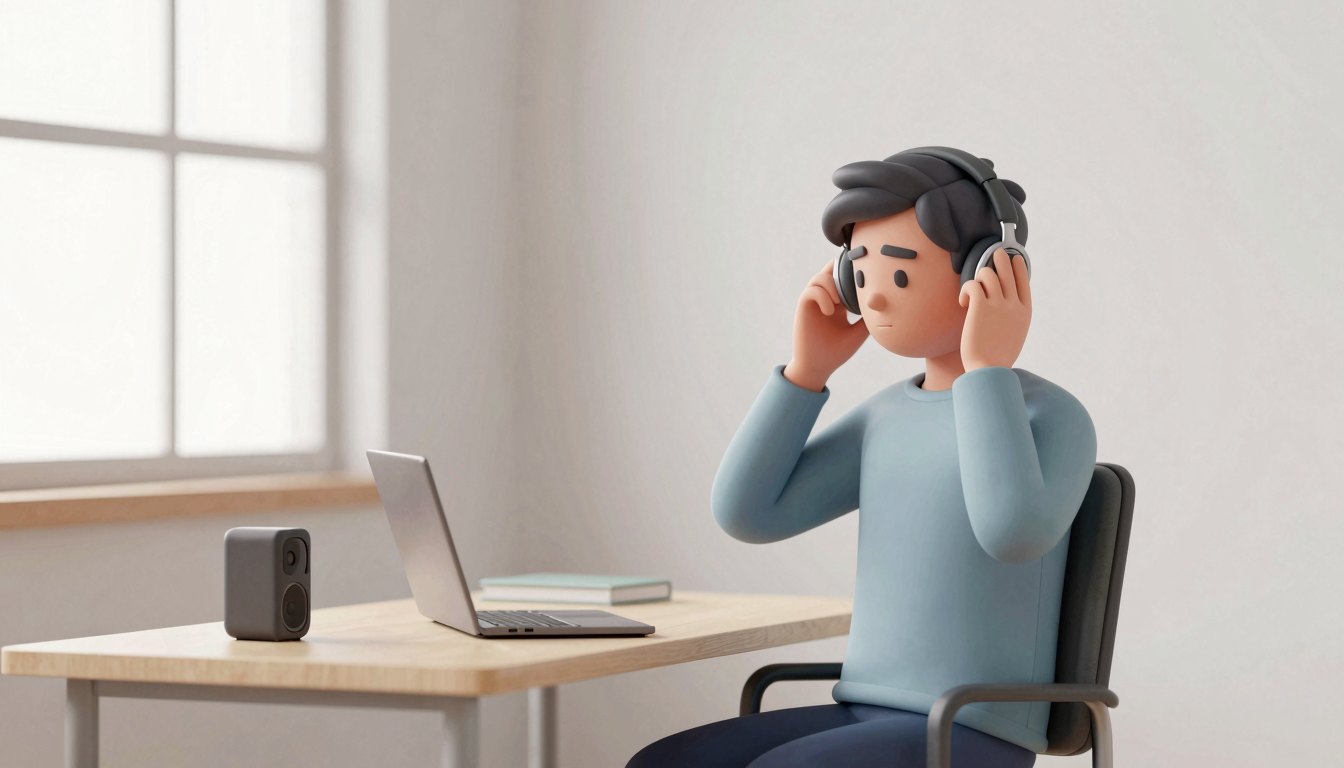
If the office soundtrack is wearing on you, a good pair of noise-canceling headphones could be a useful first step. You could also talk with colleagues or HR about the music: would a playlist chosen by employee vote be possible, or could different styles play at different times of day? During lunch or another break, try finding somewhere quiet to give your ears and mind a chance to recover.
Employers have a part to play, too. Alongside the customer experience, consider the listening needs of the people working there. Ask employees what they like to hear rather than choosing a soundtrack blindly, and leave room for periods without music. Sometimes the best background music is none at all; quiet may itself help people work.
The next time you’re getting little done and feeling irritated, don’t rush to berate yourself or question your ability. Take a moment to listen: could the company’s background music be contributing?
Pay, benefits, and ergonomic chairs all matter to the quality of a workplace. So does its less visible sound environment—the sounds that shape how people feel and think as they work.
Frequently asked questions
Can music you enjoy still interfere with work?
Yes. Even a favorite song may interfere when a task demands intense concentration, while energetic rock may clash with a client conversation. Suitability depends on the task and moment as well as personal taste.
Why does the same office music affect employees differently?
Stimulus screening ability offers one possible explanation. People differ in how efficiently they filter irrelevant sound, and insufficient sleep, excessive stress, or prolonged work may temporarily make distractions harder to filter.
What options can employees and employers consider?
Employees could try noise-canceling headphones, discuss playlists or different musical styles at different times, and take breaks somewhere quiet. Employers can ask about listening preferences and allow periods without music.