Summary
A traditional-health proposal brings quiet reclining, a view through the window and warm water into an urban morning. Its central idea is to give waking a sequence before letting the phone enter.
At a glance
The writer proposes three stages before phone use: quiet reclining after waking, opening a window and looking into the distance, then drinking warm water. The routine adapts traditional Chinese health ideas to urban life, with its explanations and benefits presented as the writer’s claims. When time is short, the writer permits one minute reclining, two minutes of distant viewing and one minute drinking water, preserving “window before screen.”
An alarm breaks into sleep, the snooze button postpones the morning, and a phone screen fills the gap before the day has properly begun. The writer proposing this three-stage morning routine claims that modern people press snooze more than three times a week on average, then encounter their phones’ blue light immediately on waking. In the writer’s traditional-health framing, this abrupt passage from deep sleep to information bombardment leaves no buffer and gradually depletes the foundations of yang qi.
A different image of dawn comes from a classical Chinese medical text. The writer attributes to it a correspondence between the four periods of a day and the four seasons: dawn is spring, when yang first emerges and life begins to stir. The proposed response is to adapt that sense of rhythm to urban life. Returning to an agricultural way of living is unnecessary; the morning can begin more gradually within the life already being lived.
Begin before getting out of bed
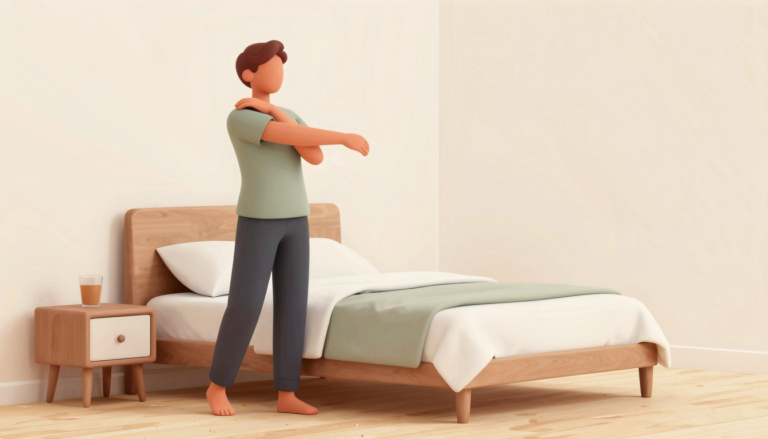
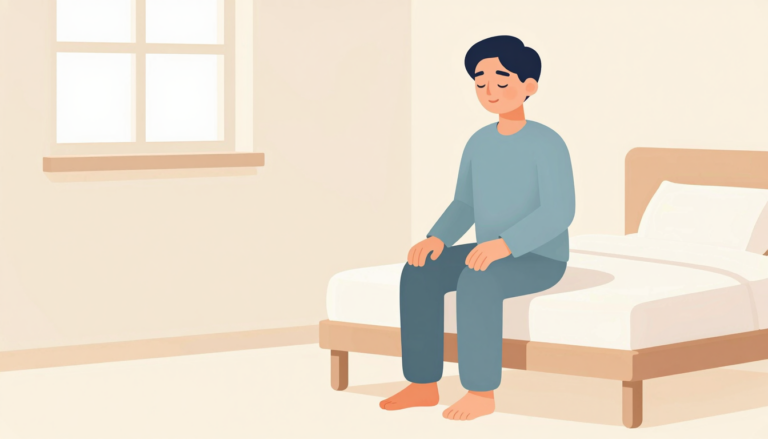
The first stage allows about three to five minutes for quiet reclining after waking. Its traditional basis is advice attributed to a classical medical compilation: before sleep, avoid singing, excessive talking and dwelling on angry thoughts; when rising, move slowly rather than hurry. The writer cites a physician’s emphasis on gradual rising, explaining in traditional terms that qi and blood move slowly while the body is lying down. Standing abruptly can then leave insufficient qi in the upper body, bringing dizziness and ringing ears.
The contemporary adaptation begins with the eyes still closed. Rub the palms together until warm, then dry-massage the face from forehead to chin, a practice the writer says promotes facial circulation. While lying on the back, extend both arms beyond the head and point the toes downward in a catlike stretch, described as guiding qi upward. Abdominal massage follows in bed: clockwise 36 times for constipation, or counterclockwise for loose stools. Within the writer’s traditional explanation, this supports the spleen and stomach in their functions of transformation and transportation.
The phone stays untouched throughout these minutes. The writer claims that screen blue light inhibits the clearance of residual melatonin and disrupts the normal rhythm of cortisol secretion, producing what the account calls “false wakefulness”: the body has risen, but the mind has not fully returned.
Turn toward the window
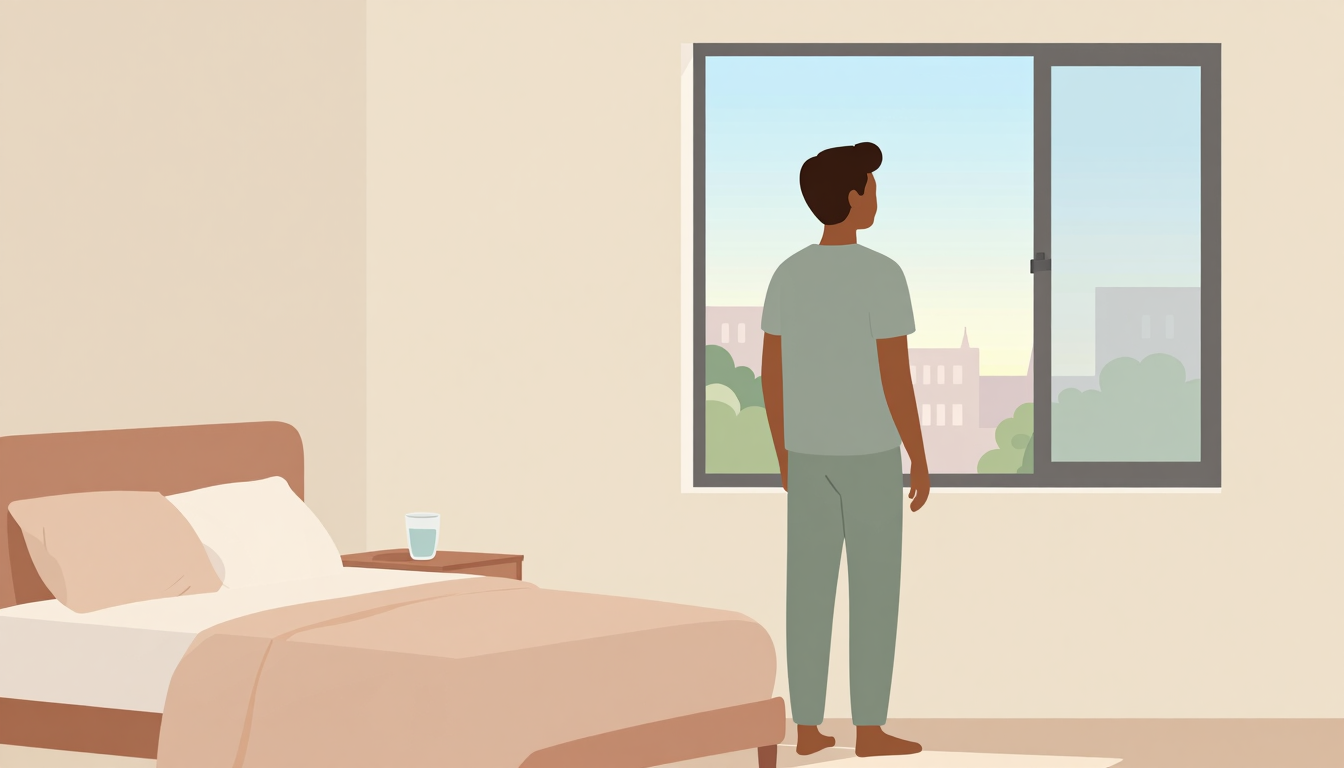
After this gradual waking in bed, the second stage moves to the window for about five to ten minutes of ventilation and distant viewing. The writer cites a traditional essay on cultivating health for the counsel, “Look far into the distance to let liver qi move freely.”
The surrounding explanation draws on the traditional association between the liver and the eyes. As the eyes first open in the morning, the writer proposes looking far before looking near, claiming that distant viewing relaxes the ciliary muscles and nourishes liver blood. Direction also has a place in this framework: east corresponds to wood, which is associated with the liver, so facing the rising sun is said to support the ascent and expansion of liver qi.
For an urban morning, a balcony view of the skyline or the rooftop opposite replaces a view of mountains. The writer presents this substitution as a way to regulate the ciliary muscles and relieve eye fatigue. Taking in fresh air becomes opening a window, optionally paired with an air purifier or fresh-air system—a combination the writer claims lowers indoor carbon dioxide and increases blood oxygen. Traditional guided breathing becomes what the writer calls abdominal breathing: inhale for four seconds, hold for two and exhale for six. Its claimed effects are activation of the parasympathetic nervous system and reduction of the morning blood-pressure surge.
The practical sequence starts with opening a window to create cross-ventilation, leaving a gap for three minutes even in winter. Next, direct the gaze toward the farthest visible point, seeking green or blue. In the traditional correspondences used here, green belongs to liver wood and blue to kidney water. Continue looking until the area around the eyes becomes slightly moist.
Breathing follows with the four-second inhale, two-second hold and six-second exhale. The writer specifies inhaling through the nose while drawing the abdomen inward and lifting the perineum, then exhaling through the mouth while relaxing the abdomen and allowing qi to descend. Repeat the sequence seven to eleven times.
For the light exposure and distant viewing, the writer also reports a 2023 study in a journal described as an international journal of environmental health research. According to that account of its findings, ten minutes of natural light after waking can increase serotonin levels and improve emotional stability during the day. The study is also reported to suggest that distant viewing can release the ciliary muscles from nighttime tension and reduce glaucoma risk.
Drink warm water
The third stage sets aside about five minutes for drinking warm water to regulate the body’s middle region. The writer quotes a classical compendium of medicinal substances on water as “the source of myriad transformations” and describes drinking water on an empty stomach in the morning as an old practice called “washing the intestines.” In this traditional account, it cleanses the digestive tract and helps yang qi descend.
The preference for warmth draws on a separate saying attributed to a classical medical treatise on cold-related illnesses: “Bodily cold and drinking cold liquids injure the lung.” The writer advises against cold drinks on this basis, explaining in traditional terms that morning spleen yang is only beginning to rise and cold liquid checks its emerging momentum.
The practical prescription is water at 40–45°C, slightly above body temperature and warm rather than scalding to the touch. The suggested amount is 200–300 milliliters, described as roughly a small cup. Drink while standing or walking slowly, swallowing it slowly in three mouthfuls rather than gulping it down.
Additions are optional and matched to particular conditions in the writer’s traditional framework. A little honey is suggested for constipation, to moisten the large intestine. For phlegm-dampness, two slices of ginger are said to warm the middle and transform retained fluid. A little lemon juice is offered as an option for the general population, with a claimed benefit of helping the liver detoxify, though the writer urges caution for people described as having stomach cold.
After drinking, an optional practice called koutianzhong involves gently tapping the teeth together 36 times, then swallowing the saliva that forms in several portions. The traditional claim is that yuye assists jinjin and nourishes the five internal organs.
Let the phone enter later
Only after completing all three stages—about 15–20 minutes in the writer’s estimate—does the phone reenter the morning. The proposed rules cover distance, duration and content: keep the device at least 40 centimeters from the eyes, a distance the writer recommends to avoid ciliary-muscle spasm; limit the first check to no more than five minutes; and put it down once urgent matters are handled. Constructive information, such as the day’s schedule, comes before social feeds, whose delay is intended to avoid emotional disturbance.
The routine also allows adjustments for discomfort and practical obstacles. For a dry mouth and bitter taste on waking, the writer offers a traditional interpretation of constrained liver-and-gallbladder heat, with bile moving upward. The suggested response is to hold a small amount of preserved sour plum in the mouth before drinking to stimulate saliva, while checking whether the previous evening included alcohol or high-fat food before bed.
Dizziness during distant viewing receives a different traditional interpretation: insufficient qi and blood, with clear yang failing to rise. The writer proposes shortening the viewing period and, before beginning, rotating the eyes with the eyelids closed nine times in each direction. Viewing time can then be extended gradually.
For winter cold sensitivity and reluctance to open a window, the account invokes insufficient defensive yang and closed interstices at the body’s surface. Its practical adjustment is to wear an outer layer while standing at the window and open only the upper section, allowing airflow without a direct draft. Looking into the distance from a balcony or corridor is offered as an alternative.
When time is the obstacle, the writer permits a compressed routine: one minute of quiet reclining, two minutes of distant viewing and one minute of drinking warm water. The essential principle remains “window before screen.”
That flexibility reflects the larger argument: for the writer, order itself is healing. Quiet reclining nourishes yang, distant viewing releases liver qi, and water regulates the middle. Together, these stages form a morning “startup ritual,” easing the passage from sleep into daytime activity. Their value rests on respecting timing rather than treating any isolated movement as magical.
Ordinary urban obligations still have their place. Phones will be checked and emails answered, but the sequence determines who sets the terms. Turning toward the window before turning toward the screen becomes a small declaration that the person initiates the day’s rhythm.
The writer closes with a teaching attributed to a chapter on ancient ideals of health in the classical medical text cited earlier: follow yin and yang, and live in harmony with traditional methods and patterns. The interpretation offered is conscious responsiveness to bodily rhythms rather than rigid rule-following. In its basic form, this adaptation is presented as requiring no special equipment or fixed location—about fifteen minutes and a little self-discipline—with the devices and settings described earlier available as options. The final promise belongs to the writer: keep practicing for 21 days, and the body will remember this ancient morning agreement.
Frequently asked questions
Can the proposed routine be shortened when time is limited?
The writer permits a compressed routine: one minute of quiet reclining, two minutes of distant viewing and one minute of drinking warm water. The essential principle remains “window before screen.”
When does the writer allow phone use?
The writer allows phone use after all three stages. The proposed rules are to keep the phone at least 40 centimeters from the eyes, limit the first check to five minutes, put it down after urgent matters are handled and prioritize the day’s schedule before social feeds.