Summary
An old teapot, a worn chopping board, and a repeatedly darned scarf reveal how everyday use can deepen beauty, familiarity, and affection.
At a glance
Some objects reveal their beauty through patient use and care, developing a patina, a familiar fit, and an emotional significance that deepens over time. The essay traces these relationships through a father's teapot, a mother's chopping board, and a grandfather's treasured scarf. This beauty depends on attentiveness, cleaning, and repair; age or use alone offers no universal promise.
We can admire an object with the respectful distance of a guest, or grow close to it through the daily intimacy of use.
Some objects hold their beauty in reserve. Only as we use them does their radiance gradually emerge, drawing us into a deeper attachment. Time becomes the finest ferment: the passage from new to old allows another kind of beauty to grow, while affection gathers slowly, becoming richer with the years.
What time brings to the surface
My father has an old teapot that he has used for more than ten years. Tea has steeped in it for so long that sometimes even plain water releases a faint tea fragrance.
Its color has deepened considerably. The raw feel it had when new has softened into a smoothness that is lovely to touch. Set it where light and shadow meet, and its fine patina glows gently across the surface.
Whenever he has a little free time, my father likes to sit at the tea table and brew a few pieces of aged pu’er. The fragrance develops in the pot, then drifts through the air, lending the whole corner an unhurried calm.
To my nose and palate, the tea is subtly different from tea brewed in a new pot. It is as though it has received some quiet blessing: the fragrance seems fuller, the flavor mellower.
I once asked him whether there was something magical about the pot.
He smiled. “It’s time.”
I came to understand that certain kinds of luster and flavor cannot be hurried. They take long, leisurely years to develop. I have also heard of people pouring tea over a pot every day and coating it with tea residue to make a patina form faster. The results may come sooner, but the sheen becomes muddied and the flavor tainted. Such haste and impatience are hardly the spirit in which to nurture an object.
A beautiful patina is something a person and time create together, for that person alone. Use an object naturally and wait patiently, and it seems to acquire a spirit of its own. A beauty that belongs to you will emerge.
A friend once gave me a pen made of brass and natural wood. At first, the brass was bright and new, while the wood looked dull. After I had used it for a while, the metal’s shine softened and the wood gained a gentle sheen. It looked different from anyone else’s. I began to feel that it had a warmth of its own, something uniquely mine.
The beauty of a familiar fit
One day, the sound of a knife on a wooden chopping board brought our old board at home suddenly back to me.
My primary school was close to our house, so I went home for lunch every day. Hearing that steady chopping always reassured me. A meal was on its way; even my hunger seemed less urgent.
On holidays, when relatives and friends gathered at our home, my mother would begin preparing food early in the morning. Sometimes I helped in the kitchen, passing her washed tomatoes, green peppers and beans, one after another.
She became a general directing an army, confident and orderly as she turned the vegetables into shreds, slices and chunks and arranged them on separate plates. Knife and board played their own music: now a clatter like a sudden downpour, now a soft murmur like a private conversation. When she minced filling for dumplings, the rhythm grew fierce. The pounding sounded like a spirited military drum.
The board was covered in cuts, some deep and some shallow, as intricate as the lines of a palm. Food and water had darkened its edges, and a noticeable hollow had formed in the center. Still, my mother could never quite bring herself to replace it. After using a new board a few times, she set it aside and brought the old one back.
“I’m used to this one,” she said.
I tried using it several times, but could never get the curve of the knife blade to work comfortably with the board’s contours. Eventually I gave up. Perhaps my mother was the only person who could handle it with complete ease. After all, every small change in its shape had been made by her hands. Over time, the two had become perfectly attuned partners.
Beauty is more than something we see. There is beauty, too, in an object that fits its purpose and its user just right. That fit develops gradually: with each use, we adapt to an object’s shape, while its shape changes subtly in response to our habits. In the end, person and object seem made for each other.
Once, I saw a master’s guqin, a traditional Chinese zither, with many fine cracks across its lacquered surface. I asked a friend who played the instrument why they were there.
My friend said that the more such cracks a guqin had, the more precious it was. As the instrument is played, the friend explained, vibrations gradually loosen the wood’s structure, producing different patterns of cracks in the lacquer while allowing the sound to become clearer and mellower.
An instrument that costs little at first may, after several years of playing and care by a skilled musician, become an exceptionally fine one.
Such a harmonious fit is a duet between a person and time.
Affection kept alive through use
My maternal grandfather had a gray scarf. It was faded, its stitches were rather loose, and several places where the yarn had come undone had been darned repeatedly.
Yet he treated that old scarf as a treasure. Each year, when the first cold winds arrived, he took it out of the cupboard. He arranged it neatly around his neck before going out and carefully put it away when he returned.
My grandmother had knitted it while she was alive.
She was outgoing and brisk, someone who threw herself into whatever she was doing, but needlework was never her strength. One day, she acquired a few balls of yarn from somewhere and announced that she would knit my grandfather a scarf. For an entire winter, she knitted and unraveled it, then unraveled and knitted it again. Only in early spring did it finally take the shape of a scarf.
My grandfather found things to criticize aloud, but he could hardly wait to wrap it around his neck and go outside. Like an eager child, he went around the neighborhood quietly showing it off.
He was usually a man of few words, with a sensitive, attentive nature. The flowers and plants he tended in the courtyard flourished. After my grandmother died, those plants withered too. Empty flowerpots stood in stacks in the corner, exposed to the winter wind.
The scarf, meanwhile, became his most cherished possession. Taking it out each winter was almost a fixed ritual.
Once, I asked my mother why he did not simply put it away for safekeeping.
“When he uses it, it feels as though your grandmother is still beside him,” she said. “If he puts it away, it becomes only a memory.”
Mending what we cherish
An old poetic line says that beautiful things in this world are fragile: bright clouds scatter easily, and glass breaks.
Imperfection is part of life, and damage is a fate objects inevitably face as we use them. Yet imperfection can have a beauty of its own.
That beauty is no deliberate attempt to console ourselves. It comes from an affection that remains alive over many years. For a damaged object, being mended and used as usual is the greatest expression of respect and appreciation.
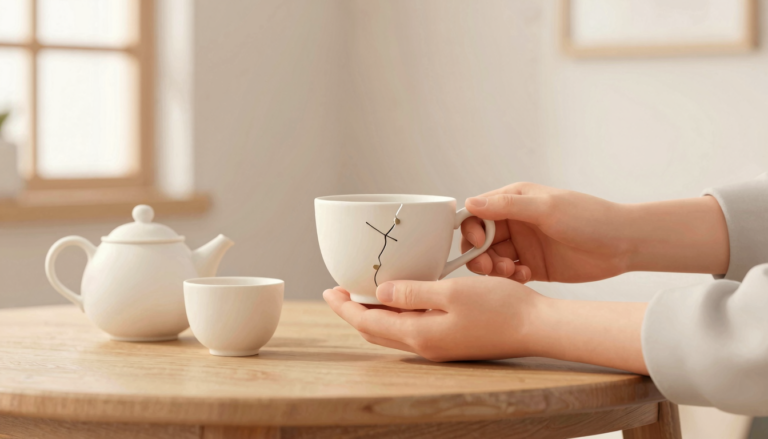
In China, crafts such as juci, which repairs ceramics with staples, and kintsugi, or gold repair, answer this wish to mend. Many of the objects brought in for repair are ordinary cups, plates and bowls with little monetary value. Years of use have created an attachment. Even broken, they are irreplaceable.
I once visited a showroom filled with handmade carpets so beautiful that I could hardly bear the thought of stepping on them.
The owner smiled and said that he actually wanted people to use the carpets, rather than store them away. Through use, he explained, their colors would gradually fade and change, developing the beauty of age. He believed it was through using them that people would come to cherish and repair them, allowing the carpets to last longer.
He also recalled old buildings he had seen while traveling in Europe, many designated as cultural heritage. People still lived ordinary lives inside them, repairing any damage promptly. In his view, that continuing habitation helped the buildings survive longer. Had no one lived there, he thought, they might have fallen into rapid decline long ago.
Seen this way, use becomes a form of wisdom for the long term. Behind each act of use and repair is a desire to cherish what we have.
Use, accompanied by care
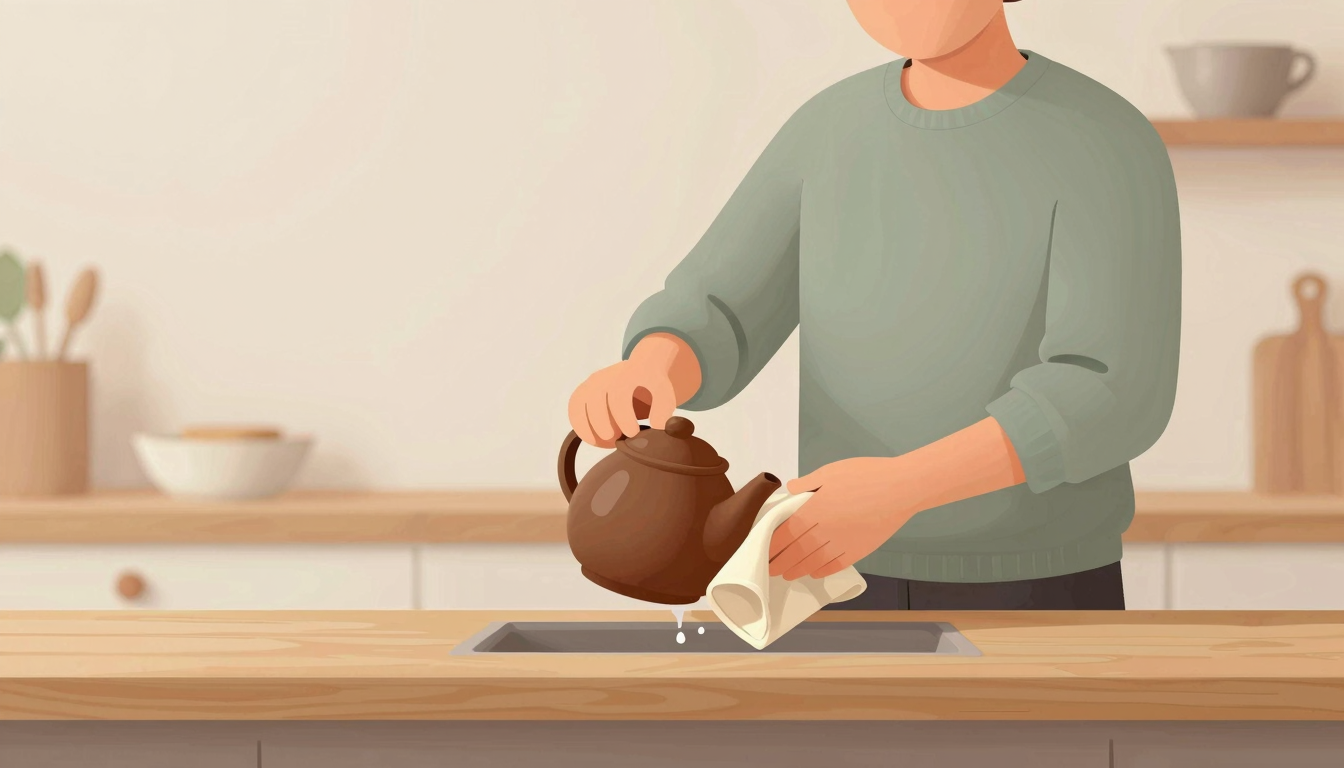
After every pot of tea, my father rinses his teapot clean and dries it with a soft cloth. After using her chopping board, my mother clears and washes it, then leaves it somewhere well ventilated.
Using things while cherishing them is the secret to their becoming more beautiful with use. It is also a practice in patience, attentiveness and care. If we use something only to throw it away afterward, discard it at the first sign of damage, or abandon it as soon as something new appears, we cannot develop a deep attachment to it. Nor will we witness its transformation over time.
The years lay a patina on more than our possessions. They give every day we cherish a radiance of its own.
Frequently asked questions
Does every object become more beautiful with age?
The essay concerns some objects whose beauty emerges through use. It connects that transformation with patience, attentiveness, cleaning, and repair, rather than making a universal promise about age.
What does a familiar fit add to an object's beauty?
Repeated use can bring the user and object into closer harmony: the person becomes familiar with its shape, while its shape may change with their habits. In the essay, the mother's worn chopping board fits her use with an ease the narrator cannot reproduce.
Why does the grandfather keep wearing his old scarf?
His late wife knitted it. According to the narrator's mother, wearing it makes him feel as though she is still beside him, while putting it away would make it only a memory.
How does repair express attachment to an object?
The essay presents mending and continued ordinary use as expressions of enduring affection. Even inexpensive cups, plates, and bowls can become irreplaceable through years of use.