Summary
A warped cabinet, an unused wheelchair, and a dusty mirror bring the narrator’s parents close again during a return to the childhood home.
At a glance
Returning to the old family home brings the narrator’s parents into vivid memory through familiar rooms, furniture, and household routines. Photographs taken during a visit in the twelfth lunar month identified as 2011 preserved the home’s last complete appearance. The surviving possessions sustain affection and remembrance, even as the house’s deterioration makes the loss of shared family life tangible.
Time Stands Still in the Old House; Those We Love Remain in the Past
Years have slipped by, yet in unguarded moments I still return to the old family home in dreams. Looking back now on the eighth day of the twelfth lunar month in 2011, I realize what that visit preserved. Every photograph held a little of a life—and of the people in it—that I could never return to. That day, Jingjing, a granddaughter in our extended family, was married. After the wedding festivities, I found half a day to myself and went alone to the home I had not visited for so long. Only three dilapidated adobe rooms remained in the quiet, desolate courtyard. I took out my camera and photographed what was left, recording the old home’s last complete appearance and the place that held so much of my life.
The plot measured twenty-three meters from east to west and thirteen from north to south: a courtyard of four fen and five li, or 0.45 mu. This was where I had grown up, the ground in which all the warmth of my childhood had taken root. Along the street, newly painted village committee slogans stood out brightly on the walls, giving everything an air of renewal. But the old house had lost the bustle that once filled it. After my father died in 2001, the simple iron gate was removed and a low red-brick wall sealed the entrance. Looking at it, I felt that our days of living and gathering together had been closed away too.
The three old rooms on the eastern side had long since collapsed, leaving our courtyard open to the neighbor’s property. Only the three adobe rooms beside the street still stood. To reach them, I had to knock at the home of our northern neighbors, cross their courtyard, and enter our own from the inside. Sheep were kept on the open ground joining the two yards. Our kind neighbors had used red bricks left behind by our family to protect the roots of the wutong trees. They were tending those few small trees for us, preserving the little green life that remained beside the house.
Underfoot lay the weathered earth of the fallen rooms, broken down into soft soil that bore the marks of long abandonment. Yet the midday sun spread warmly across the empty courtyard, easing the chill of the last lunar month. A few of the neighbors’ hens were scratching peacefully for food. At the sound of my footsteps, they startled, flapped their wings, and flew over the courtyard wall. So much time had passed that even the creatures living here seemed to regard me as a stranger, though I had once belonged to this home and had carried it with me through all the years away.
I pushed open the weathered, rotting wooden door. Inside were layers of cobwebs, thick dust, and silence. My parents were no longer moving about their daily work; the familiar warmth and smells of a lived-in home were gone. And yet the timber-framed house they had left us still offered its old comfort. After decades of wind and rain, it remained warm in winter and cool in summer. Even in that deep winter month, the rooms felt sheltered and mild, holding something of the quiet security I remembered.
A houseful of old possessions held a lifetime of affection. Everything I looked at that day had accompanied my parents through long years and now stood quietly in the empty rooms. Looking at those things again, I find the life we once shared still vivid within them, though my parents and their days here are beyond recall.
Outside the Old House: A Weathered Courtyard, Still Familiar
In the photographs of the courtyard wall and the bricked-up entrance, the fresh slogans on the street-facing end walls and boundary wall are strikingly bright. Their newness makes the age of the house all the more painful to see. After Father’s death in 2001, the iron gate was taken away and the opening filled with red bricks. The family entrance was closed, and the lively gatherings that had once taken place beyond it belonged forever to the past.
Other photographs show the wutong trees, their roots surrounded by our old red bricks. Rooted in the courtyard, they had witnessed the changing years of our family life. The neighbors’ care kept them alive and preserved something of my childhood alongside them. Nearby stood the simple kitchen and the three surviving adobe rooms, their brick, tile, earth, and timber worn by the weather. This was the home in which I had grown up. Its modest buildings held the ordinary days of my childhood and the steady presence of my parents.
Inside the House: Remembering My Parents Through What They Left
The old pull switch on the wall, its long dangling cord, and the small, dim bulb brought back the evenings when my parents were alive. That faint light had shone through season after season and warmed the whole of my youth. The solid wooden lattice windows recalled another household rhythm. As winter approached, we pasted thick paper over them to keep out the cold. In early summer, we stripped the paper away and nailed up insect screening to let the air through. The window frames remained familiar after all those years, but the people who had waited beside them, hoping to see me come home, were gone.
The tall solid-wood cabinet had been made for my marriage in 1984. My parents brought a carpenter to the house and took great care over its construction. Later, when I established a home and livelihood elsewhere, I left it behind, and it stayed with them through their later years. By the time of my visit, its doors had warped and needed wooden blocks to hold them in place. In their slow misalignment, I could see the passing years: once-familiar things quietly growing old.
The dining stool, round-backed chair, table, and wooden walking aid had been part of Father’s daily life for thirteen years in his old age. They recalled the many mornings and evenings when he sat there resting. Every worn surface seemed to carry a trace of those quiet, ordinary hours with him.
His hand-propelled wheelchair brought back a different side of those years. He used it for two years, and I still remember one astonishing noon in 1998, when I was running a clothing shop in the county town. Father, who by then had been paralyzed on one side and unable to speak for nine years, arrived at the shop alone, having propelled himself all the way there. He liked setting out on his own and traveled as far as my eldest sister’s home in Fangzhong, more than ten li away. Worried about his safety, we quietly put the wheelchair away where he could not use it. We were trying to protect him, but we also took away his freedom. The chair now held that tender, unforgettable part of our past.
The calendar on the wall was still open to the fifth day of the fifth lunar month in 2001. It was the Dragon Boat Festival, when the scent of rice dumplings filled the town and households celebrated the season. That day, Father quietly passed away as a light breeze blew. The calendar was never turned again. For me, time in the old house had stopped there, in the year 2001.
Mother’s old wooden cabinet reached back much further. There was space on top for folded quilts and bedding, and my maternal grandfather had provided it as part of her dowry when she married in the 1930s. It stayed with her for decades, accompanying the long course of her family life. In that one enduring piece of furniture, I could still feel the affection of an earlier generation and the gentleness with which she had lived.
The ceramic oil jar had stood beside Mother through much of her life at the stove. When I opened it in 2011, the cooking oil that had been stored for ten years still looked clear. A small iron spoon hung from its side, a reminder of the care and thrift with which she managed the household. Looking at it, I could almost see her working at the stove again. The warmth of that memory remained, though she herself was gone.
On the windowsill in the inner room stood her porcelain incense burner. In her later years, Mother burned incense at festivals and on the first and fifteenth days of each lunar month, praying for the family’s well-being. The memory of that rising smoke held her devotion and kindness, and her enduring wish that those she loved would be safe.
Among the large vessels used to store grain, the innermost one was made of cement. Father had fashioned it from a section of pipe he used in his well-digging work. Decades later, the red characters he had written on its side were still clear: “May the five grains yield abundant harvests.” His handwriting remained, but the hand that had written it was long gone.
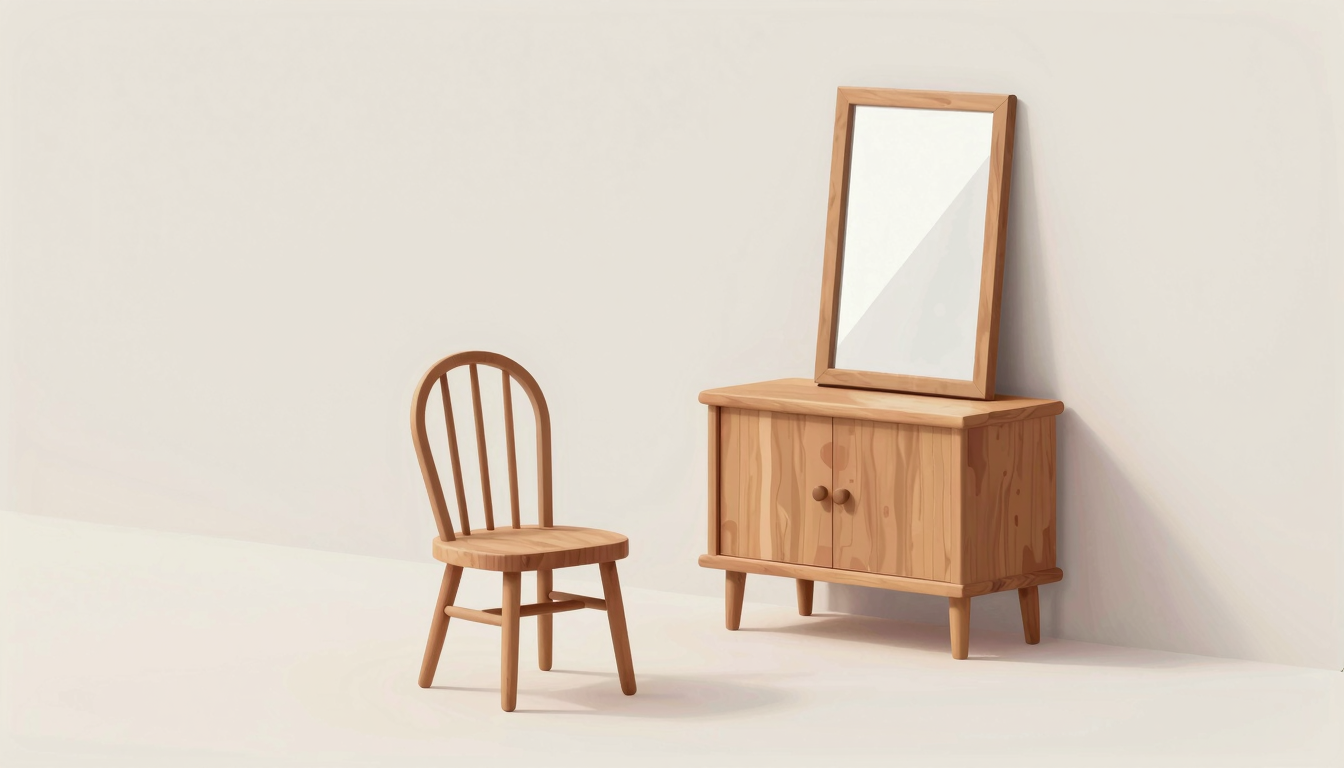
The wooden-framed dressing mirror carried memories of both parents. When my elder brother married in the 1970s, Father had asked a carpenter to make it from leftover timber and guided the work. Our whole family shared it for decades. After Father died in 2001, it stood unused in the old house, gathering dust. During my return in 2011, I raised a hand to wipe its surface, then stopped. I was afraid I might brush away more than dust—that a strand of Mother’s hair might still be caught in a gap in the wooden frame, and that I might lose that tiny trace of her too.
A bare courtyard, a houseful of old possessions, a lifetime of missing those who once lived there. Despite its weathering, the house still looked so familiar to me. The surviving doors and windows, the objects resting in their places, all seemed to belong to the same remembered world. Yet the life that had filled the rooms was gone, and the parents who had loved me had been absent for years. Time seemed to stand still in the old house, while those I loved most remained forever in the past. Year after year, I would keep wanting to go home; remembering my parents would be part of all the life I had left.
Recorded at the old family home on the eighth day of the twelfth lunar month, 2011; revised years later in remembrance.
We spend our lives finding our way home and saying goodbye to what has passed. An old house holds the simplest warmth of family life; familiar possessions carry a longing that can last a lifetime. The photographs from 2011 preserved the desolation of that courtyard and those rooms. What has never faded in my heart is the love of the people who made them home, and how deeply I miss them.
Frequently asked questions
Why does time seem to stand still in the old house?
The calendar remained at the fifth day of the fifth lunar month in 2001, when the narrator’s father died. The image of stopped time also expresses the contrast between familiar possessions and the absence of the parents, although the house and furniture had visibly deteriorated.
Why does the narrator stop before wiping the mirror?
The narrator fears that a strand of Mother’s hair might remain in a gap in the wooden frame and could be brushed away. The passage describes that apprehension without confirming that the hair was present.
What did the photographs from the visit preserve?
The photographs preserved the old home’s last complete appearance, including the desolate courtyard and surviving rooms. Looking back years later, the narrator connects them with family life and loved ones who can no longer be returned to.