Summary
Rigid sleep targets can add pressure. Understand timing and sleep need, support the environment, and use tailored insomnia care rather than forcing an exact duration.
At a glance
Allow adequate sleep without treating eight hours as a nightly performance test. Regular patterns and stimulus control may help, while persistent insomnia warrants assessment and tailored CBT-I rather than unverified mechanisms or rigid self-treatment.
You are tired, tomorrow starts early and there is still another episode to watch. Once you finally turn everything off, a different task begins: making yourself fall asleep quickly enough to get the number of hours you decided you need.
That can turn rest into a performance. “I must sleep exactly eight hours.” “Tonight I will fall asleep two hours earlier.” “I must never nap, however sleepy I am.” A plan intended to help becomes another set of demands to monitor.
The Chinese article, written around the book Get a Good Night's Sleep, argues for understanding sleep rather than forcing it. That is a useful starting point, provided it does not become an excuse to dismiss sleep loss or replace one rigid rule with another.
Look at the pattern, not an exact nightly score
Eight hours is not a universal pass mark. Most adults are advised to allow seven to nine hours, and needs vary with age and circumstances. The NHLBI's duration guidance notes that more sleep can be appropriate during recovery from deprivation or illness.
A sleep diary can help you notice bedtime, waking, naps and daytime functioning. Are you repeatedly struggling to stay awake? Do you have enough opportunity to sleep? Has something changed? The pattern is more useful than treating one night as success or failure.
Daytime feelings matter, but feeling alert is not sufficient proof that a shortened night caused no impairment. Nor is fatigue proof of a single sleep problem. Symptoms, duration and circumstances need to be considered together.
The source illustrates this with Xiao A, who wakes groggy after a nap, sleeps for another hour and still struggles to concentrate. That describes an experience many people recognize. It does not establish the article's explanation that carbon dioxide has accumulated until it acts as a natural anesthetic.
Grogginess after waking is often discussed as sleep inertia. Persistent or severe unrefreshing sleep deserves assessment rather than an assumption that more sleep has poisoned the brain. Duration alone cannot supply the explanation.
Why an earlier bedtime does not always produce earlier sleep
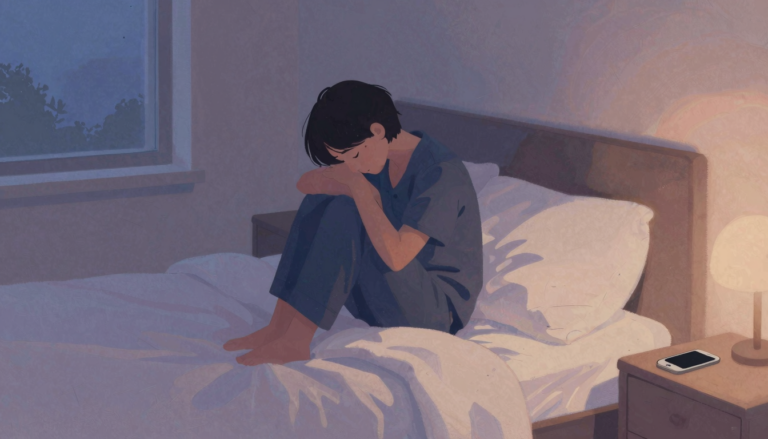
Xiao B, another source illustration, cannot sleep until three in the morning, then gets up at the usual time. Exhausted the next day, Xiao B tries going to bed two hours earlier. The body feels tired, but the mind remains alert, increasingly occupied with the question of why sleep has not arrived.
Sleep timing involves both the circadian system and the buildup of sleep pressure while awake. The NHLBI explanation of the sleep-wake cycle describes interacting signals rather than a single switch controlled by intention.
This distinction helps explain why being exhausted does not always mean falling asleep at a chosen moment. Going to bed earlier may create more time in bed without immediately changing the timing of sleepiness. Worrying about the failure can add another source of wakefulness.
The battery metaphor has limits. Sleep is not governed by a simple law of energy conservation in which the body clock delays sleep to prevent energy from running out. Neither is catching up on lost sleep a false concept. Recovery can be needed even if a particular attempt to sleep does not work as planned.
The practical aim is adequate opportunity and a workable rhythm, rather than calculating a precise balance of energy to recharge. If your pattern remains difficult, it is worth discussing the details with a clinician.
Naps are a question of context
A nap can be useful for alertness, but a long or late nap may reduce the pressure to sleep later. People managing insomnia may receive different advice from someone recovering after an unusually short night.
That is why “never nap” and “nap whenever you feel tired” are both too simple as universal rules. Consider timing, length and the effect on the following night. If you repeatedly need daytime sleep despite sufficient nighttime opportunity, investigate the reason rather than endlessly changing nap rules.
The source proposes short midday rests and avoiding naps near bedtime. These are sensible matters to consider, but its exact thirty-minute and eight-hour cutoffs should not be treated as personal medical prescriptions.
Make the environment support sleep
Sleep hygiene refers to habits and conditions that can make sleep easier. A quieter, comfortable bedroom, consistent scheduling and attention to caffeine or stimulating late-night activity can all be relevant.
Noise, temperature and bedding also matter. Not every obstacle is a failure of self-control. A shared room, work schedule or uncomfortable sleeping environment may limit what can be changed.
The source's Xiao C comes home, sits on the bed with a tray, drink and snacks, and watches dramas or variety shows. The next day brings drowsiness; returning to bed at night brings enthusiasm for more entertainment. This is an illustration, not a diagnosis, but it raises a useful question about what the bed has come to signal.
If the bed is repeatedly the place for lively entertainment, it may be harder to treat it as a cue for settling. Changing the routine is about creating a clearer association, rather than condemning the wish for enjoyable time after work.
Stimulus control is part of insomnia treatment
Stimulus control aims to strengthen the association between bed and sleep. The NHLBI's insomnia treatment guidance describes going to bed when sleepy, leaving if unable to sleep and using the bed for sleep and sexual activity. It places these steps within cognitive behavioral therapy for insomnia, or CBT-I.
That is more than general sleep hygiene. CBT-I also addresses thoughts and behaviors that sustain insomnia, and is commonly recommended as a first treatment for long-term insomnia. A clinician can help tailor the approach.
The basic idea is to avoid repeatedly turning the bed into a place for prolonged wakeful struggle. If you remain awake and frustrated, a quiet activity elsewhere may be more useful than forcing another attempt. Return when sleepy rather than treating the move as failure.
The source gives a twenty-minute prompt for leaving bed. The purpose is to recognize prolonged wakefulness, not to watch the clock until you meet a new target. Repeated checking can become another demand that keeps attention on sleep.
A consistent wake time can also be part of treatment, but it should fit a safe, individualized plan. Do not interpret “get up regardless” as an instruction to ignore severe sleepiness or attempt activities that require alertness when you are unsafe.
Keeping a record may help evaluate progress. Two weeks of practice is not a guaranteed cure, and an approach that needs adjustment is not evidence that you lack discipline.
Avoid turning the wind-down into another test
A calming period before bed can help separate the day from sleep. It does not require lying awake with your eyes closed for an hour. That instruction would conflict with the aim of reducing extended wakefulness in bed.
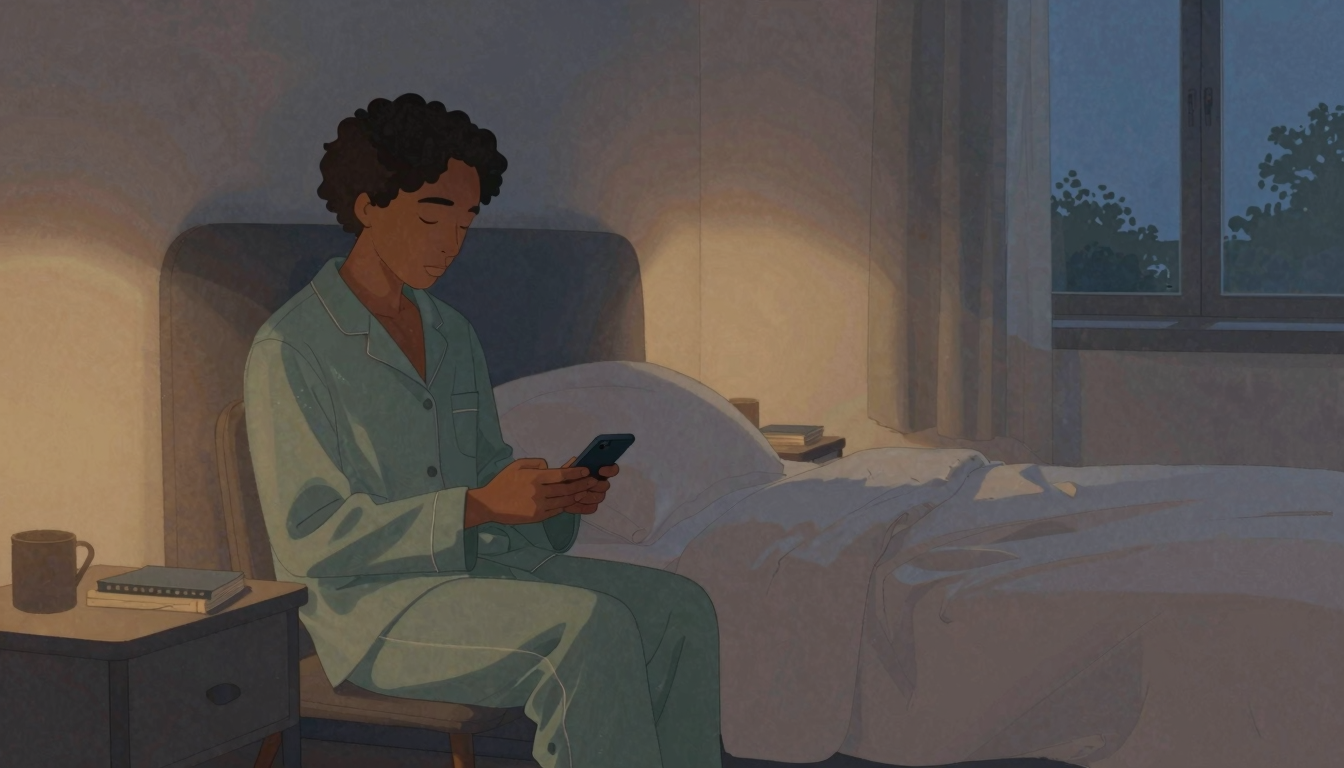
Likewise, sitting up to use a phone is not an established fix for the effects of engaging content or light. If a full change is difficult, consider a manageable step toward a clearer separation, such as finishing the activity before getting into bed.
Food should not become a treatment formula either. The source's exact milk quantity, timing and banana suggestion are not a verified insomnia regimen. A light snack may be comfortable if you are hungry, while personal tolerances and health needs matter.
If sleep difficulties persist or interfere with daytime life, seek qualified help. Improving sleep is not solely in your hands, and it is not a matter of willpower. The goal is to reduce the struggle, support adequate rest and address the factors keeping you awake.
Frequently asked questions
Must I sleep exactly eight hours?
No. Needs vary, but adequate sleep opportunity still matters.
Does feeling alert prove enough sleep?
No. Daytime feelings are informative but not the whole assessment.
Is recovery sleep a false concept?
No. Recovery can be needed; forcing sleep at an unsuitable time may still fail.
What is stimulus control?
It strengthens the bed-sleep association and is one component of CBT-I.
Should I lie awake for an hour to prepare?
That conflicts with reducing prolonged wakefulness in bed; use a calming wind-down without forcing sleep.