Summary
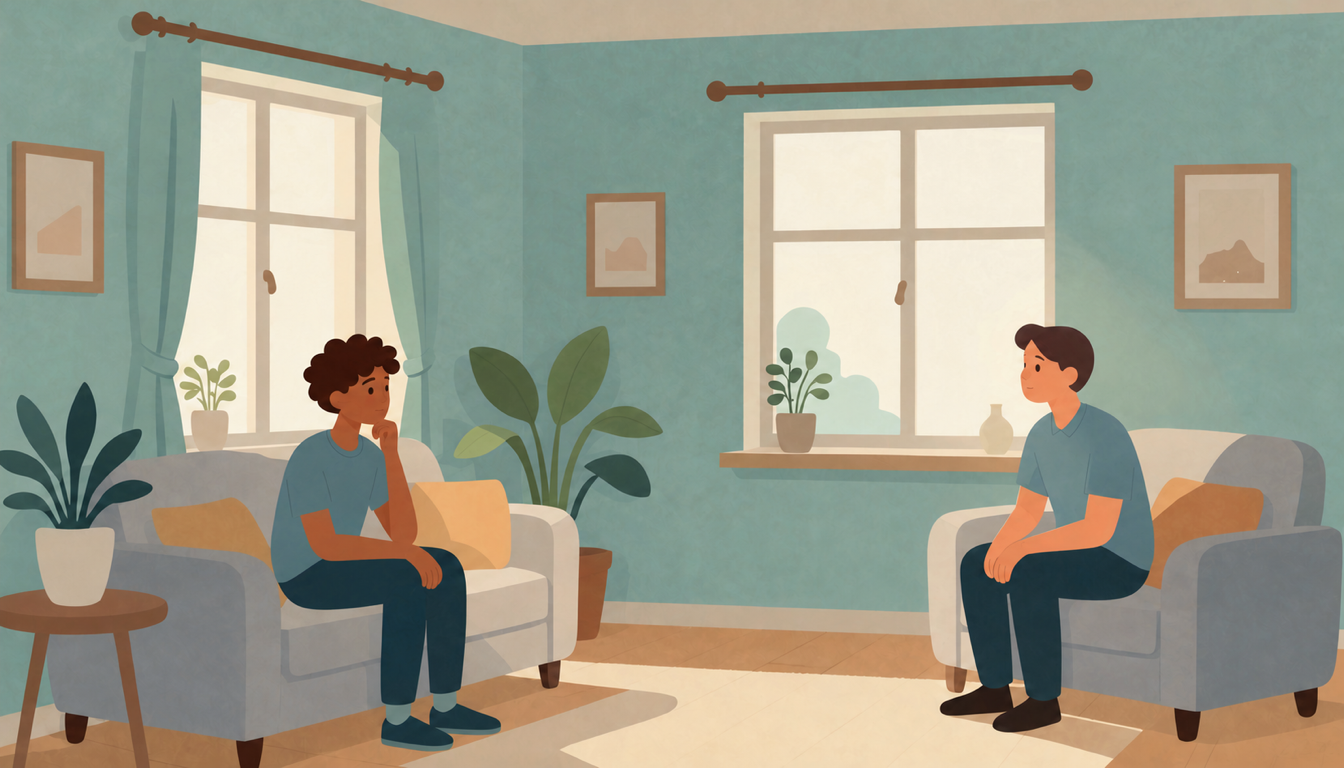
Teenagers may seek privacy, rely more on peers and respond strongly to evaluation while learning independence. Parents can stay connected through curiosity, specific encouragement, clear boundaries and attention to persistent distress.
At a glance
Pulling away can reflect identity exploration, changing social contexts and a wish for autonomy alongside continuing support needs. Listen to the specific experience, avoid broad judgments and comparisons, and adjust communication and boundaries while taking sustained distress or impaired functioning seriously.
A child who once narrated the whole school day now answers with a few words. Their bedroom door stays closed. A suggestion that used to be welcome becomes an argument. Parents can experience these changes as losing access to someone they thought they knew.
Adolescence brings changes in identity, relationships and independence alongside physical growth. The World Health Organization defines it as ages 10 to 19, rather than equating it precisely with puberty or secondary school. Timing and experience vary considerably.
A teenager can want more authority over their life and still need practical help, reassurance and protection. That combination is not hypocrisy. It is part of learning to handle situations that are becoming more complex: academic choices, friendships, attraction, family expectations and uncertainty about the future.
Understanding those pressures does not eliminate family disagreement. It can help parents respond to the actual need instead of treating every change as rebellion.
Privacy can be part of forming an identity
A diary, a closed door or time alone can give a young person room to think without immediately explaining themselves. They may be trying out preferences, reconsidering beliefs or deciding what they want others to know.
Erik Erikson’s account of identity development offers one lens: adolescence involves questions about who a person is and what kind of life they want. Those questions do not have to arrive as a dramatic “identity crisis.” Ordinary private reflection can be part of them.
A growing sense of adulthood can also change disclosure. A teenager may feel that reporting every conversation or feeling makes them a small child again. Keeping something private can be a way to establish a boundary rather than reject a parent.
That does not mean all withdrawal is harmless. A sustained change involving distress, loss of interest or impaired daily life deserves attention. The distinction is between respecting personal space and overlooking a young person who is struggling.
Ask how to remain available without demanding complete access. A parent can say that they are ready to listen and can help with a difficult situation while accepting that not every thought must be shared. Trust is more likely when disclosure is met thoughtfully rather than turned immediately into a lecture.
Home and school can bring out different behavior
Some teenagers are relaxed and talkative at home but quiet at school. Others barely speak to parents yet become lively with friends. Neither pattern requires the conclusion that one version is false.
When home is the easier setting
At home, a young person may know the people and expectations well enough to be less guarded. School involves more observers, unfamiliar comparisons and rules about when to speak or act. Quiet behavior can reflect caution, concentration, uncertainty or a wish to avoid attention.
Moving from a small family setting into a large class can also change how recognition feels. A child accustomed to being heard may need time to find a place among many students. That is a possible experience to ask about, not proof that the child is self-centered.
Different rules can explain part of the contrast too. A teenager may test an idea at home that they would not risk in front of classmates. Parents need not accept hurtful behavior, but they can distinguish a boundary problem from a fixed personality judgment.
When peers feel easier than family
Friends often share immediate concerns: teachers, social events, music or a conversation that happened that day. Less explanation is needed. A teenager may feel understood before having to justify why the subject matters.
Silence at home can also reflect the history of family conversations. If attempts to speak usually end in criticism or dismissal, saying little becomes a way to avoid another conflict. That possibility deserves examination without assuming that every quiet teenager has authoritarian parents.
Ask about the context. What happens before the teenager withdraws? Are there topics on which conversation remains easy? A specific pattern gives the family more to work with than the claim that the child has become an entirely different person.
Other people’s opinions can feel unusually important
As a young person develops a view of themselves, feedback can carry substantial weight. A teacher’s casual remark or a friend’s response may seem to answer a larger question: am I capable, likable or accepted?
The looking-glass-self idea describes how a sense of self can be influenced by how we imagine others see us. It is a useful reminder that a comment may land differently for the speaker and the listener. The adult may mean one assignment; the teenager may hear a judgment about their ability.
Peer relationships also become a significant focus. The NIMH overview of the teen brain discusses development alongside social experience and the capacity to learn and adapt. This is not evidence that teenagers are incapable of reason or that every strong response is caused by an unfinished brain.
Sensitivity differs among people and situations. A young person can question authority thoughtfully, while still finding a particular criticism painful. Avoid explaining them through a fixed label such as suspicious or melancholic.
Help separate the event from the larger conclusion. What exactly was said? Is there another interpretation? Is the criticism useful, unfair or incomplete? Those questions respect the teenager’s ability to think instead of simply telling them to stop caring.
Studying can become a test of worth
Learning is easier to engage with when there is some interest, purpose or experience of progress. When the whole activity becomes meeting demands, it may feel mechanical: finish the assignment, avoid criticism and move to the next requirement.
Intrinsic motivation means finding satisfaction in the learning activity or subject itself. Not every task will be intrinsically interesting, but constant pressure can leave little room to discover what is. Ask what the teenager understands, finds worthwhile or wants to explore rather than discussing only results.
Goals matter as well. A demanding but reachable goal differs from one that remains impossible despite sustained effort. Repeated unsuccessful attempts can weaken confidence and the expectation that trying will help. “Work harder” may be a poor answer when the student needs a different strategy or a more realistic step.
Lack of interest in a subject is another possible factor. So are teaching methods, workload, learning needs and conditions outside school. Avoid treating all reluctance as a defective attitude.
Parents’ lofty expectations can be experienced as a demand to become a nearly error-free learning machine. A conversation about progress should leave room for mistakes, rest and help. The question is what supports learning, not how to remove every sign of difficulty from the record.
Comparison can undermine the encouragement intended
“Look at someone else’s child” may be meant to provide a model. The teenager may hear that their own efforts are invisible or that approval belongs to a different person.
The harm is not that another child’s achievement can never be discussed. It is using that achievement to define the listener as inferior. Repeated comparisons can turn a specific task into a broad judgment about worth and belonging.
A young person may then doubt their competence or feel that love depends on performance. Those reactions are possible, not inevitable. Pay attention to what your child says the comparison means rather than defending only what you intended.
More useful feedback describes the actual effort, strategy or result. What improved? What remains difficult? What help is needed? Encouragement tied to the child’s own work gives them something they can use.
Being available is different from taking over
Parent-child communication can stall when one person wants understanding and the other immediately supplies a verdict. A teenager explains a decision; the parent calls it immature; the teenager stops explaining. Both may leave convinced that the other refuses to listen.
Independence and support can coexist. Ask whether they want to be heard, think through options or receive advice. You can still set a necessary boundary, but explain the concern and hear their view before deciding that disagreement proves a lack of judgment.
Generational differences can make this harder. The source’s example is music: parents may not appreciate current rap, while teenagers do not understand the appeal of older songs. Neither preference must be shared for the conversation to be respectful. Curiosity can replace the demand that the other person defend their taste.
Peers will continue to matter. A parent does not need to compete with every friendship or become the first person told every story. The goal is a relationship in which the teenager can return when support is needed and expect a response that makes further conversation possible.
Growing up changes the distance between parent and child. Responding well means adjusting that distance without withdrawing care. Listen for the person developing behind the behavior, keep boundaries understandable and take persistent distress seriously. There is room for both greater autonomy and an ongoing family bond.
Frequently asked questions
Is a closed bedroom door a warning sign by itself?
No. Privacy can support reflection; sustained distress or impaired daily life requires more attention.
Why do home and school behavior differ?
Rules, familiarity, observers, peers and conversation history can bring out different responses.
Can comparison with another child motivate?
It can instead be heard as a judgment of inferiority. Specific feedback about the child’s own work is more actionable.
How can parents remain helpful?
Ask whether the teenager wants listening, problem-solving or advice, and explain necessary boundaries while hearing their view.


