Summary
Late-night online rewards, fatigue and postponed transitions can reinforce bedtime delay. A realistic routine, supportive environment and attention to needs for rest and connection can help interrupt the pattern.
At a glance
Identify whether you are postponing sleep, unable to sleep or lacking opportunity. For bedtime delay, plan the transition, reduce device and environmental friction, meet connection needs earlier and choose a sleep-compatible immediate benefit. Persistent insomnia needs assessment rather than more self-blame.
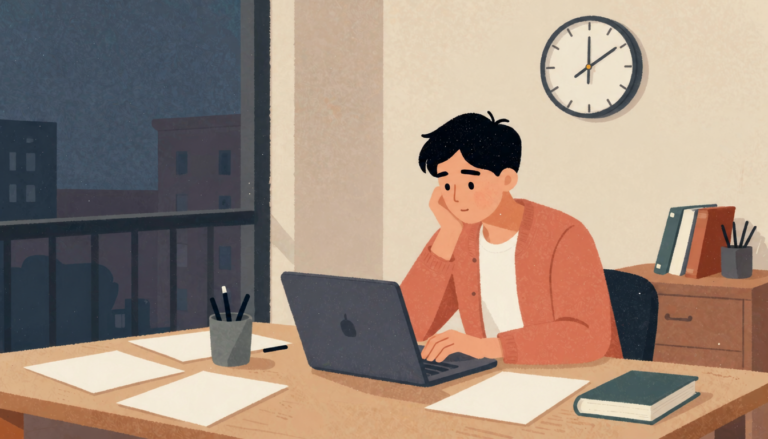
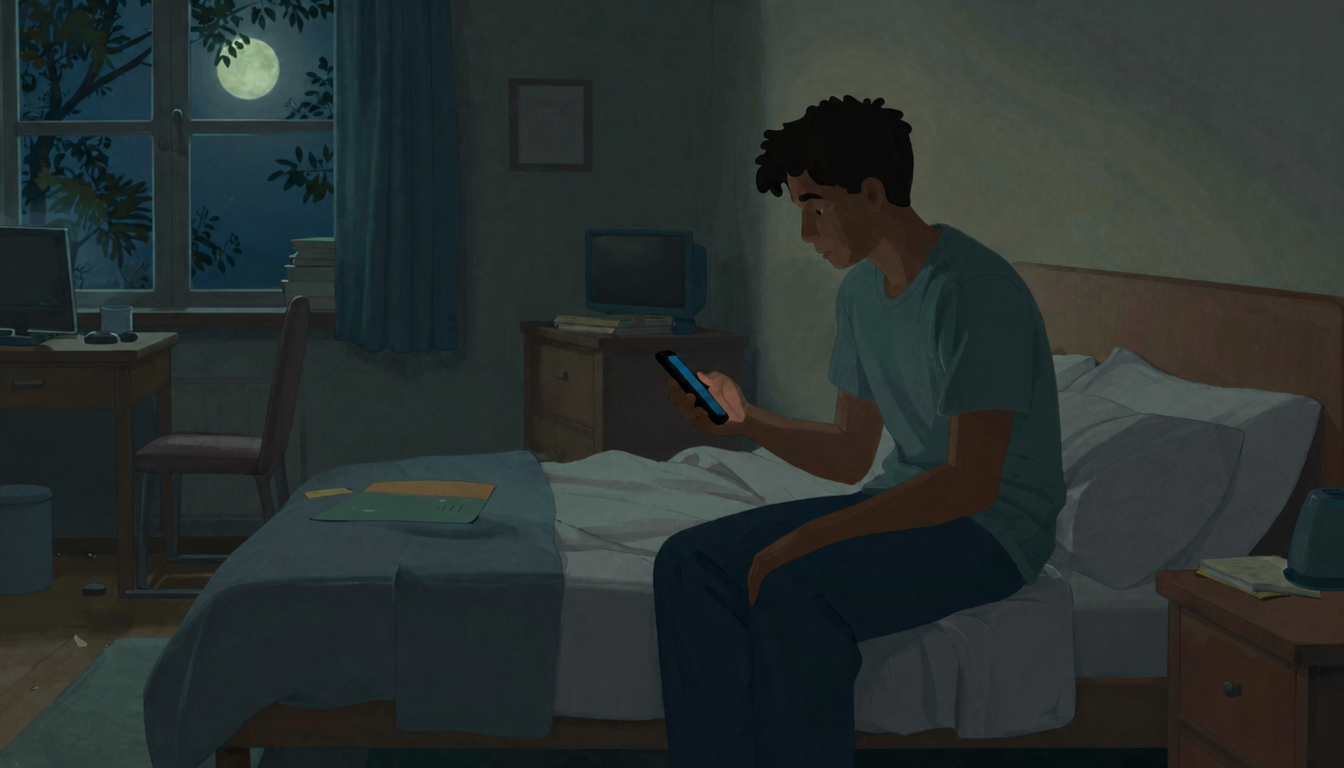
At ten, brushing your teeth can wait until the game finishes. At eleven, a creator you follow has posted something new. At half past eleven, a conversation still feels unfinished. Then the clock says 11:47, and midnight suddenly seems like a tidier time to stop.
The next morning, you regret the sequence and promise to change it. By the following evening, the same small postponements begin again.
Understanding this pattern requires more than deciding that you lack discipline. Online rewards, fatigue, a difficult transition and the wish for time of your own can work together. A useful response makes bedtime easier to approach rather than demanding a stronger argument with yourself every night.
First, identify what kind of late night it is
There is a difference between postponing bed when you could sleep, being unable to sleep despite wanting to, and having work or caregiving that leaves too little opportunity. A naturally later sleep schedule can also conflict with an early timetable.
These situations may overlap, but they need different responses. A phone limit cannot create time that responsibilities have taken away. More determination cannot reliably solve insomnia. Begin by describing what actually happens between intending to stop and remaining awake.
If you repeatedly have difficulty sleeping or substantial daytime impairment, discuss the pattern with a clinician. This article focuses mainly on the behavioral sequence of putting bedtime off, not every reason someone is awake late.
Why the online world is difficult to leave
Digital activities offer immediate experiences: a new message, another clip, a game that has not quite finished. The next item is available with little effort, while going to bed requires ending the current activity and beginning several others.
Three useful features to consider are anonymity, convenience and escape. Online interaction may feel safer when you are shy or uncertain. Information and entertainment are available whenever you reach for them. And a virtual activity can provide relief from frustration or pressure in the rest of life.
These features can make the internet valuable as well as absorbing. Finding companionship online is not itself a problem, and frequent use is not enough to establish addiction. The practical concern is when the activity repeatedly displaces something important and becomes difficult to regulate.
Novelty adds another pull. If you enjoy varied experiences, an endless supply of changing content can keep providing a reason for one more look. Peer activity can reinforce it: friends are still chatting, a roommate is scrolling and stopping may feel like leaving the social space.
Fear of missing out turns that invitation into unease. You may not expect the next refresh to be wonderful; you simply dislike the possibility of missing something. Reassurance through checking is brief, so the checking continues.
It is worth asking what the online activity provides. Is it amusement, connection, relief or a rare period when nobody is directing your time? If late night is your only private time, the problem includes how the rest of the day is organized, not just where the phone is charged.
Fatigue can change the decision without emptying a fuel tank
After studying, meeting deadlines or handling difficult relationships, the easy option can become especially attractive. You may feel too tired to begin the bedtime routine while still being able to watch another short video.
That is not necessarily contradictory. Passive continuation and a transition that requires several actions place different demands on you. The current activity keeps happening unless you interrupt it; preparing for bed requires a start.
An influential theory called ego depletion proposed that acts of self-control draw down a shared limited resource. It gave a compelling explanation for feeling “used up” after a demanding day. The literal resource account remains contested, including in large preregistered research.
You do not need to settle that debate to take fatigue seriously. What matters for a bedtime plan is whether it still works when you are tired, distracted or disappointed. A routine that depends on an unusually determined evening may be too fragile for ordinary life.
Instead of trying to refill a hypothetical willpower supply, reduce the number of decisions left until late. Put the necessary items where you will use them and begin the first part of the routine before you are ready to collapse.
Why immediate pleasure wins so often
Procrastination involves delaying an intended action even when the delay is likely to be unhelpful. At bedtime, the consequence is often distant enough to lose the argument: tomorrow’s tiredness versus tonight’s enjoyable conversation.
Delay discounting describes how a reward can feel less valuable when it is further away. The benefits of enough sleep may be important, but their reality is less immediate than the next episode.
This does not mean every late sleeper has the same psychological profile. It offers a way to understand why knowing the consequences is not always enough. The current choice includes a reward you can experience now and a cost you expect later.
Guilt can then become part of the cycle. “I have done it again” makes the next day harder, while another promise to transform your whole schedule offers little help with tonight’s first transition.
A smaller question is more actionable: what will make stopping at the intended point easier than continuing by default?
Four changes to try
Plan the transition, not an exact moment of sleep
Choose when to finish the absorbing activity and when to start practical steps such as washing or preparing clothes. A reminder for the beginning of the routine may be more useful than an alarm announcing that you should already be asleep.
Do not demand that sleep happen on command at midnight. You can choose to stop scrolling and create an opportunity for sleep; the act of falling asleep is not an item you can force through effort.
Make the plan fit your obligations and sleep needs. One realistic change, followed consistently enough to evaluate, is more useful than a strict timetable abandoned after two nights.
Make the environment support the choice
A dark, quiet, comfortable sleep space and a calmer period before bed are among NHLBI’s healthy-sleep recommendations. Move unnecessary devices out of immediate reach or decide where they will stay when the routine begins.
In a shared room, discuss what is workable rather than expecting yourself to ignore every light and notification. The aim is less friction around sleep, not a perfectly controlled environment.
You can also reduce the pull of the current activity: stop at a natural boundary and avoid beginning something open-ended near that point. Notice which apps or conversations are hardest to leave and plan around that specific obstacle.
Meet the need for connection earlier
Offline conversation can be welcome when it is available and suits you. So can meaningful online contact at a time that does not repeatedly consume sleep. The relevant need is connection, not a moral ranking of digital and face-to-face relationships.
If bedtime has become the only time for enjoyment or autonomy, look for a small protected period earlier. It may not be possible every day, but recognizing the need helps you design a plan that gives something back rather than only taking an activity away.
Give the routine an immediate benefit
Choose a modest reward that fits sleep rather than competing with it. A comfortable wind-down activity or the satisfaction of a simple record may help the transition feel less like deprivation.
Avoid using another open-ended screen session as the reward for ending one. A late caffeinated drink may also work against the goal. Reward an action you control, such as starting the routine, rather than judging yourself for how quickly sleep arrives.
Restore some room for rest
Calm music, a short outdoor walk, enjoying art or recalling a pleasant event may make an evening less strained. An inspiring story can be encouraging, but watching more content about discipline is not necessary preparation for putting down a device.
A brief gratitude note is another option if it feels helpful: recall up to five things you appreciated during the week. It does not require you to deny worries or prove that life is good. If it becomes another obligation, choose a simpler way to wind down.
These are possible restorative activities, not established methods for replenishing a measurable self-control reserve. They also do not replace treatment for persistent sleep problems. NHLBI describes cognitive behavioral therapy for insomnia as a treatment option for long-term insomnia, which is different from a list of sleep-habit suggestions.
The cycle is easier to change when you can see its parts. Identify the need the late activity serves, the transition you postpone and one piece of friction you can remove. Tomorrow’s clearer morning begins with a practical action tonight, not a verdict on your character.
Frequently asked questions
Is late-night phone use automatically addiction?
No. Absorbing or frequent use alone is insufficient for that conclusion.
Does tiredness prove ego depletion?
No. The limited-resource account is contested; practical fatigue can be addressed without that diagnosis.
What should a bedtime plan specify?
Actions you control, such as stopping an activity and beginning washing, rather than commanding sleep at an exact minute.
What if I cannot sleep after going to bed?
Repeated difficulty and daytime impairment deserve clinical discussion; insomnia is different from choosing to postpone bedtime.