Summary
Sad songs and resonant comments may offer companionship while becoming part of a familiar emotional ritual. The writer explores allowing sadness, noticing rumination and making room for a small meaningful action.
At a glance
The writer proposes allowing sadness to exist without continually intensifying it. After acknowledging the feeling, you can gradually return attention to the present and choose one small action that matters to you while the emotion remains. This does not promise immediate happiness or require giving up sad music.
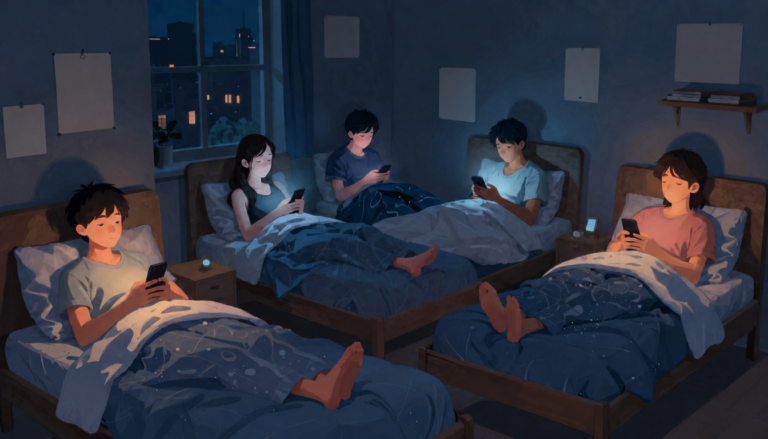
Imagine this: after a packed day, you let out an exhausted sigh and lie in bed with the lights off. In the faint glow of your phone, you open the music app with the red musical-note logo. Perhaps a song picked at random will help you sleep, easing some of the exhaustion, emptiness and loneliness the day has left behind.
You only meant to listen. Somewhere along the way, you tap into the comments.
An hour later, you’re reading: “Just meeting some people uses up all the luck you have.” Another hour passes: “It’s two in the morning, and I’m still thinking of that person.”
The more you scroll, the more awake you feel. The comments hurt, but you want to keep reading. Before you know it, it’s three in the morning, and you have somewhere to be at eight.
You finally fall asleep in tears. Whether they’re tears of sadness, regret over staying up, or some mixture of the two is hard to tell. You promise yourself you won’t spend tomorrow night lost in the same mood. Then tomorrow night comes, and you do it again.
A defensive voice might insist: “I’m not fragile. Besides, that barely counts as being hurt. These moods are all the same anyway.” Yet dismissing the feeling does little to explain its pull. This is the everyday sadness people sometimes casually call being “emo.” If sinking into it hurts so much, why can it be so hard to stop—and what would it mean to stop fighting it?
The writer offers one possible explanation: an experience can hurt and still give us something of value. Thinking over an upsetting event again and again may be an attempt to understand what happened or find a cause, even if no answer comes. A sad song or a comment that captures something familiar may offer a different kind of comfort: “So I’m not the only one.” There can be a sense of being understood, of having company and feeling less alone.
Sometimes the immersion may also offer a brief retreat from everyday reality. The music and feelings create a private inner space, closed off from the world for a while, where you can become absorbed as though dancing alone. The sadness may remain, but the distance from ordinary life can be part of what draws you back.
That comfort can coexist with a growing pattern of rumination. In the writer’s account, playing the songs brings back associated memories and feelings. If you also return to sad comments at the same time of night, the combined experience can grow increasingly familiar. What began as listening to music may gradually become a habitual emotional ritual.
The tempting response is to reach for the skip button: “Fine. If it hurts this much, I’ll skip the sad songs, skip the comments—and skip all the bad feelings from the day while I’m at it.”
Upset because you seem to be the only one moving the group assignment forward? Skip!
Spent the whole afternoon running experiments, only to end up with unusable results? Skip!
Sent out job applications and heard nothing back? Skip!
Back in the dorm that evening, feeling as though nothing went well all day? Skip that too!
And so on…
The feelings are there. What you can do with them is still an open question.
The writer questions this familiar response: endure the sadness, tell yourself “Stop thinking about it” when you’re irritated, and try to become less sensitive so you can act as though the things that hurt never happened. In this account, pressing “Skip” on a feeling doesn’t make it disappear; like an app, it can still be running in the background.
Avoidance may hide the feeling for a while, perhaps even let you forget it temporarily. But the writer warns that feelings forcibly pushed aside can slowly ferment out of sight, then burst out in a moment when you’re vulnerable. Trying to hold a feeling down can also pull more of your attention toward it. You may gradually begin to treat having a negative emotion as a failure in itself. That adds another layer of distress: you’re sad, and now you’re anxious and blaming yourself for being sad.
The response the writer proposes is psychological acceptance: allowing a feeling to exist without continually feeding it. You can feel sad, listen to sad music and admit, “I’m really low right now,” while keeping a little room to observe what you’re experiencing. This is how you feel at the moment; it isn’t the whole of reality.
Falling into a low mood and being unable to leave it immediately can be normal and understandable. It needn’t mean you’re fragile or immature. The writer offers a kinder interpretation of that sensitivity: it can be part of responding closely to life, of feeling what happens to you and noticing your emotions.
The practical distinction is between experiencing a feeling and ruminating on it. Experiencing means letting it be there. Rumination means repeatedly circling it in thought, questioning it and making it loom larger. Trying to understand something painful isn’t necessarily rumination; the concern is the repeated turning-over that keeps amplifying the feeling.
Once you’ve noticed and acknowledged the feeling, you don’t have to keep pursuing a final answer. You can gradually bring your attention back to the present: Where am I? What am I doing? Where do I want to put my time and energy next?
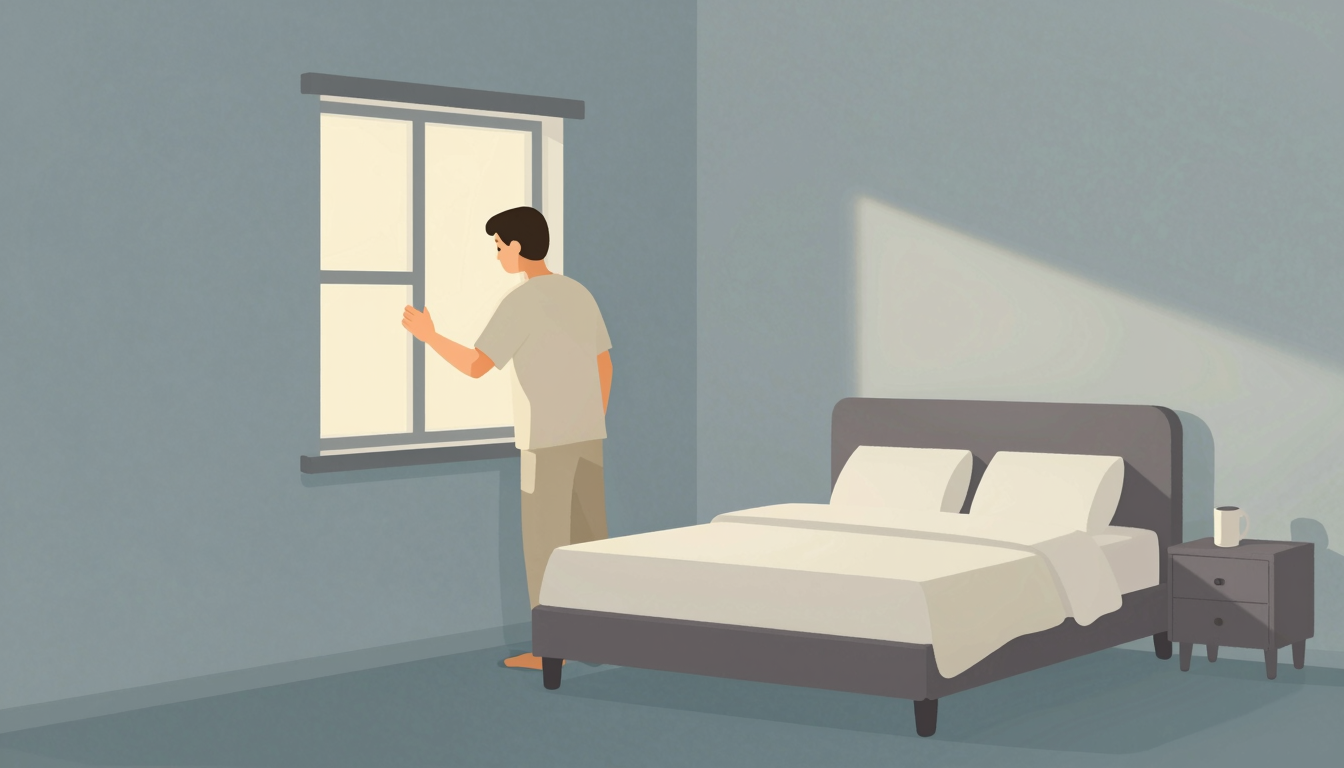
This takes acceptance beyond allowing yourself to feel sad. While the feeling is still there, you can ask: “Is there one small thing that matters to me that I’m still willing to do?” You might send a message to a friend you haven’t spoken to in a long time, open a window for fresh air, or simply notice the grains of rice in your mouth as you chew slowly.
None of these is guaranteed to make you happy right away. But small actions may connect with things you value—learning, relationships, health or growth. The writer calls this “values-based action”: taking a small step toward what matters while the emotion is still present. You don’t have to wait for your mood to improve before you begin living.
For the writer, this includes a modest late-night practice. After a difficult day, they allow themselves some music and time to feel sad. If many things have gone wrong, they listen for another 15 minutes. When the time is up, they get out of bed and take a couple of sips of a sweet drink.
Life can still be exasperating, with much beyond their control. But tomorrow is another day.
Frequently asked questions
Why can sad music and comments be hard to leave behind?
The writer suggests they may offer recognition, companionship or temporary distance from everyday reality. Repeated songs, sad comments and a familiar time of night can also make the experience increasingly habitual; this is a possible pattern, not an inevitable outcome.
What is the difference between feeling sadness and ruminating?
Experiencing sadness means allowing the feeling to be present. Rumination means repeatedly circling it in thought, questioning it and amplifying it. Trying to understand something painful is not necessarily rumination.
Does acceptance mean stopping sad music?
The writer's proposed acceptance allows sadness and sad music while keeping some observing distance and avoiding continually feeding the emotional loop. After acknowledging the feeling, attention can gradually return to the present.
Do small meaningful actions have to make you happy immediately?
No immediate happiness is promised. The writer suggests that small actions may connect with valued areas of life and can begin while sadness is still present.
Is the extra 15 minutes a recommended listening limit for everyone?
The additional 15 minutes belongs to the original writer's personal practice when many things have gone wrong. Their initial listening allowance is unspecified; the article does not establish a universal listening limit.