Summary
Blocking may relieve immediate pressure while increasing a partner’s uncertainty. Bounded pauses, later repair and agreed conflict rules offer alternatives in safe relationships.
At a glance
In ordinary conflict, explain that you need a pause, name a return time and return to address both the original issue and the cutoff. Repeated unexplained blocking needs attention. Where contact is unsafe, protective blocking can take priority over repair.
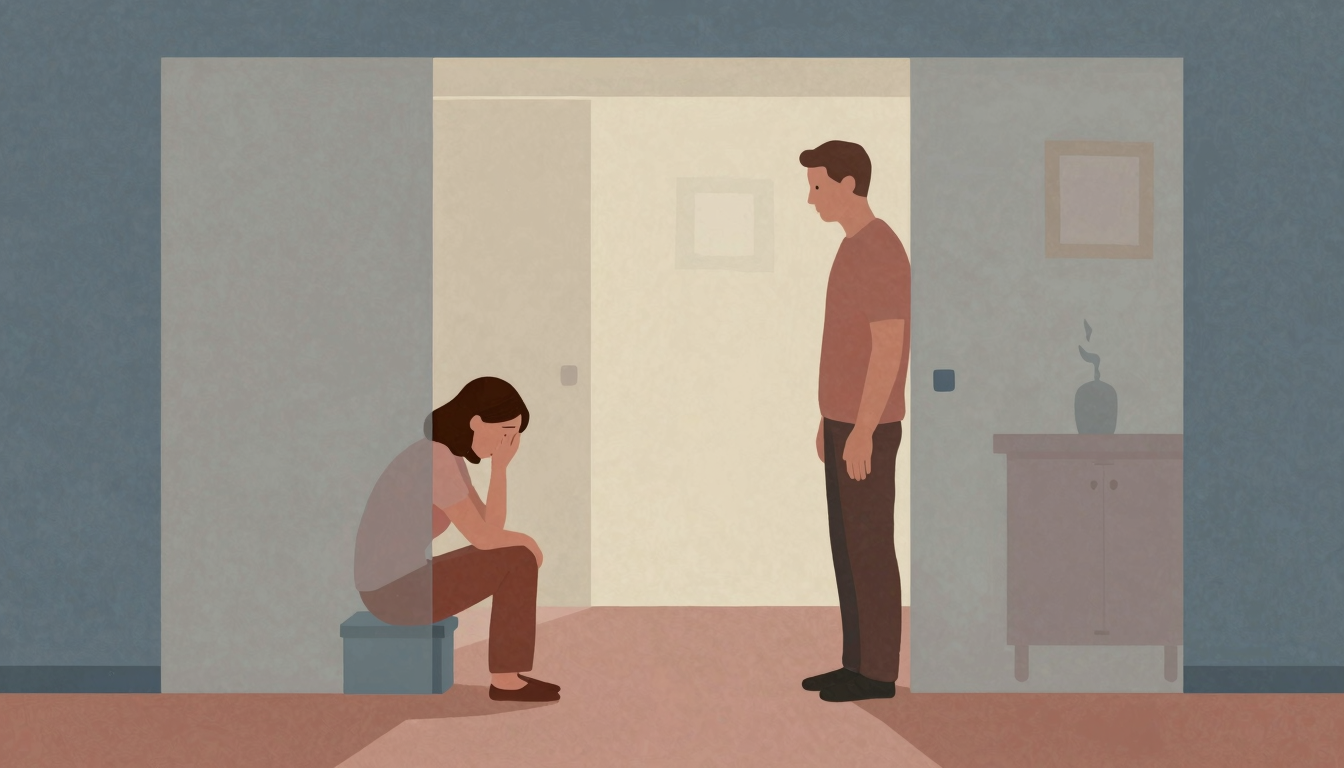
Being blocked after an argument leaves a question the phone cannot answer: what does the silence mean? Your partner might be trying to cool down. They might be punishing you, avoiding an uncomfortable subject or considering separation. Without an explanation, it is hard to tell which possibility you are facing.
That uncertainty can become a second source of distress, separate from the disagreement itself. The person who blocks may feel immediate relief because the messages have stopped. The person who has lost contact may feel that the relationship has suddenly become less secure. Both experiences can be real, even though they pull the couple in opposite directions.
Understanding the pattern matters because a pause and an unexplained cutoff have different effects. In ordinary, safe conflict, a useful pause creates enough distance to return to the problem. Repeated blocking can leave the problem untouched while making the return more difficult.
How blocking adds another conflict
An argument might begin with housework, money or a request for change. After one partner blocks the other, the subject expands. Now the couple also has to discuss the disappearance: whether it was meant to hurt, whether it will happen again and whether difficult conversations can be trusted to continue.
The blocked partner may start seeking reassurance more urgently. The person who withdrew may then feel even more pressure, or feel guilty and defensive about the harm caused. The immediate exchange has stopped, but its emotional consequences keep moving.
Social rejection can be painful in a very literal-feeling way. A 2003 fMRI study by Eisenberger and colleagues examined exclusion during a virtual ball-tossing game and reported activity in regions also implicated in pain, with anterior cingulate activity related to reported distress. This was not a study of romantic partners blocking one another. It helps explain why exclusion merits attention without establishing that digital rejection and physical injury are identical experiences.
For the person withdrawing, the motive may be less calculated than the other partner imagines. During intense conflict, thoughts can become disorganized, the body tense and speech difficult. Turning off a phone can seem like the only available way to stop an exchange that feels increasingly unmanageable. That explains a possible function of blocking; it does not settle its intention or remove its impact.
When withdrawal becomes stonewalling
Stonewalling describes shutting out a partner during an interaction: becoming unresponsive, turning away or refusing to engage. Blocking can serve that function when it is used to terminate a difficult conversation without explanation. It is not the meaning of every block. Context, purpose and what happens afterward matter.
The Gottman Institute’s description of stonewalling connects withdrawal with feeling overwhelmed and recommends an agreed signal for taking a break. The distinction is practical: stepping back can support a conversation if both people know what is happening. Vanishing can make the same distance feel like abandonment.
Withdrawal does not require a messaging app. Walking away while a partner is speaking, slamming a door or staring at the floor can communicate that the exchange is over. So can appearing indifferent when the other person is upset. These behaviors are worth discussing in their particular context rather than treating each one as proof of a fixed personality.
Phones can introduce another version of disconnection. A person may remain physically present while repeatedly checking a screen and giving distracted replies. Sometimes called partner phubbing, this can leave the other person competing for attention. It overlaps with the experience of being shut out, although ordinary distraction is not automatically deliberate stonewalling.
The broader pattern is often described as demand–withdraw: one person presses for engagement or change while the other retreats. Either partner may occupy either role, and the roles can change with the issue. The important question is what each response invites next. More pursuit can bring more retreat; more retreat can bring more pursuit.
Four pressures that can keep the pattern going
Feeling required to change
“I only want to talk” may be sincere, while the listener hears an invitation to another account of everything they are doing wrong. If the conversation seems to require one person to change while the other judges progress, withdrawal can become an escape from that pressure.
This does not make requests for change illegitimate. Partners need to discuss responsibilities and hurtful behavior. It does suggest that the form of the discussion matters: a specific concern offers something to address, whereas a sweeping judgment about a person can make engagement feel futile. Before assuming indifference, ask whether the conversation has become a struggle over who must change.
Repeating an argument without finding a way forward
Silence can arrive after many attempts to discuss the same unresolved problem. To the person seeking an answer, it feels like being ignored again. To the person withdrawing, it may feel like having nothing left to say that will make a difference.
Criticism, defensiveness and contempt can accumulate around that history. Eventually, each person reacts to the previous arguments as well as the present one. A demand for an immediate answer carries the weight of earlier disappointments; a turned back recalls earlier departures. The couple needs to address that repeated sequence alongside the original issue.
Becoming overwhelmed in the moment
A racing heart, a tense body or a blank mind can make listening and speaking harder. Someone who cannot organize a response may need time before continuing. Demanding perfect clarity at that moment can prolong the struggle rather than produce an explanation.
There is no single heart-rate number that tells you what another person intends, and silence alone does not establish a nervous-system freeze response. Overwhelm is a possibility to discuss, not a diagnosis to impose. Being tired can also leave people with less patience and capacity for a difficult exchange, but it cannot explain every instance of withdrawal.
Letting avoidance become the normal response
A one-time cutoff and a recurring pattern have different implications. When blocking, ignoring messages or saying “Think whatever you like” becomes the routine answer to discomfort, the relationship loses a reliable way to process disagreement.
The warning sign is the repetition together with the absence of explanation or repair. Does one partner now avoid raising concerns because contact might disappear? Do they spend the silence appeasing, guessing or doubting themselves? Those effects deserve attention even when the blocking partner says they only needed space. A claimed need for calm does not make every method of obtaining it workable.
Replace disappearance with a bounded pause
A pause works best when it has clear boundaries. State what is happening inside you, say that you need to stop and give a realistic time to reconnect. The original article offers a useful model: “I’m overwhelmed and I’m worried I’ll say something hurtful. I need half an hour. Let’s talk again at nine.”
The exact wording is less important than the information it conveys. You are struggling to continue; you are asking for distance; you intend to return. If you cannot manage a full explanation, a previously agreed short phrase can do the work. That is easier to use under pressure than inventing a careful speech during the argument.
Describe your own state rather than turning the pause into an accusation. “My thoughts are too confused to respond well” gives a partner something different from “You’re impossible” or “Stop bothering me.” The disagreement may still be serious, but the request is about creating enough capacity to address it.
Both people also need to respect the pause. Continuing to send accusations through other channels can defeat its purpose. At the same time, the person asking for space must take responsibility for returning, or for communicating if the proposed time genuinely needs to change. An agreed break should not quietly become indefinite silence.
Repair the cutoff before resuming ordinary life
Unblocking someone and exchanging everyday messages can feel like reconciliation. It may only mean that contact has resumed. If nobody acknowledges what happened, the injury is available to resurface in the next argument.
A repair can begin plainly: “I was overwhelmed, but I understand that blocking you left you uncertain and hurt. I want us to handle the next pause differently.” This recognizes the impact without requiring a final judgment on every part of the argument. The other partner can explain what the silence meant to them without having to prove that the original disagreement was entirely their partner’s fault.
People who struggle with regulating their emotions may need practice, support or a different approach to difficult conversations. Acknowledging that difficulty is more useful when it leads to a concrete change: an agreed phrase, a return time and a plan to revisit the issue.
While calm, discuss the rules you want to use next time. Can either person request space? How will that request be signaled? What happens if someone needs longer? Agree that temporary distance will not be used to threaten the relationship. The aim is to keep a disagreement from deciding, by accident, whether communication remains possible.
Do not make fear a test of love
Blocking to make a partner panic, chase, apologize or demonstrate how much they care is different from requesting room to recover. It uses their attachment as pressure. Even if it produces reassurance once, it can teach them that honest disagreement threatens access to the relationship.
Repair requires willingness on both sides; one person cannot supply it alone. If repeated unexplained cutoffs continue despite attempts to agree on a different pattern, the issue is larger than finding the perfect message. Consider what the relationship is asking you to tolerate and whether meaningful change is occurring.
The safety exception is essential. Where there are threats, stalking, violence, humiliation or persistent control, blocking may be a protective boundary. You do not owe ongoing access or a scheduled return to someone whose contact makes you unsafe. The guidance about returning to a conversation applies to ordinary conflict in a relationship where doing so is safe.
A couple does not need to avoid every argument. It needs a dependable way to stop an overwhelming exchange and, when safe, come back to what still needs attention.
Frequently asked questions
Is blocking always punishment?
No. It may reflect overwhelm or avoidance, but motive cannot be read from silence alone.
What can replace blocking after an argument?
A clearly communicated pause with a realistic return time and a commitment to revisit the issue.
Why does unblocking not finish the repair?
Contact can resume while hurt and uncertainty about the cutoff remain unaddressed.
When is blocking appropriate?
It may be a protective boundary where there are threats, stalking, violence or persistent control.

