Summary
A worn pink flask outside a park brings back the narrator’s own failed attempt to reuse a baby bottle—and the feeding years that still make it difficult to discard.
At a glance
In this personal reflection, children’s old belongings hold memories of the care spent choosing them and the years when the children were small. Some remain useful, while the narrator keeps a baby bottle even after an unsuccessful attempt to repurpose it. An elderly man’s pink flask prompts a similar interpretation, though its history and his motives remain imagined.
A Grandfather’s Pink Water Bottle and What We Can’t Bear to Part With in Middle Age
Outside Eling Park, I saw an elderly man carrying a pink children’s insulated flask. Something about him made me understand, all at once, how hard it can be to let things go.
I was passing the park entrance one afternoon when I came across a tour group of older people. Most had graying hair, carried their own bags and were holding up their phones to take photographs. One man stood out: hanging loosely from his shoulder was a pink children’s flask decorated with a rabbit, its cartoon design partly worn away. He walked among people his own age looking entirely at ease, as though the flask had always belonged to him.
I kept looking, stirred by a feeling I couldn’t quite name. Perhaps the flask had belonged to his granddaughter. She might have outgrown it or got a new one, leaving this one behind. I imagined he carried it because throwing away something perfectly usable seemed such a waste, rather than because he had no other flask.
When I later told a colleague about him, she slapped her thigh in recognition. “It’s the same in our house!” With two children, she had accumulated at least seven or eight insulated flasks over the years. She had chosen every one carefully: 316 stainless steel, excellent at keeping drinks hot. Yet some had lasted only a season before the children decided the designs weren’t cool enough.
“Throwing them away feels wasteful, but keeping them takes up space,” she said. In the end, she picked the two she liked the look of best and brought them to the office for her own use. “You’re so thrifty,” I teased. She gave a rueful smile. “It’s more that I can’t bear to part with them. Every time I think about throwing one away, I remember how much care I took choosing it—and how little time they spent using it.”
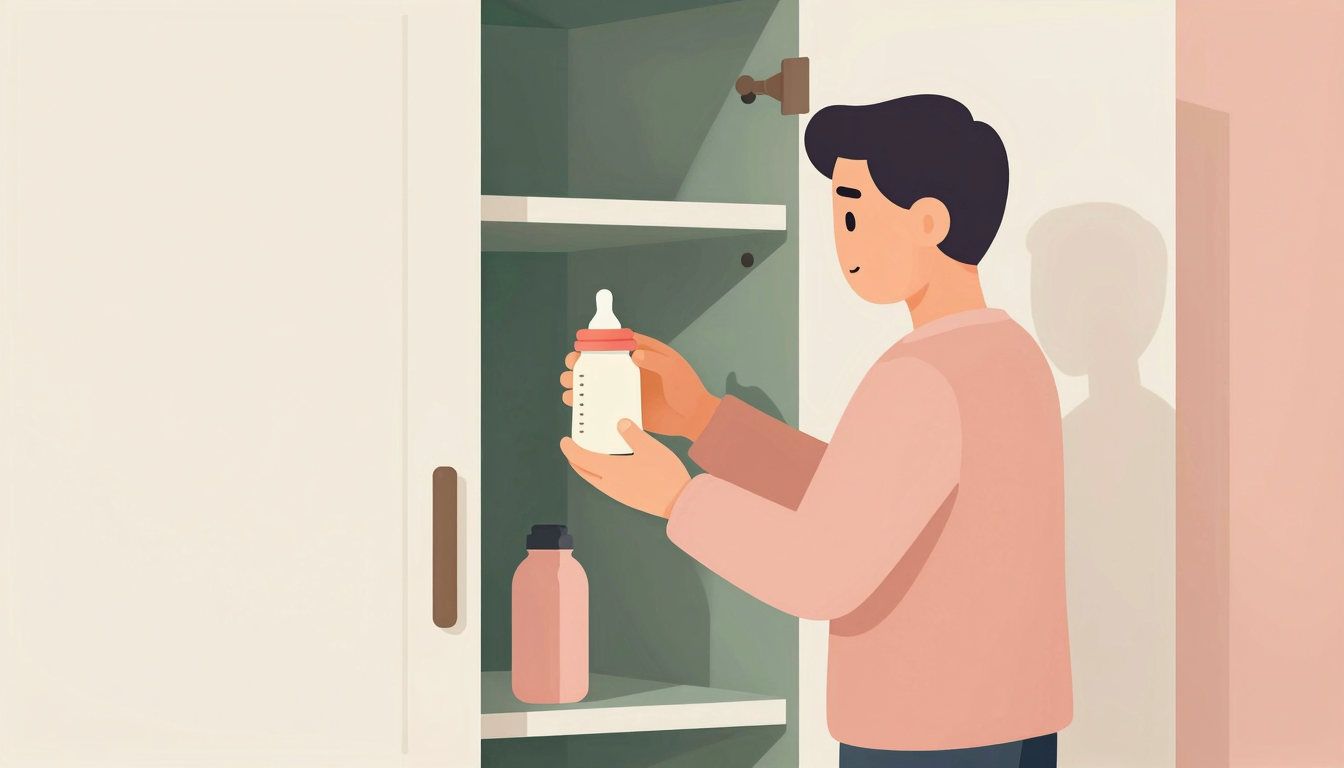
Her words reminded me of something similar I had done. Unable to throw away a bottle my child had used as a baby, I washed it out and tried using it as a toothbrushing cup. The opening was so narrow that fitting a toothbrush and toothpaste inside together was a struggle. Even emptying the water after brushing took a couple of extra shakes. I gave up in less than a week.
“This baby bottle is such a pain to use!” I complained to my mother. She rolled her eyes. “It was made for feeding a baby. You’re the one who insisted on using it to brush your teeth. Whose fault is that?” I had no answer.
She was right. I knew it didn’t work well as a toothbrushing cup, yet I still couldn’t bring myself to throw it away. Keeping it made those days of feeding my baby feel a little less distant.
I also have a habit of noticing my colleagues’ insulated flasks during meetings. Whenever I see one in a childish color, with cartoon characters and a few old scratches, I tend to assume its owner has children—and that the flask is something one of those children no longer wants.
One colleague had half a sticker still clinging to her flask’s lid; I could just make out Ultraman. “Was that your son’s?” I asked. She smiled without a trace of embarrassment. “He thinks it’s childish now. I think it’s great. It’s 316 stainless steel, and it keeps drinks hot better than the one I bought for myself.” We both laughed. At this age, using our children’s castoffs can feel like an unspoken understanding.
What makes these flasks so hard to part with goes beyond the objects themselves. There is the care we put into choosing them, the moment a child first took a drink from one, and the years when our children were still small—years we can never return to.
Perhaps the elderly man’s pink flask was an old one his granddaughter had used, and he had taken it along because he couldn’t bear to discard it. A cartoon flask on a colleague’s desk might likewise be one her son had rejected, something she kept using because she couldn’t bring herself to throw it away.
My baby bottle lasted just three days as a toothbrushing cup, but it is still in the cupboard. I know how inconvenient it was for that purpose. I still can’t bear to part with it.
By middle age, we begin to see how much of what we keep is bound up with days that still shine in our memory, even though we can never go back to them.
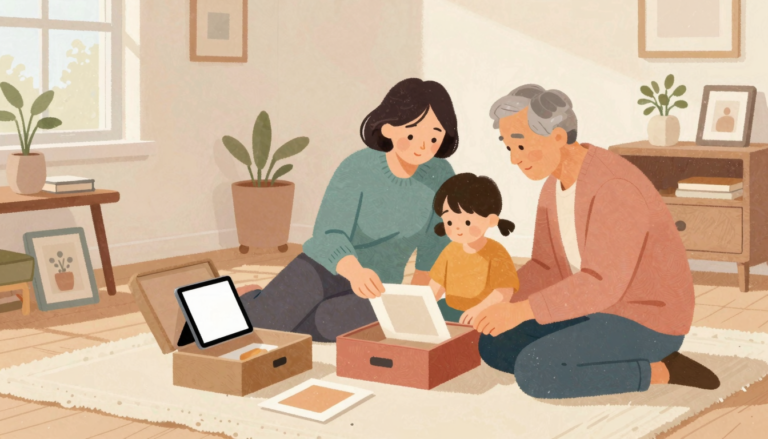
When I think of that grandfather carrying his pink flask, I imagine something more than an attachment to a cup: a little granddaughter pestering him for a drink, calling out “Grandpa!” Perhaps it is the sound of that voice, from when she was small, that he would find hardest to let go.
The bottle I keep has long since become more than a bottle, too. It holds the exhaustion of getting up at three in the morning for a feed, my child’s satisfied smile afterward, and all the hardship and sweetness of a time I can never return to.
Frequently asked questions
Why does the narrator keep the baby bottle despite its inconvenient new use?
Keeping the bottle makes the days of feeding the narrator’s baby feel closer. Although its use as a toothbrushing cup lasted just three days, it still holds memories of exhaustion, the child’s satisfied smile, and the hardship and sweetness of that time.
Did the elderly man’s pink flask definitely belong to his granddaughter?
The narrator does not know who previously owned the flask. Its connection to a granddaughter, the man’s reasons for keeping it, and the granddaughter calling for a drink are imagined possibilities.
What practical reasons do the colleagues give for reusing their children’s flasks?
The colleagues describe carefully chosen flasks that remain useful after their children reject the designs. One says her son’s old flask keeps drinks hot better than the one she bought for herself; another also recalls the care spent choosing flasks the children used only briefly.