Summary
From saved grain ration coupons sent home to weekly letters to a distant fiancée, one writer remembers the care, longing and everyday happiness held in correspondence.
At a glance
For the writer revisiting old correspondence, handwritten letters preserve family affection, romantic love, friendship and traces of personal growth. Their handwriting, paper and remembered rituals revive both the joy and the anxiety of waiting for replies. While acknowledging the convenience of digital communication, the writer misses the personal texture and anticipation of exchanging letters.
How long has it been since you last wrote a letter? For one writer revisiting old correspondence, even counting back cannot produce an answer. It feels so long ago that writing letters has become something remembered rather than done.
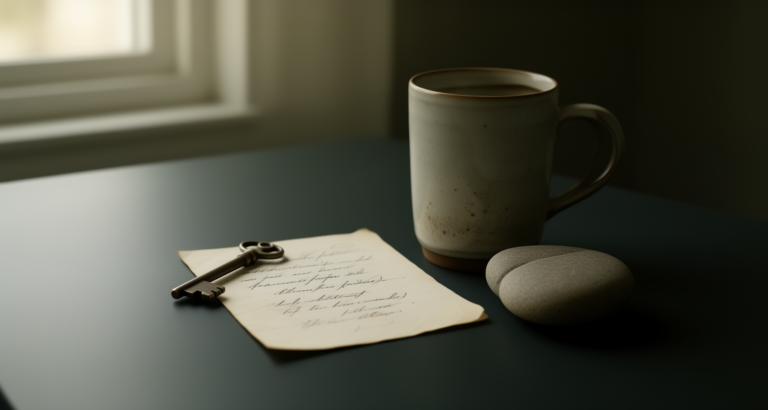
They gently lift the letters, finding a familiar warmth in the different stationery and handwriting. A faint scent of ink rises from the yellowed sheets and seems to fill the room. At the window, they raise a hand, letting spring sunlight pass between their fingers and fall in scattered patches across the pages. The written characters seem to stir and dance, laughing softly: an imagined sound like butterflies murmuring among flowers, then like the notes of a pipa, large and small pearls tumbling onto a jade plate. As the pages turn, the days of writing letters and the stories bound up with them return one by one, growing clearer and more alive.
Reading slowly is like savoring an aged wine. Particular people and objects, feelings and scenes come sharply into view, held for a moment as though time could no longer touch them. These memories seem to have endured the weathering of the years. The attachments they preserve give substance to the writer’s life story and continue to bring color to its ordinary days.
The longing carried by these pages has older echoes. The writer recalls a traditional account of how wild geese came to stand for letters and those who carried them. In this telling, a Han envoy is banished by the Xiongnu ruler to herd sheep at the Northern Sea. Ten years later, reconciliation between the Han and the Xiongnu still fails to win his release. A fellow envoy secretly tells a Han representative where he is and devises a story for the representative to deliver: while hunting, the Han emperor has shot a goose with a letter tied to its leg, reporting that the banished envoy is tending sheep in a marsh. The representative delivers the claim, and the ruler allows the banished envoy to return. The goose-carried letter is part of his fellow envoy’s diplomatic invention; in the tradition the writer recounts, the episode explains the bird’s association with correspondence.
The writer connects such messenger tales with the difficulty of sending letters in an ancient world they describe as lacking postal facilities. Poetry gives that longing other forms, too. A visitor arrives from far away bearing a pair of carp; when the speaker calls a child to cook them, a letter written on silk is found inside. A length of plain silk, a blue-green mythical bird and a pair of carp all serve as literary expressions for correspondence. Elsewhere, tiny characters on red stationery disclose a lifetime’s feelings. A goose is in the clouds, fish are in the water, yet affection remains painfully difficult to send.
For the writer, these images convey the joy of receiving a letter as well as the longing that precedes it. If war meant that a message had to travel for months before reaching its recipient, a family letter could acquire the immense worth expressed by a poet: it was worth ten thousand in gold.
A letter may also survive far beyond the moment of its arrival. Friends and family confide in one another through letters; when the correspondence of notable people survives, it can bear witness to history, with the handwriting itself treasured alongside the words. The writer points to a collection preserving the exchange between a literary author and his wife as an example of what letters have allowed later readers to inherit. They admire another author’s love letters as beautifully accomplished prose, each letter a complete essay in its own right. In a third author’s series of letters to young readers, they find the letter form carrying abundant care for the next generation.
Reading a collection of family letters brought home to the writer how much life a collection of letters could contain. Its expansive range seemed to distill life itself into the correspondence. What endured was more than a documentary record: exchanges between minds and hearts survived with the words, along with the memories bound to them.
Their own letters hold memories of the ordinary work that made such exchanges possible. Time has taken away many beautiful things, they reflect, but it has also left much that cannot be forgotten. Receiving a letter was exciting; what remains especially vivid is composing one, folding the sheets and attaching the stamps. Remembering those acts deepens their longing for the whole cycle of writing, waiting and reading.
Laying out the stationery always brought a little excitement: the hand could give the heart its own expression. The opening greetings came readily enough—How are you? How have things been lately? Is everything going smoothly? Please forgive the late reply. Beyond those familiar phrases, the writing required thought. What should be shared, and what was better left unsaid? What should be asked, and what should not? These choices had to be weighed again and again.
In the writer’s memory, every letter carried sincere feeling; posting it sent hope and expectation on their way. Most ran to two or three pages. Occasionally inspiration took hold and the pen raced on, filling ten or twenty pages, as though ten thousand words might pour out at once. Even then, there were moments when the sealed letter had to be opened again just as its carrier was about to leave. Something still remained unsaid.
Expression continued in the handling of the paper. The writer remembers a threefold “kneeling” form used to express respect for elders, especially parents and teachers, and a threefold “bowing” form that conveyed humility toward older brothers. Among classmates, the possibilities multiplied: straight folds and diagonal folds, designs wishing someone smooth sailing or prosperity through all four seasons, peace doves and paper cranes. Some displayed names or offered good wishes; others expressed romantic affection or the hope of winning someone’s heart. So much feeling went into those folded sheets. Now, when the writer picks up a piece of paper, they can reproduce almost none of the designs they once knew.
Placing the stamps was especially absorbing. In the practice they recall, the most formal arrangement was a single stamp set upright in the envelope’s upper-right corner. Upright, left-leaning, right-leaning, inverted or reverse-side placements could carry different meanings. Two, three or more stamps opened up further combinations, creating a varied, expressive language of their own. People bought low-denomination stamps so they could make these arrangements without spending more than necessary.
The writer dates the beginning of regular correspondence to the 1970s, while studying at the teacher-training school in Leiyang. Letters home carried particular concern during the lean stretch between harvests. Was there any grain left at home? Was the family relying on borrowed rice? When would the new rice be ready to harvest? Above all came the urgent plea: please do not go hungry. Sometimes the writer slipped one or two grain ration coupons they had saved into the envelope, sending them home to help the family through the shortage.
Letter writing became most intense after graduation, when the writer stayed at the teacher-training school in Leiyang to work while their fiancée taught in Anren. Living apart, they sent their feelings back and forth on paper. Lines of poetry gave voice to that separation: who would send a letter through the clouds? The geese returned, moonlight filled the western chamber, flowers drifted down and water flowed on—one longing, felt in two places.
They loved sitting at the desk late at night, when everything was quiet, lighting a small lamp and spreading out a sheet of plain stationery. The pen whispered across the paper, carrying thoughts toward the distant beloved, as faraway and elusive as a wisp of cloud passing over the moon. Outside, the clear moon seemed a cool seal pressed upon the blue sky. Moonlight spilled over the ground while love filled the page on the desk. Writing meant giving oneself over to feeling. Thought followed emotion, and the words came freely and sincerely, expressing longing, concern and an attachment difficult to put aside.
Once those feelings began to flow, there seemed no end to what needed saying. One page became two, then three, then several; sometimes finishing a letter only prompted the writer to begin another because the feeling had not run its course. They generally wrote once a week. As time passed and affection deepened, the forms of address changed too: from “XXX” to “Classmate XX,” then “Dear” and “My…” Even sealing the envelope could not exhaust what they wanted to say.
Writing and waiting for replies gave them something to hope for every day. Happiness seemed close enough to touch because the hope was so simple and concrete: a letter would arrive. Looking back, the writer misses the anticipation itself, the way it filled a restless heart with expectation.
From the moment a letter slipped into the mailbox, they began calculating when it would reach their fiancée and when a reply might come back. They checked the mailroom once or twice a day, sometimes three or four times. The letter held longing at both ends: missing each other made them wait, and waiting made them miss each other more. Days passed slowly, stretching out in a quiet mixture of sadness and expectation. At times the longing became an anxious, restless vigil that kept the writer tossing and turning through the night. What a strange kind of poetry and beauty there was in such a troubled state of mind—how could they describe it? Then, after the long wait, a reply arrived from far away, bringing a rush of joy and excitement.
Distance had its beauty for the writer, and waiting had an even deeper beauty. Instant communication and the internet offer so much convenience; might something poignant and poetic be lost when there is no longer any interval to live through?
When a reply finally came, they could hardly wait to open the envelope, yet handled it with care. They unfolded the sheets and withdrew somewhere private to read, still unable to contain their excitement. Reading their fiancée’s words felt like one heart meeting another, a conversation between souls. The pages held the couple’s private concerns and troubles, along with tender inquiries, good wishes and the reassurance of being loved and missed. It was as though the heart held a cup of water: love flowed from it, emotion brimmed over, and a current of warmth spread through them.
Letter by letter, feelings accumulated, and a record of the writer’s growth took shape. Rereading the yellowed pages, still faintly scented with ink, they find family affection, romantic love and friendship gathered together. The words make them feel held in love, grateful that writing letters has been part of their life. In these exchanges, they find truth, goodness and beauty throughout ordinary human life. Returning to the letters deepens their appreciation of how happy and rich that life has been, and their desire to cherish its small details.
Against the personal traces preserved on those pages, newer forms of communication feel very different. To the writer, the spread of telephones, mobile phones and the internet has brought the age of personal letter writing to a close. Apart from official correspondence and papers, they see written exchanges among relatives and friends as having given way to calls, texts and email. They acknowledge the speed and convenience, but the uniform printed characters and fixed email formats feel no substitute for distinctive handwriting or ink-scented paper carrying someone’s mood and feelings. Looking back, they find a subtlety and breadth of emotion in handwritten letters that the more direct words and images of texts and emails cannot match.
They often hear people say that, in a digital society promising communication without distance, people have grown further apart. The writer agrees: machine-produced words seem to them to lack the personal warmth of a letter written with care. In the shape of the handwriting, the signature and even the spacing between lines, they feel they can read something of the sender’s habits and character.
The world evoked by wartime letters home feels far removed from their present. The poet of the lines recalled earlier, with her question about who might send a letter through the clouds, has long been dead. Letters with feathers attached seem to the writer to belong to the world of films. Yet even with communication so convenient, their affection for handwritten letters persists: the care in each stroke, the stamps from far-flung places, the happiness that follows persistent waiting and the feelings that seep through between the lines.
The writer readily admits to being nostalgic. Reading an old letter from a friend, they still feel the affection it carried at the moment it was written. The familiar handwriting brings such a strong sense of recognition that they almost expect to look up and see the friend standing nearby.
They miss letting feeling flow through a pen and the imaginings that filled the days of waiting. They miss exchanging paper letters, and the days they remember as happy, unhurried and full of poetry. Most of all, they miss the small happiness of knowing that family and friends were thinking of them. Those days feel beyond recovery now. The yellowed letters remain, keeping them company through lonely, unsettled times.
Might letters, once so important a means of communication, soon become a distant final echo, flourishing or fading only in the imagination?
Frequently asked questions
Was waiting for letters always a happy experience for the writer?
The writer remembers both happiness and distress. Anticipation gave each day a concrete hope, but waiting also brought sadness, anxiety, restlessness and sleeplessness before a reply arrived.
Does the writer acknowledge the benefits of digital communication?
The writer acknowledges its speed and convenience while personally finding handwritten letters richer in individual expression, emotional nuance and the anticipation surrounding their arrival.