Summary
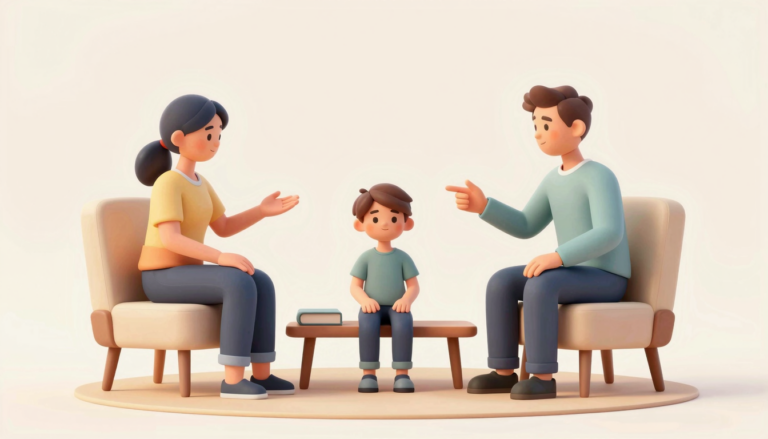
A child's departure changes more than daily routines. Both generations face a shift in closeness, authority and dependence, while parents may need to renew attention to their own lives and partnership.
At a glance
Graduation and leaving home can reshape family roles as young people seek greater independence and parents adjust to being less needed. Parents can redirect attention toward their own interests, social lives and couple relationship while supporting their child's connections beyond the family. Independence still includes an emotional bond: parents can encourage exploration and welcome their children back after setbacks.
What Challenges Do Families Face When Children Graduate and Leave Home?
Graduation marks an important milestone for young people, and it is likely to become a turning point for the whole family as well. For some families, the prospect of a child leaving home or becoming fully financially independent can unsettle relationships, sometimes with extreme outcomes of the kind described in news reports. Why can a child's graduation have such a profound impact on family life?
One way to understand this transition is to consider the developmental needs of young people about to enter university. They are in late adolescence, a period regarded as an important transition in psychological maturity and personality development (Freud, 1958; Erikson, 1968). Six years of intense academic pressure in secondary school can leave little room to develop a sense of identity. University therefore often offers a fresh opportunity to explore fundamental questions: Who am I? What do I enjoy doing? What do I dislike? What kind of life do I want to lead? That exploration also includes deciding where appropriate boundaries with parents should lie.
Alongside this search for identity comes a shift in emotional relationships. Erikson (1968) describes a central developmental task at this stage as experiencing intimacy to overcome isolation. Friendships and romantic relationships become ways to meet emotional needs, accompanied by less emotional dependence on parents. As graduation approaches, these young people, newly entering adulthood, can feel a powerful need to separate from their parents.
The family, meanwhile, has its own developmental cycle. When a child leaves home, parents face a return to life as a couple, with less emotional reliance on their child and greater reliance on each other. This requires a substantial adjustment across the family. If the couple have left problems in their marriage unresolved, and focusing on their child has helped them avoid those problems, the child's departure can remove that means of avoidance. Issues they can no longer sidestep may then erupt into intense conflict.
The parent-child relationship also needs to change, moving from a one-way relationship governed by parental authority toward a more equal, reciprocal relationship. Some separation allows young people to develop independence and autonomy (Blos, 1979). When that process stalls—because a child remains excessively dependent after leaving home, or because parents continue to exert too much control and allow too little room for independence—the child's development and adjustment to life outside the family can suffer. Parents, too, can remain unable to redirect their energy toward their own personal development.
How can psychology help us understand the emotional difficulty of this transition? For parents, accepting a less close relationship can be painful. A child who once depended on them completely now seems, almost suddenly, to need them much less. Even so, parents need to remind themselves that learning to let go is part of this stage of family life.
For the young person, the struggle takes a different form. When the wish to explore an independent life is constrained and becomes entangled with guilt toward parents, the developmental tasks of this stage become harder to accomplish. That difficulty can emerge as trouble forming new intimate relationships and building a wider social support network.
Research helps explain why those new connections matter. Meltzer et al. (2013) and Vanhalst et al. (2013) link a lack of social support with higher levels of anxiety, depression, and other negative emotions, and report a significant positive association between negative emotions and the development of loneliness. These findings underscore the importance of new, meaningful relationships for young people's psychological well-being. Levitz-Jones and Orlofsky (1985) also found a significant association between the capacity for mature intimacy and appropriate separation-individuation—the process of becoming a distinct person while separating from parents. This supports the view that an appropriate degree of separation can help young people develop healthy intimate relationships.
However difficult it feels emotionally, parents therefore need to learn to let go and support their children in building social support beyond the family. What can parents do to help themselves through this challenging period of separation?
First, bring some attention back to your own life. For stay-at-home mothers and other primary caregivers, a child's graduation can feel like a kind of “job loss”: the caregiving role that has occupied so much of life is changing. Developing a career, pursuing interests and hobbies, and renewing a social life can help make life feel full again.
Second, give the couple relationship renewed attention and care. Years of raising children and working may have left little time for the partnership, yet it will be a key source of practical and emotional support in the years ahead. Redirecting some of the attention once devoted to your child toward your partner can help you find greater happiness together during the empty-nest stage.
Supporting independence still means maintaining an emotional bond. As a secure base, parents need to remain available in two complementary ways: encouraging their children to explore the world and welcoming them back after setbacks, so they can recover before setting out again. Continuing emotional connection has a positive role in helping young people adjust to social life (Ainsworth, 1989; Bowlby, 1982).
This combination of connection and freedom is also reflected in research on identity development. Researchers agree that a family environment offering moderate closeness while encouraging independence is most conducive to adolescent identity development (Allison & Sabatelli, 1988; Josselson, 1988). The closeness between parents and children should therefore ease to an appropriate degree without disappearing. Their relationship remains an important part of both their lives.
Graduation can be a difficult turning point in the parent-child relationship. Both generations need to acknowledge and grieve the loss of their former closeness; that loss can weigh heavily on them. For their own healthy development, and for the health of the relationship, they also need to work together toward a changing balance between separation and dependence (Lapsley & Edgerton, 2002).
Long Yingtai captures the emotional weight of this process: “Slowly, very slowly, I came to understand that being a parent and a child means spending this lifetime watching your child walk farther and farther away. You stand at one end of a path, watching them gradually disappear around the bend. And with their back turned, they silently tell you: you need not follow.”
Frequently asked questions
Does supporting independence mean ending emotional closeness?
Supporting independence still means maintaining an emotional bond. Parents can encourage exploration while remaining available after setbacks. The article describes moderate closeness alongside encouragement of independence, with the relationship continuing to matter to both generations.
Why might a child's departure bring marital problems to the surface?
If parents have unresolved marital problems and focusing on their child has helped them avoid those problems, the child's departure can remove that means of avoidance. Under those conditions, issues that become harder to sidestep may lead to intense conflict.
What can parents focus on as their caregiving role changes?
The article first recommends bringing attention back to personal careers, interests, hobbies and social connections. It then recommends renewed attention to the couple relationship. For stay-at-home mothers and other primary caregivers, the changing caregiving role may feel like a metaphorical loss of a job.