Summary
A pet can bring older parents companionship and a comforting routine when the arrangement is freely chosen and the animal’s needs fit everyday life. Good experiences and realistic expectations help the bond grow.
At a glance
Start by asking whether your parents want a pet, then consider activity, temperament, cleaning, health costs and backup care. Allow pleasant contact to develop at their pace. Possible health benefits vary and should not be used to justify an unwanted responsibility.
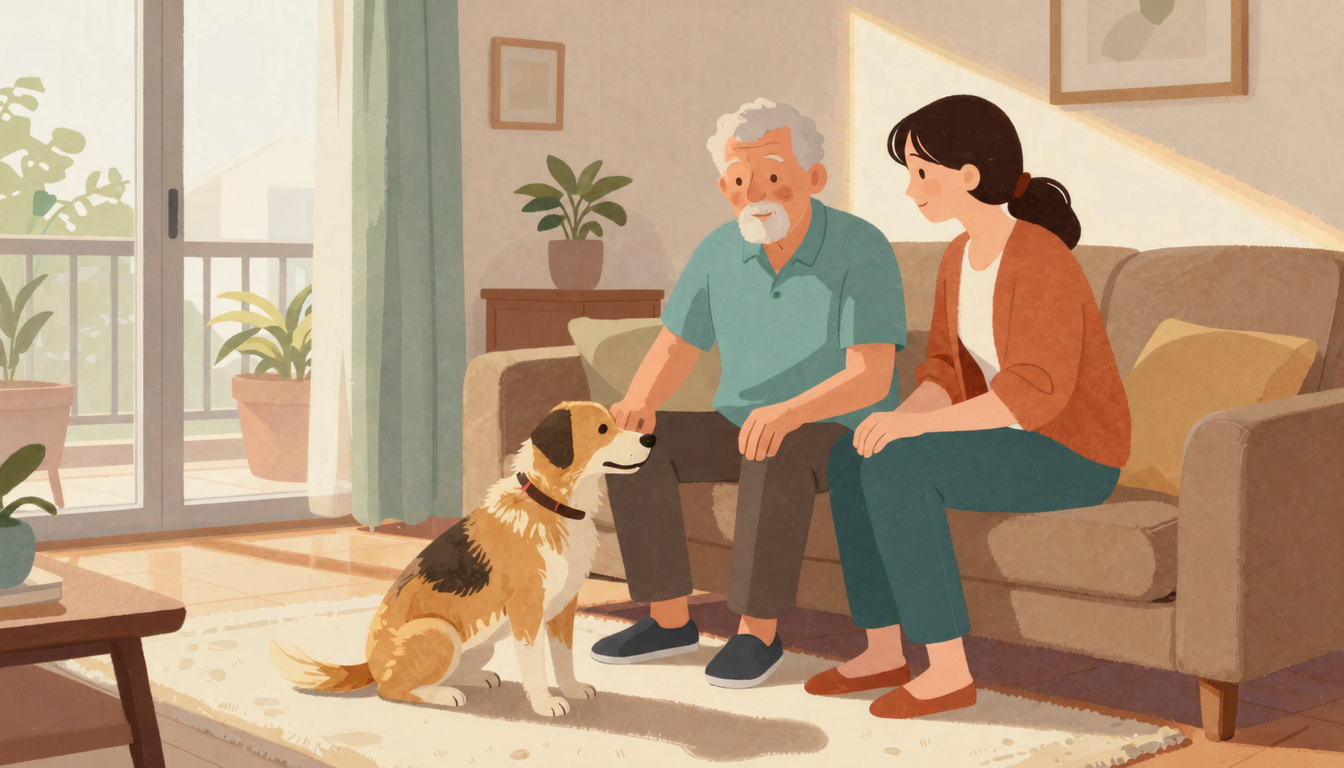
The parent who once insisted that no animal would enter the house is now saving a favorite chair for the dog. Families recognize this transformation, and often joke that the pet has become the preferred child.
The affection can be real. Feeding, playing and sharing a quiet room can give daily life a comforting rhythm. For an older person navigating change or loss, a familiar animal may become a meaningful source of closeness. But a good relationship begins with the person who will live with the pet choosing it freely.
Begin with your parents’ wishes and capacity
A pet is a living companion with daily needs. Giving one to someone who does not want it transfers responsibility along with the hoped-for affection. Talk with your parents before making arrangements, and take hesitation seriously.
Ask what appeals to them about having an animal, what worries them and what kind of contact they already enjoy. Someone who likes visiting your dog may not want to manage feeding, cleaning, exercise and veterinary care every day. Enjoying an animal and wanting to own one are different decisions.
Possible health benefits should be kept in perspective. NIH’s overview of human–animal interaction discusses promising findings while recognizing that results vary. Pet ownership does not guarantee lower blood pressure, faster recovery from cardiovascular disease, protection against cognitive decline or improved immunity.
Animal-assisted visits in a care setting are also different from taking full responsibility for a pet at home. Companionship may help with loneliness, but it should complement human contact and appropriate care rather than become a substitute for them.
Match the animal’s needs to everyday life
Consider the actual household. A dog needing substantial exercise may be a poor fit for someone with limited mobility. Heavy shedding can create more cleaning than an owner wants to manage. An animal with difficult behavior or substantial medical needs may require skills, money and support the household cannot provide.
A suitable companion is one whose needs can be met reliably and whose temperament fits the people around it. Gentleness, comfort around people and manageable activity needs can matter more than appearance. No animal can be guaranteed never to become ill, and even a calm pet needs ongoing care.
Discuss who will help with exercise, appointments or temporary care if circumstances change. The question is not whether your parents are capable in the abstract, but whether this particular arrangement works for both them and the animal.
Let a relationship grow through good experiences
The familiar joke says to bring the dog home and let the dog do the persuading. It works better as a joke than a plan: affection should not be used to bypass someone’s refusal.
With willing participants, however, unhurried contact can help. Familiarity gives people a chance to notice an animal’s habits, understand its signals and discover what they enjoy together. Pleasant experience can do more than an argument about how lovable pets are supposed to be.
There is no need to force closeness. A short, comfortable encounter is a better beginning than overwhelming either the person or the animal. Repeated unpleasant contact is not made beneficial simply by being frequent.
Temperament is something to understand
Pets differ in activity, sociability, caution and responsiveness. Owners naturally describe these differences as personality. The source discusses questionnaire research comparing animal traits with human personality frameworks, including the Big Five and a Chinese Big Seven model.
Such comparisons should not be read as proof that animal personality fits human categories exactly. For a family making a decision, observed behavior in relevant situations is more useful than assigning the animal a human personality score.
Experience and interaction can shape behavior, but they do not give an owner unlimited power to mold a pet into an ideal companion. Predictable care, appropriate training and respect for the animal’s signals can make daily life easier. Compatibility involves adapting expectations as well as teaching routines.
Care can create closeness and belonging
Some animals’ small features, expressions and dependent behavior evoke a wish to care for them. Owners may enjoy providing comfort and seeing the animal relax or approach them with trust. This helps explain why “pet parent” can feel like an affectionate description of a real bond.
A pet’s presence may also offer continuity during a period of change. The familiar greeting, the place beside the chair and the routine of a meal can become an emotional refuge. The animal does not need to understand every word for its company to feel comforting.
Owners sometimes describe pets as listeners because they remain nearby without offering criticism or unwanted advice. That experience of quiet companionship can matter deeply. It does not mean animals never create conflict, stress or uncertainty, or that every approach from a pet is evidence of understanding a human emotion.
A well-matched relationship can bring playfulness, affection and ordinary pleasure into the day. It can also require patience when routines go wrong. Both realities belong in the decision.
If your parents want a pet, help them choose with those realities in view and remain available after the exciting arrival. You may eventually discover that the newest family member has claimed the best chair—and more than a little of everyone’s attention. That is a happier outcome when the companionship was chosen, supported and allowed to grow.
Frequently asked questions
Should a pet be a surprise gift for an older parent?
No. The person taking responsibility should choose freely before arrangements are made.
What makes a suitable companion?
A match between the animal’s needs and the household’s capacity, preferences and support.
Can a pet replace human companionship?
A pet can complement relationships and care, but should not be expected to replace them.
Will familiarity always create affection?
No. Comfortable, welcome experiences matter; repeated contact is not automatically pleasant.