The Quiet Omen / Signs
Why Deja Vu Feels Like a Warning
That strange second pass through a moment may not predict the future. It may show you where your life has started to rhyme with itself.
- Published
- Read time
- 6 min
- Topics
- Coincidences / Intuition vs Anxiety / Pattern Recognition
- Sections
- 3
What this essay is really about
That strange second pass through a moment may not predict the future. It may show you where your life has started to rhyme with itself.
- That strange second pass through a moment may not predict the future
- It may show you where your life has started to rhyme with itself
You step into a room, hear a sentence, see the angle of light on a glass, and suddenly the whole moment seems to tilt.
Not because anything impossible has happened.
Because it feels as if it has already happened.
For a second, the present stops behaving like the present. It becomes doubled. The room is still ordinary, but your attention tightens around it. You know you have not stood in this exact place before, not with these exact people, not with this exact weather outside the window. And yet some part of you insists: I know this.
That is why deja vu can feel less like a memory glitch and more like a warning.
The mind does not merely say, "This is familiar." It often adds a second, more unsettling sentence: "Pay attention. Something is hidden here."
This is the part people do not always admit. Deja vu is not frightening because it is strange. Plenty of things are strange and pass through us without consequence. Deja vu is frightening because it makes the present feel selected. For a brief moment, ordinary life appears to have been underlined by an unseen hand.
The obvious question is whether deja vu means something is about to happen.
But that may be too narrow.
The better question is: why did this moment feel charged enough to be mistaken for fate?
There are grounded explanations for deja vu. A moment can feel familiar because the brain processes recognition before it can place the source. A scene can resemble another scene without your conscious mind finding the match. A mood can return before a memory does. The machinery of familiarity can fire without giving you the file name.
That explanation matters.
It also does not empty the experience of meaning.
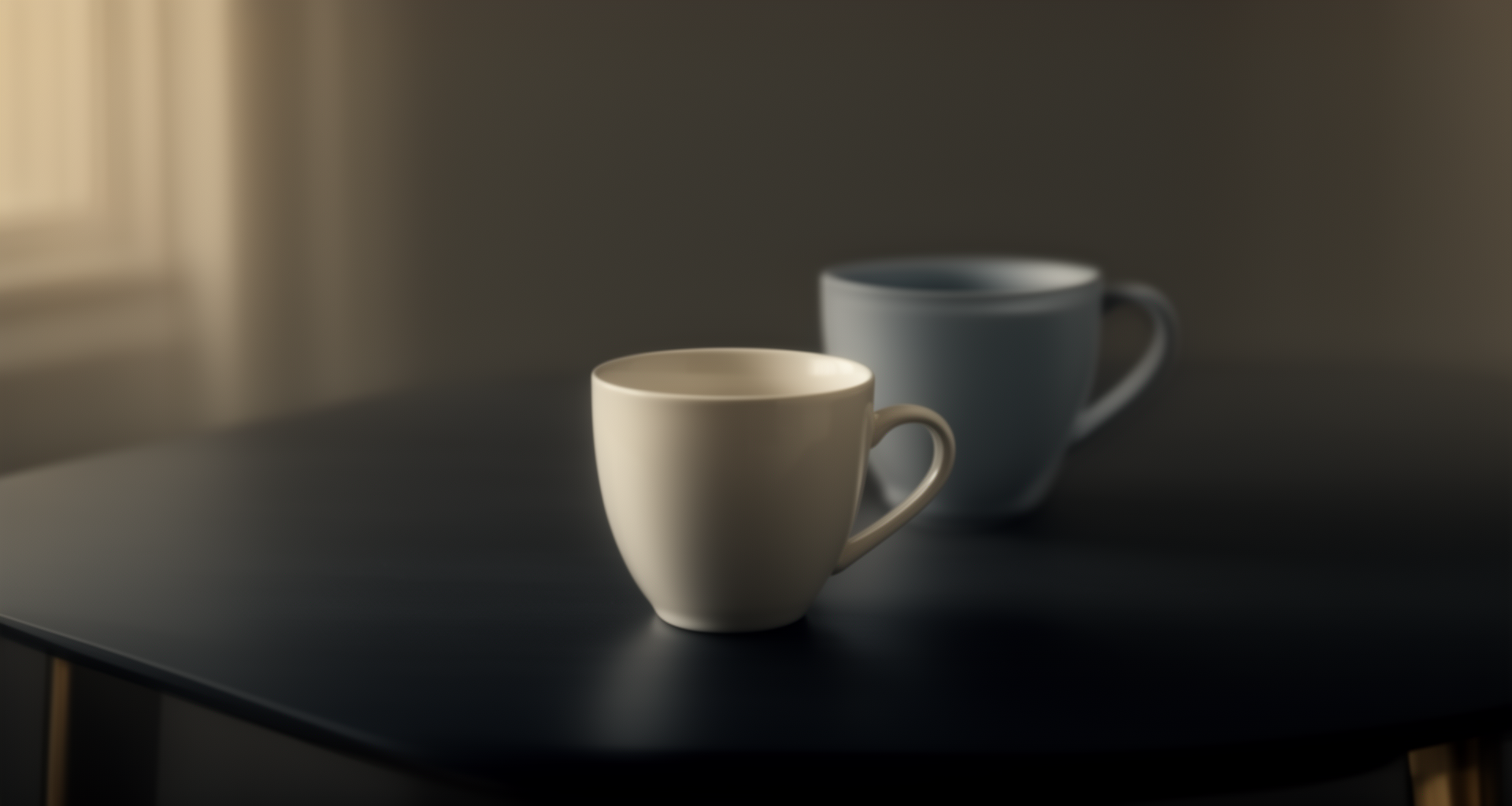
Human beings do not live inside raw events. We live inside timing, tension, memory, hope, dread, pattern, repetition, and atmosphere. The same cafe table can be forgettable on Monday and unforgettable on Thursday because something in you has changed between those two days.
Deja vu turns the present into evidence before you know what it is evidence of.
That is the strange power of it.
It does not arrive like a clear message. It arrives as pressure. It says, in effect, "This belongs to something." But it does not immediately tell you what that something is.
This is where many people make the first mistake. They treat the feeling as if it must be a prediction. A relationship is about to begin. A danger is approaching. A decision has already been made somewhere beyond them. The future is leaking backward into the room.
Maybe that is why the experience feels so seductive. A warning gives uncertainty a plot. It makes the shapeless future feel like a story with foreshadowing.
But recognition is not the same as prediction.
That sentence is worth keeping close.
A moment can feel known because it resembles your past, not because it contains your future. The deja vu may not be saying, "This will happen again." It may be saying, "This pattern has returned in another costume."
Suppose you feel deja vu while talking to someone you have just met. The shallow interpretation says, "This person must be important." Perhaps. But the deeper question is what kind of familiarity the person has awakened. Do they make you feel chosen, tested, dismissed, rescued, watched, forgiven? The omen may not be about the person as destiny. It may be about the old emotional arrangement they have activated.
Suppose deja vu arrives during a conversation you do not want to have. The room feels doubled. The words feel prewritten. You may think, "This is a sign something bad is coming." But maybe the charge belongs to repetition itself. Maybe you have been here before, not literally, but structurally: smoothing over a truth, managing someone else's reaction, pretending not to know what you already know.
That kind of deja vu can feel like a warning because it is one.
Not a supernatural alert.
A symbolic one.
It warns you that the present is beginning to borrow the shape of an old situation.
This is the lightly controversial part: sometimes what we call a premonition is actually recognition arriving before honesty.
Not always. But often enough to matter.
The body can notice a pattern before the mind is ready to explain it. A room can feel familiar because the social script is familiar. A person's tone can resemble another tone. A silence can have the same weight as a silence from years ago. The details are new, but the structure is not.
In that sense, deja vu is not always about time folding. Sometimes it is about pattern exposing itself.
The scene says, "You know this shape."
And part of you does.
This does not mean every experience of deja vu deserves deep interpretation. Sometimes a flicker is just a flicker. The mind misfires, resets, and moves on. If the experience is frequent, distressing, or tied to other worrying symptoms, it belongs in a practical conversation with a qualified professional rather than in an omen reading.
But the occasional charged moment can still be read carefully, without turning it into a command.
The key is to slow down before making it mystical or dismissing it.
Ask first: what exactly felt repeated?
Do not answer too quickly. Was it the place, the sentence, the light, the mood, the role you were playing, the feeling in your chest, the way someone looked away, the sense of waiting for permission? The symbolic meaning often lives in the specific detail that caught you.
Ask second: where in my life has this shape appeared before?
This is different from asking whether the exact event has happened. You are looking for a pattern, not a duplicate. Have you been in this emotional arrangement before? Have you ignored this kind of hesitation before? Have you mistaken intensity for intimacy before? Have you accepted an old part in a new scene?
Ask third: does this feeling open my attention or narrow it?
A useful omen makes you more precise. It helps you notice more. It gives you a better question. A bad reading makes you rigid. It turns a strange feeling into a verdict. It tells you to obey the sensation simply because it was vivid.
This distinction protects the experience.
It lets deja vu remain meaningful without making it sovereign.
The most useful reading is rarely, "This proves what will happen next." More often it is, "Something here resembles something I have not fully understood."
That is less dramatic than prophecy.
It is also more useful.
Because if deja vu is treated only as a prediction, you become dependent on the next flicker. You wait for the world to confirm your life from the outside. But if you treat it as symbolic recognition, you can participate. You can ask what the moment gathered. You can notice the old script before you perform it again.
This is why deja vu can stay with a person for years. Not because it delivered a clean message, but because it made the present feel haunted by meaning. It suggested that life is not a straight line of disconnected scenes. It suggested that certain rooms, people, choices, and moods may rhyme.
And sometimes a rhyme is more revealing than a prediction.
A prediction asks, "What will happen?"
A rhyme asks, "What is repeating?"
That second question may be the one deja vu is really offering.
When the strange familiarity comes, do not rush to fear it. Do not worship it either. Let the room remain a room. Let the moment remain a moment. Then ask what part of your life it made visible.
The warning may not be that something is about to happen.
The warning may be that something is already happening again.