Summary
Meaningful rituals turn patterned actions into occasions for care, order and attention. Their value depends on the meaning people share, while savoring practices help notice ordinary pleasures.
At a glance
Rituals matter when actions carry symbolic significance beyond their practical function. They may support emotion, a sense of order and connection, especially when freely valued. Their form can be adapted; repetition, expense or a particular gift does not guarantee the intended experience.
A year-end reflection, a meal with a friend, flowers on an anniversary, tea at three in the afternoon: each can make an ordinary stretch of time feel marked and noticed. Yet the same word—ritual—can also become a source of friction. One person sees care in a familiar gesture; another feels trapped by an expensive or compulsory performance.
The difference often lies in what the action means to the people involved. A ritual can give attention a shape. It becomes less useful when the prescribed shape matters more than the feeling it was supposed to express.
What makes an activity a ritual?
Researchers describe rituals through features such as patterned action, repetition and symbolic meaning. An integrative review by Nicholas Hobson and colleagues examines how those features relate to emotional, performance and social functions.
A recognizable sequence
A ritual usually has a form that can be recognized and repeated. It may be brief, such as a particular greeting, or elaborate, such as an anniversary celebration. A small cake can mark a shared date. Buying a sweet-and-tart candied fruit skewer after an exam can turn an ordinary purchase into a celebration.
The action doesn't need to be grand. Repetition gives it continuity; attention and meaning help distinguish the occasion from everything around it.
More than a practical operation
A routine is often organized around a direct task. An athlete warms up to prepare the body for competition. A pregame prayer has a different relationship to the result: its sequence doesn't mechanically produce a winning performance.
The distinction can overlap in everyday life. Making tea has a practical result, but the way you set it aside as a pause may also carry ritual meaning. An activity can serve a function and contain symbolic elements at the same time.
Meaning people invest in it
Wearing familiar exam clothes or using a preferred pen may provide reassurance. It doesn't ensure a good grade. The psychological importance comes from the association, rather than a power in the object to control the result.
In that sense, a meaningful repeated activity connects an action to something beyond its immediate use: care, gratitude, continuity or the beginning and ending of a stage. The meaning may be personal or shared. It needn't be a belief in luck.
Rituals also aren't defined by happiness alone. A farewell can matter while remaining sad. A commemorative practice can hold grief and affection together. The emotional value lies partly in being able to acknowledge the occasion.
Meaning can get lost in the required form
Flowers may be a welcome anniversary gesture. But treating their absence as automatic proof of absent love can overlook other expressions of care: doing the dishes, cleaning the litter box or quietly carrying a shared responsibility.
That doesn't make wanting flowers shallow. It means the people involved need to understand the need behind the request. Is it being remembered, sharing time or seeing that someone made an effort? Different gestures may answer that need, or one particular tradition may matter deeply for a reason worth explaining.
Likewise, dismissing every ritual as pretentious can miss a sincere invitation to connect. Instead of arguing about whether ceremony is necessary in the abstract, discuss what this activity means, whether both people want it and what version fits their lives.
How rituals may support emotional life
A place for feelings
A sequence of actions can make room to acknowledge an emotion that otherwise has no clear outlet. Telling stories, marking a loss or gathering at a transition may help people express what matters and feel accompanied.
Storytelling in end-of-life care is one example of a meaningful practice: memories can connect a person's life with the people listening. That doesn't mean any story automatically calms distress or that a private ritual replaces professional care. Its value depends on the person, setting and way it is offered.
Order within uncertainty
Repeated steps can provide a manageable focus when a situation feels uncertain. You may not control the coming year or an exam result, but you can prepare a familiar sequence and decide how to begin.
A feeling of order is different from control over external events. A useful ritual supports action or steadiness; it doesn't need to promise that nothing bad will happen. If the steps become a frightening obligation, it is reasonable to reconsider their role.
Shared attention and connection
Interaction ritual theory emphasizes people gathering around a common focus and sharing emotion. A mutually valued anniversary celebration or a long-distance couple's morning and evening greetings can provide occasions for that attention.
The number of repetitions isn't a guarantee of closeness. A greeting sent from obligation may feel different from one that carries interest. What matters is how the participants experience the exchange, including whether the form still suits them.
Rituals can help us savor good experiences
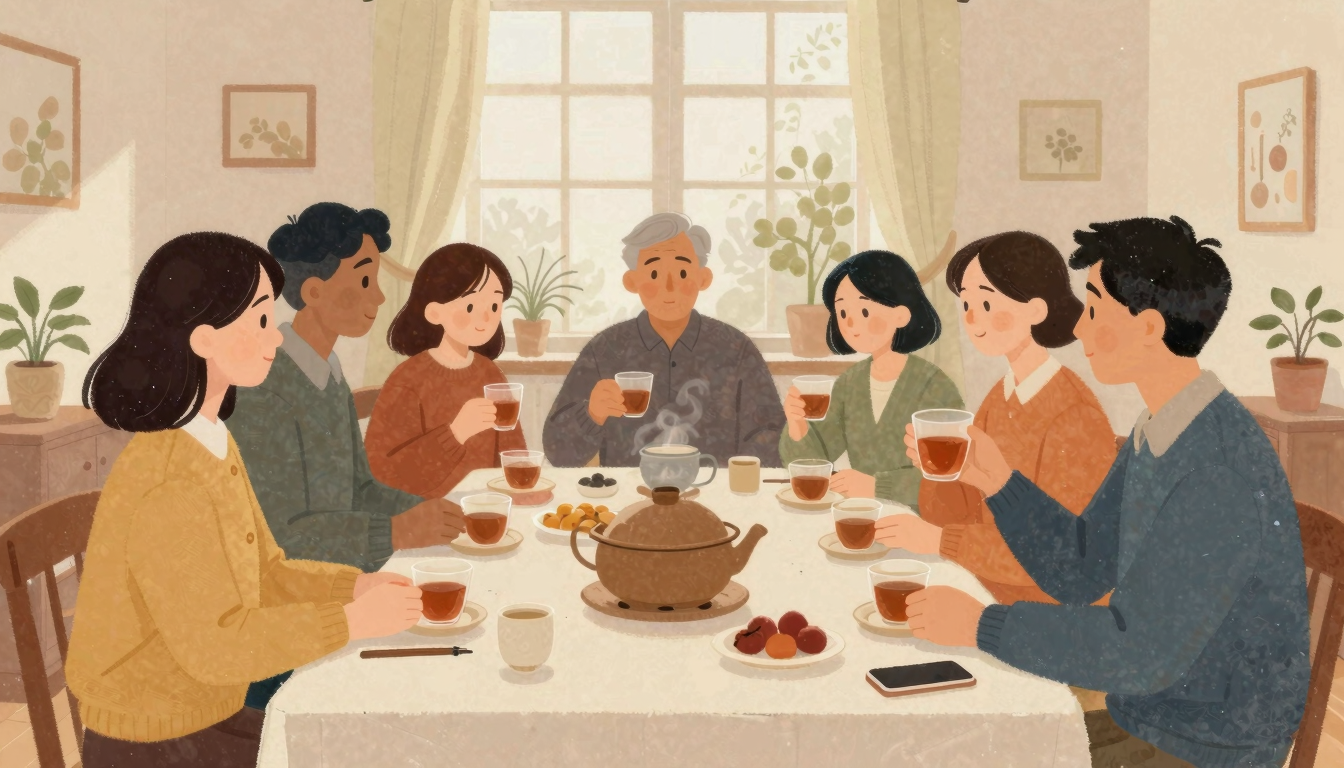
Savoring means attending to and appreciating a positive experience, sometimes extending or revisiting the pleasure it brings. Ritual can create an occasion for this: a pause over tea, an anniversary conversation or a deliberate year-end reflection.
You might drink tea and read at a fixed time each day because the pause helps you notice something enjoyable. You might thoughtfully prepare for an anniversary because you want to remember a shared experience rather than let the date pass unnoticed.
The savoring framework associated with Fred Bryant and Joseph Veroff includes attention to present enjoyment, anticipation and remembered pleasure. These are useful reflection points rather than commands to feel positive. Can you enjoy looking forward to something? Can you notice a good moment while it happens? Can you recall it later without using the memory to deny a difficult present?
There is no need to maximize happiness at every opportunity. A small, believable pleasure may be enough, and people differ in which practices they enjoy.
Three ways to practice noticing
A daily vacation is a brief opportunity to appreciate ordinary life. Choose a manageable pause and attend to something pleasant within it. The point isn't to manufacture an exceptional experience, but to notice what would otherwise pass in the background.
A life review draws together positive memories and their significance. Recall an event, what you appreciated and how it connects with other valued experiences. This can give a celebration or year-end reflection more substance than a list of achievements.
A mental camera exercise focuses attention on a present moment as if you wanted to remember it clearly. Notice details and how the experience feels. It needn't involve taking an actual photograph, and documenting the moment shouldn't displace experiencing it.
Use the ideas flexibly. A practice that feels forced can be changed or left aside. Ritual loses something when enjoyment becomes another performance requirement.
Mark a transition in a way that fits
The original discussion appeared at the beginning of 2021, looking back on a difficult pandemic year and proposing a gathering as an expression of care. Its broader point travels beyond that moment: transitions offer a reason to pause, recognize what happened and express what matters next.
Your version may be a meal, a conversation, a written reflection or a quiet cup of tea. Choose a form that carries meaning for the people involved. The ritual earns its place through that meaning and attention, rather than through the cost or complexity of the occasion.
Frequently asked questions
How does ritual differ from routine?
Routine often directly accomplishes a task; ritual adds patterned symbolic meaning. Everyday activities can contain both.
Must a ritual feel happy?
No. Farewells and commemorations may matter while holding sadness or grief.
Can rituals control outcomes?
No. Familiar exam objects may reassure someone but do not guarantee grades.
How can I practice savoring?
Try an ordinary pause, a review of meaningful positive memories or focused attention to present details, without demanding a particular mood.