Summary
From prayer position through cobra and back again, DY outlines twelve movements with breathing cues, attributed benefits and recommendations for a morning routine.
At a glance
DY presents Sun Salutation as twelve connected positions: prayer, raised arms, forward fold, equestrian, downward-facing dog, eight-point prostration, cobra, downward-facing dog, equestrian, forward fold, raised arms, and prayer. The walkthrough includes specific breathing directions and foot movements. DY recommends early morning practice after a bowel movement and on an empty stomach, followed by warm water and a healthy breakfast.
Two traditional Chinese sayings urge people to rise at cockcrow to practice and to plan the day in the morning. Drawing on that emphasis on an early start, DY offers Sun Salutation as a way to begin the day with energy amid demanding work and the considerable pressures of daily life.
The name describes a salute to the sun. In the traditional origin account DY recounts, ancient Indians bathed and paid homage at dawn in gratitude for the sun’s light and energy. Yoga scholars developed this practice into twelve positions to honor the sun god, thank him for the energy he bestowed, and seek the removal of impurities.
DY explains the twelve connected positions through their movements, breathing, and the benefits attributed to them.
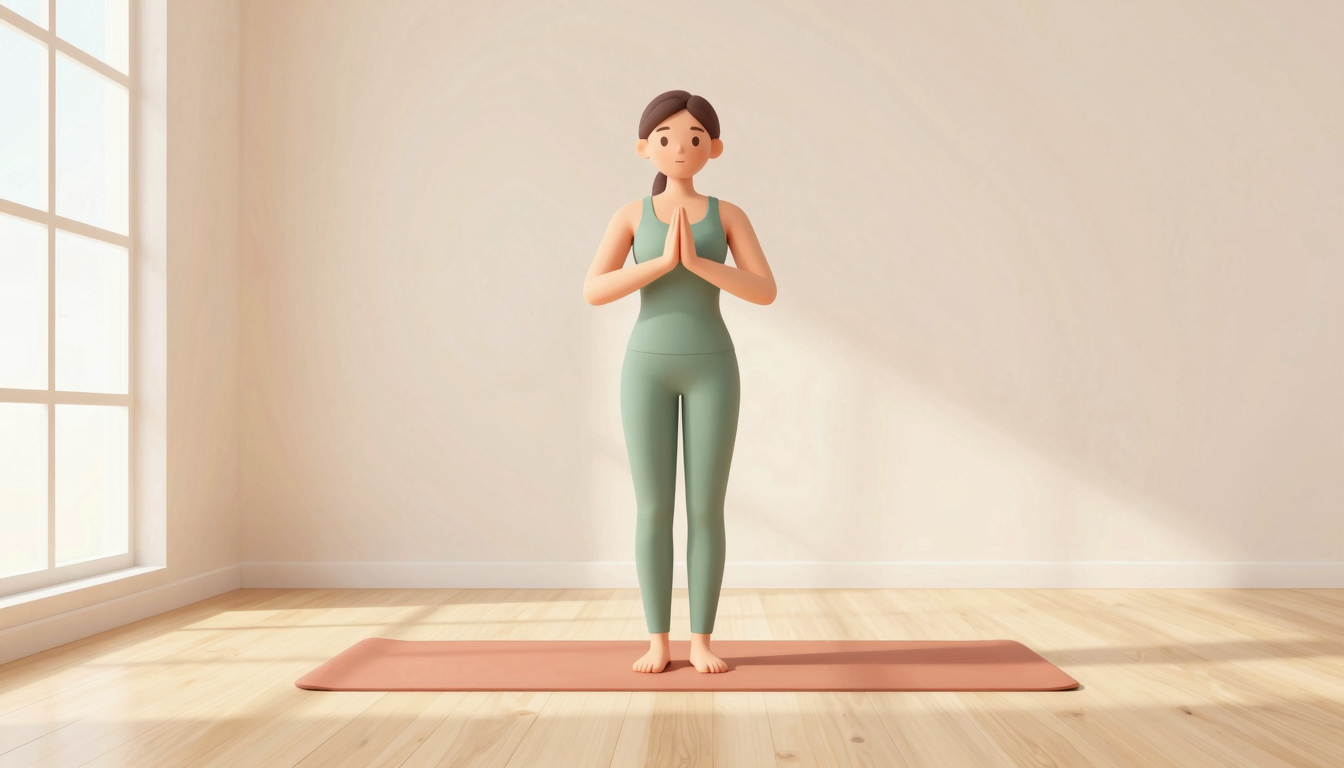
1. Prayer position. Stand upright with your feet naturally together, relax your shoulders, and look straight ahead. Bring your palms together in front of your chest and breathe evenly. DY says this position can quickly settle your thoughts and bring a sense of quiet.
2. Raised-arms position. Keeping your legs straight, take a deep, long, slow breath in as you raise your hands overhead and straighten your elbows. Slowly bend your spine backward, continuing to breathe. DY claims this position helps stretch the abdominal organs and eliminate excess fat.
3. Forward fold. Exhale as your arms lead your body into a forward bend. Keep your legs straight without bending your knees, press your palms against the ground, and bring your upper body close to your legs. With repeated practice, DY claims, this position can prevent stomach ailments, promote digestion, relieve constipation, improve spinal suppleness, and strengthen the spinal nerves.
4. Equestrian position. From the forward fold, inhale as you press firmly through your hands, take a large step backward with your left foot, and raise your back. Inhale again, arch your spine backward, and push your chest forward. DY attributes three benefits to this position: effectively massaging the abdominal organs, strengthening the leg muscles, and improving balance.
5. Downward-facing dog. Exhale, relax your back, and bring your right foot backward to join your left. Inhale as you lift your hips and straighten both knees. Then exhale, lowering your head and pressing your shoulders and back downward while directing your tailbone toward the sky. Bring your heels to the ground if possible. DY describes this position as bending the spine in the opposite direction from the preceding equestrian position and claims it helps maintain spinal suppleness and supports blood supply to the spinal nerves.
6. Eight-point prostration. Exhale as you bend your elbows, place both knees on the ground, and lower your chest and chin to the ground. DY describes the internal organs as inverted in this position and claims it promotes their self-massage and self-healing, increases intestinal movement, and improves bodily coordination.
7. Cobra. Inhale and let your head lead your body forward and upward. Straighten your elbows, keeping your thighs and pubic bone as close to the ground as possible. Lift your neck upward to lead your spine into a backward arch. According to DY, this position can help improve stomach problems, including indigestion and constipation, while exercising the spine and reinvigorating the spinal nerves.
8. Downward-facing dog. Begin the return through the sequence by moving into downward-facing dog again, inhaling as you extend your hips toward the sky.
9. Equestrian position. Inhale as you take a large step forward with your left foot. Raise your head to lead your spine into a backward arch.
10. Forward fold. Keep your hands on either side of your feet. Inhale as you bring your right foot forward to join your left, straighten both knees, and bring your upper body close to your legs.
11. Raised-arms position. Inhale and let your arms lead your body slowly upward and backward, arching your spine backward.
12. Prayer position. Exhale as you lower your arms and bring your palms together in front of your chest. Resume normal breathing.
For a morning routine, DY recommends practicing early, after a bowel movement and on an empty stomach, saying this timing gives the best results. After practice, drink a glass of warm water and eat a healthy breakfast.
DY also recommends loose clothing and a calm emotional state and pleasant mood during practice. Follow the rhythm of your breathing and enjoy the process of yoga.
The invitation is to wake half an hour earlier and keep up the practice for one week, with DY promising unexpected gains.
Frequently asked questions
Must your heels touch the ground in downward-facing dog?
DY makes heel contact conditional: bring your heels to the ground if possible.
Does DY prescribe a thirty-minute Sun Salutation session?
The invitation is to wake half an hour earlier and continue practicing for one week. It does not specify a thirty-minute practice duration, and the promised gains remain unspecified.
Which foot moves first in DY's sequence?
DY instructs you to step the left foot backward in the first equestrian position, then bring the right foot backward to join it. On the return, step the left foot forward first, followed by the right foot.